
Invisalign is an orthodontic treatment system consisting of custom-made, transparent and removable aligners that help the teeth gradually align according to pre-planned movements. The process is carried out with orthodontic examination, digital recording and dentist checks.
Invisalign® clear aligners Treatment,
It is applied with a digital orthodontic plan.
It evaluates tooth alignment and bite with digital records. We plan the Invisalign clear aligner process according to your daily life and clinical needs.
clear aligners evaluation↗
Before recommending the aligner option, we evaluate tooth movements, closure and usage patterns together.
What is Invisalign?Transparent aligner treatment
Transparent aligner treatment
How does it provide tooth movement?
Invisalign treatment consists of personalized clear aligners that apply controlled force to the teeth in a planned sequence. The aligners are removable. However, for successful progress, the usage pattern determined by the dentist must be followed.
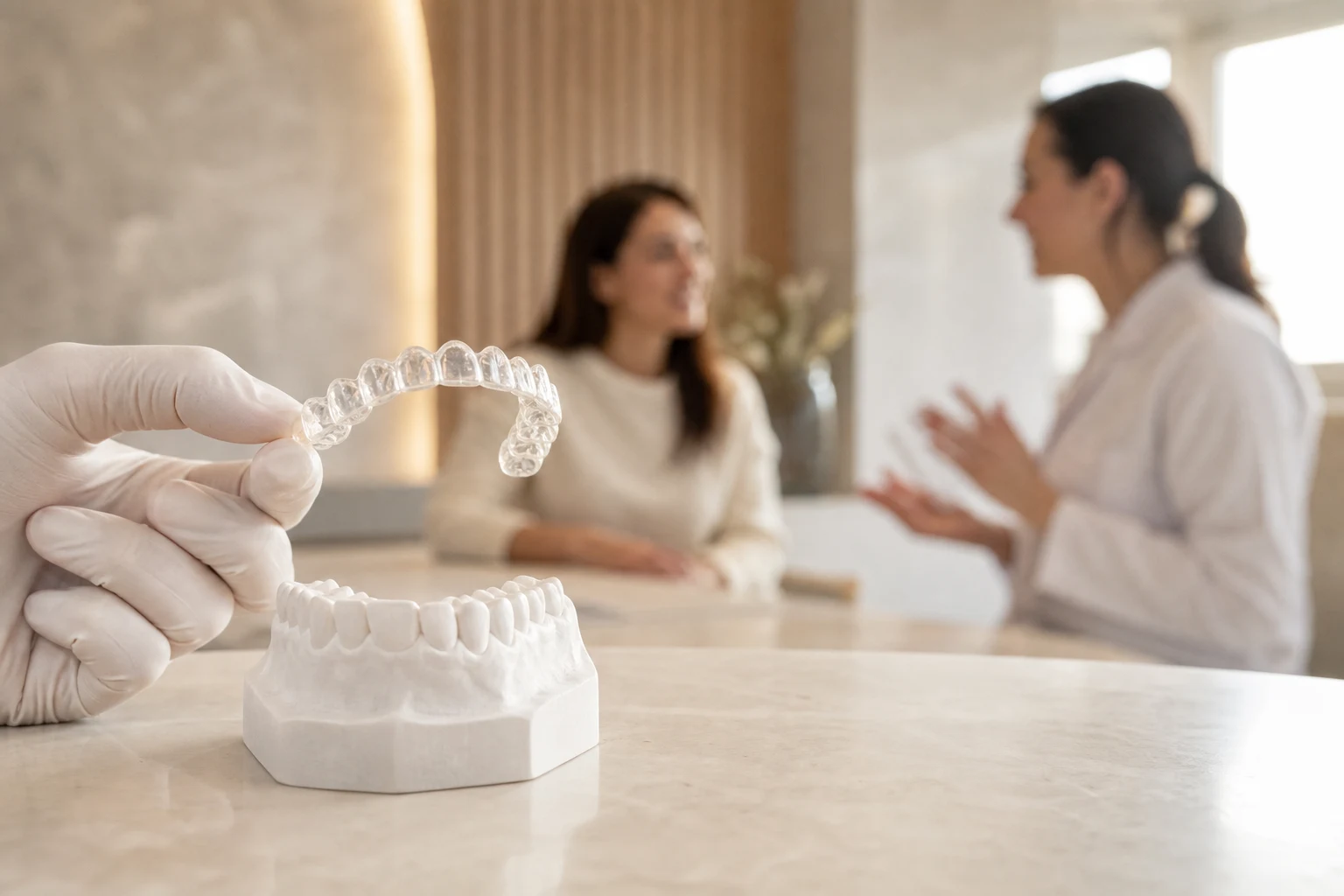
Appearing transparent does not make the treatment a simple product choice. Each aligner is part of a larger plan of action determined by clinical evaluation.
First of all, we examine crowding and spacing, contact between upper and lower teeth, gum health and existing restorations. We combine the necessary photographs and imaging records with digital impressions.
In appropriate cases, the order of tooth movements is planned. during review visits, the compatibility of the aligner, oral tissues and the movement achieved are evaluated and the process is followed clinically.
Not every case is suitable for clear aligners.The method is done not only according to the aesthetic expectation, but also according to the nature of the necessary tooth movements and the bite relationship.
- 01
- tooth alignmentCrowding, skewing and spacing
- 02
- biteRelationship of lower and upper teeth
- 03
- Oral healthGums, decay and restorations
- 04
- Compatibility of useAdaptability to daily routine
Treatment processInvisalign treatment process
Invisalign treatment process
progresses from digital recording to clinical follow-up.
The production of records is only one part of the process. Correct case selection, sequence of movements, initial aligner fit and regular check-ups are all part of the same plan.

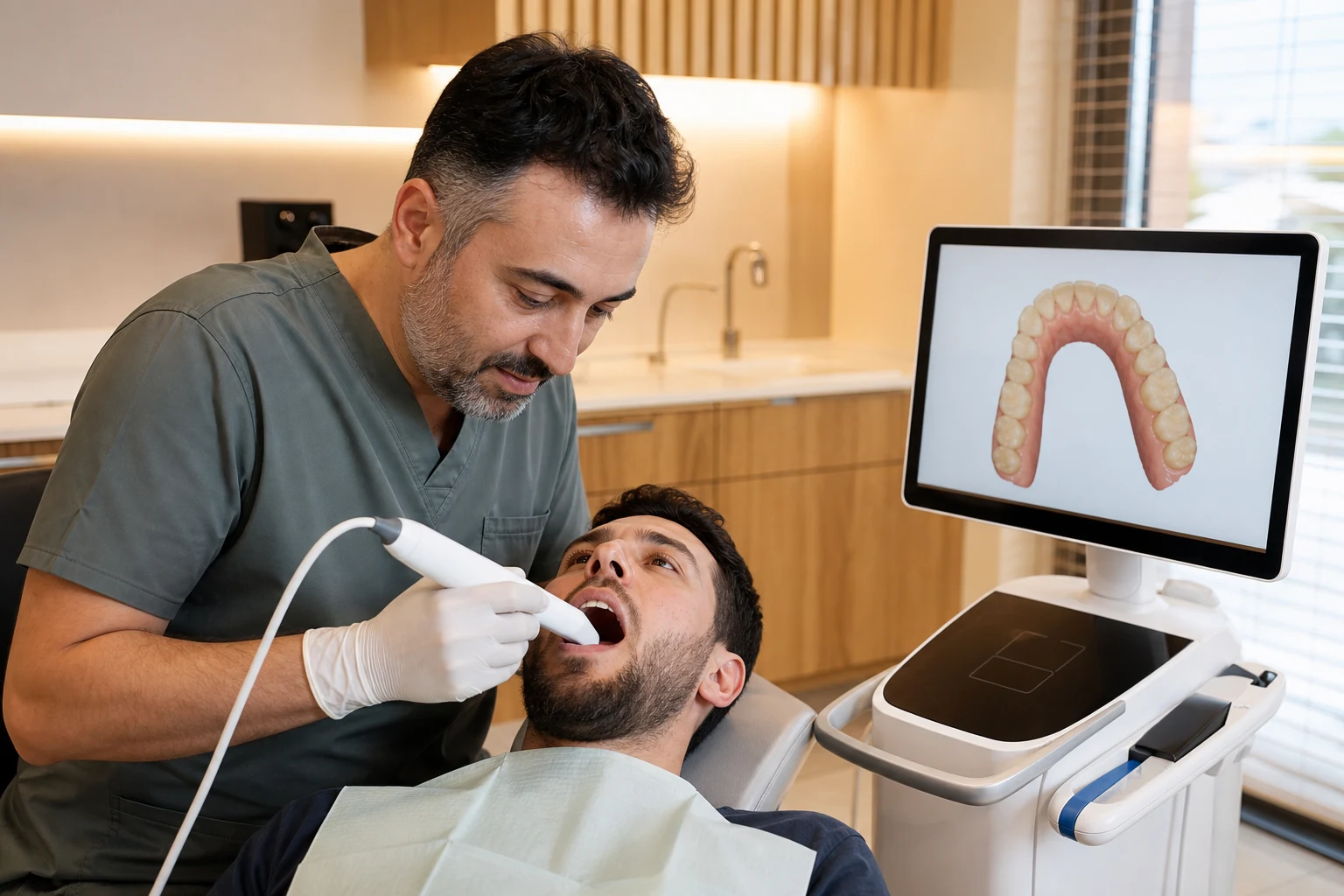
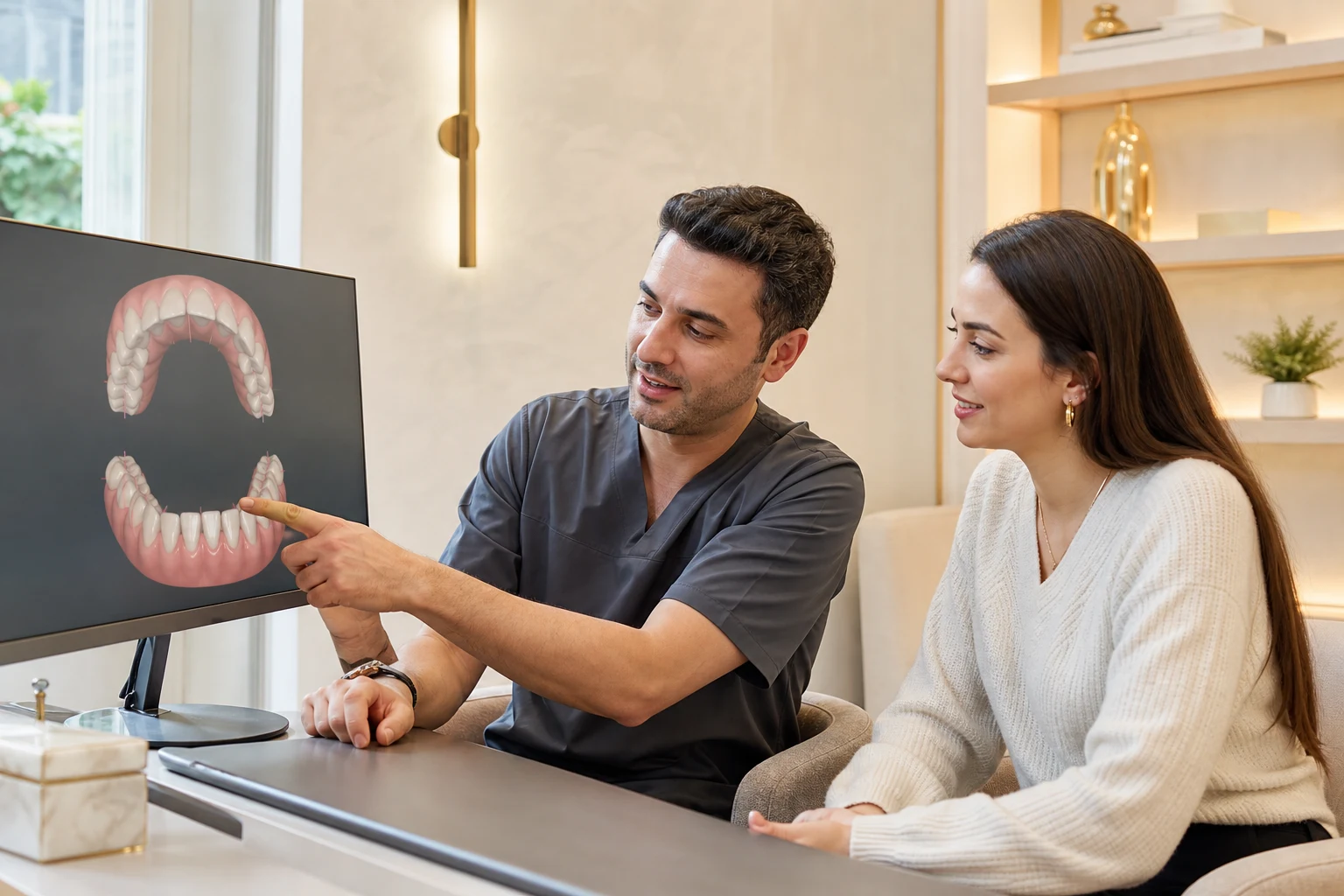

We determine it by inspection.01 — 04
- 01Inspection and bite
Assessment and planning
We examine tooth alignment, bite, gum health and the scope of movements that need to be planned.
- 02Scanning and recordings
Digital intraoral impression
We record the initial situation in detail with intraoral scanning, photographs and necessary imaging.
- 03motion simulation
Preparation of the plan
We determine which tooth will move in which direction, the aligner order and the necessary auxiliary procedures according to clinical goals.
- 04Delivery and checks
aligner harmony and progression
He checks the fit of the first record; At scheduled appointments, we evaluate tooth movements and the transition to subsequent aligners.
Personal treatment stagesUse of transparent aligner
Use of transparent aligner
Requires regular daily compliance.
Being removable can make daily life easier. The same feature also brings with it the responsibility of regular use. Your specific usage and transition schedule will be explained upon delivery of the aligner.
- 01Usage time
The treatment plan determines the schedule.
How long you will wear the aligners and when to switch to the next aligner is determined by the dentist.
- 02Food and oral care
Remove, clean, reinstall.
aligners are usually removed during eating and oral care. The teeth are reattached after they are cleaned.
- 03Protection and cleaning
Store records in their case.
It is important to protect the record in the box provided to prevent it from being lost or damaged when not in use.
- 04Appointment tracking
If there is a compatibility problem, do not wait.
If the aligner does not fit, is lost or damaged, reach the clinic without waiting for the next check.

Proper cleaning and safe storage of aligners, as well as regular use, are part of the treatment routine.
Frequently asked questions
Invisalign clear aligner treatment:
frequently asked questions.
Suitability, number of aligners, usage pattern and treatment duration. It is determined individually after clinical examination and digital records.
No. Suitability. The extent of crowding or gaps, bite relationship, necessary tooth movements, gum health and compliance with the use of aligner are evaluated together. In some cases, a different orthodontic method may be more appropriate.
Daily usage time and transition schedule to the new aligner are determined by the dentist according to the personal treatment plan. It is important to use the aligners in the recommended order in order to follow the planned tooth movements.
aligners are usually removed during eating and oral care. It is recommended to reattach it after meals, paying attention to cleaning of teeth and aligners. Your specific usage details are shared upon aligner delivery.
For some tooth movements, small tooth-colored composite attachments may be planned to help the aligner transfer controlled force to the tooth. Attachment requirement and placement are determined according to the personalized digital treatment plan.
Treatment duration; It varies depending on the number and complexity of tooth movements to be corrected, bite relationship, review findings and the usage pattern of the aligners. Estimated time is shared after digital records and clinical examination are completed.