Leaf Tooth Veneer,
It is a thin ceramic restoration applied to the front teeth.

We plan porcelain laminate veneer procedure individually by evaluating the enamel texture, color, tooth proportions and closure together.

Assessment and planning
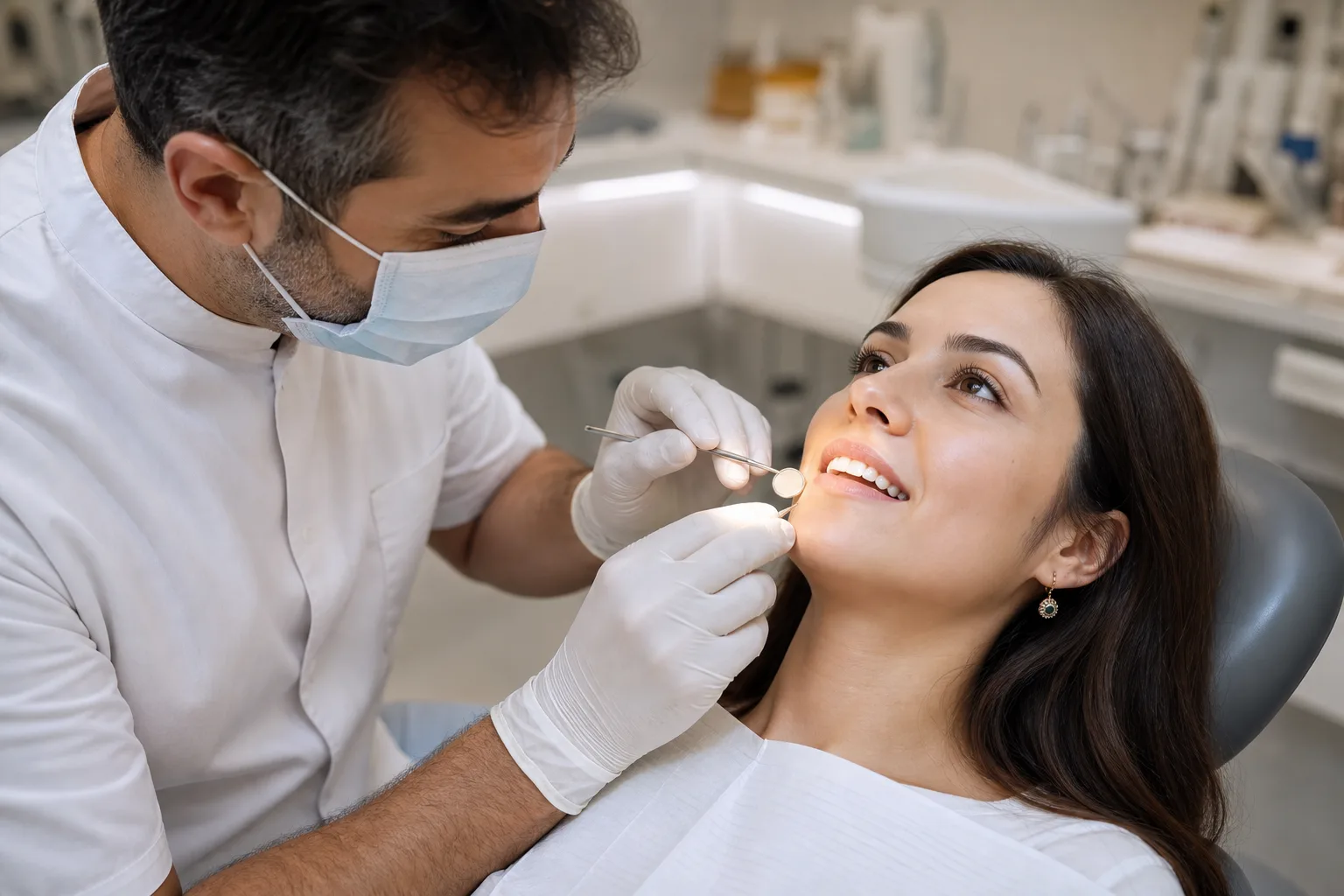
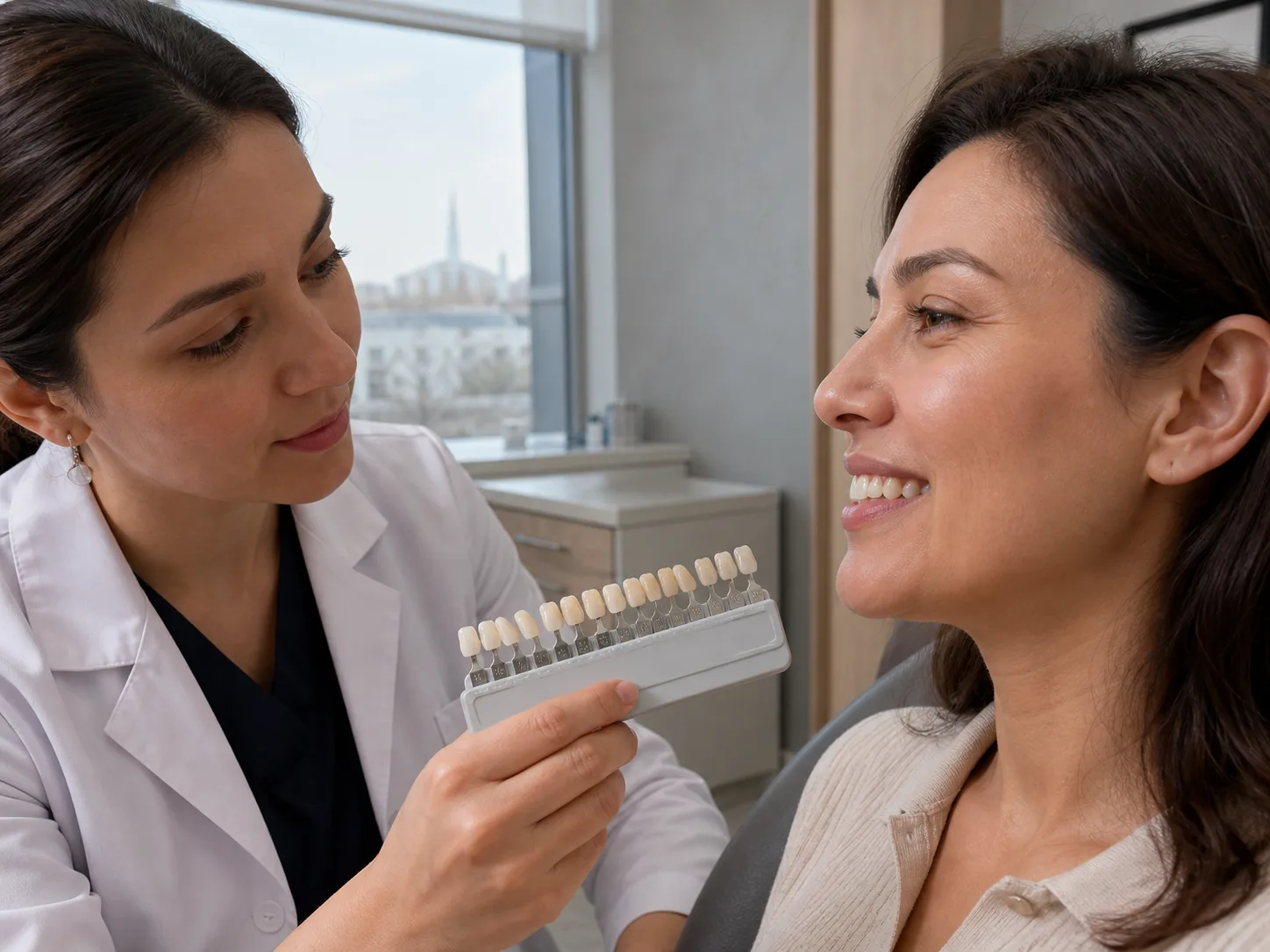
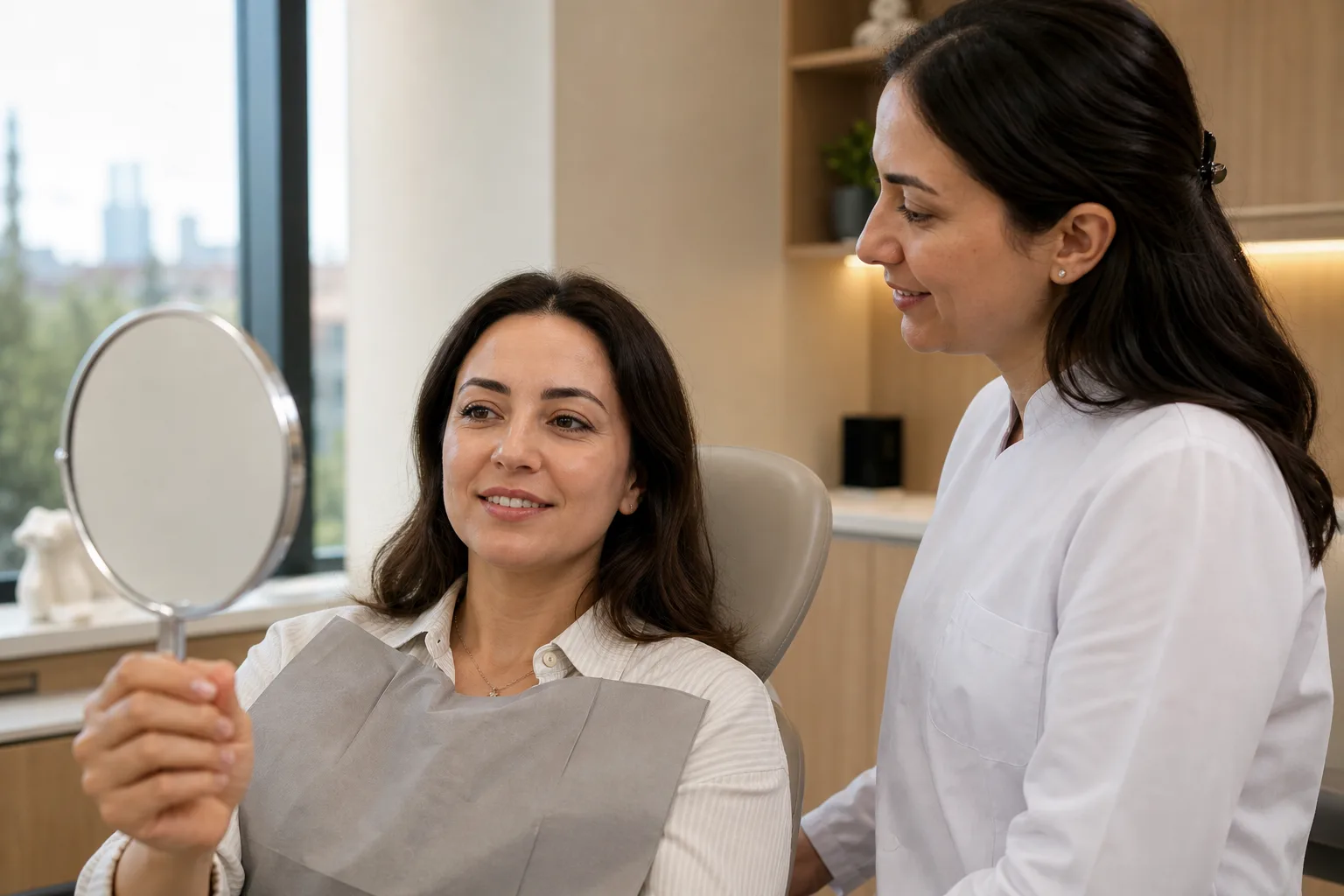
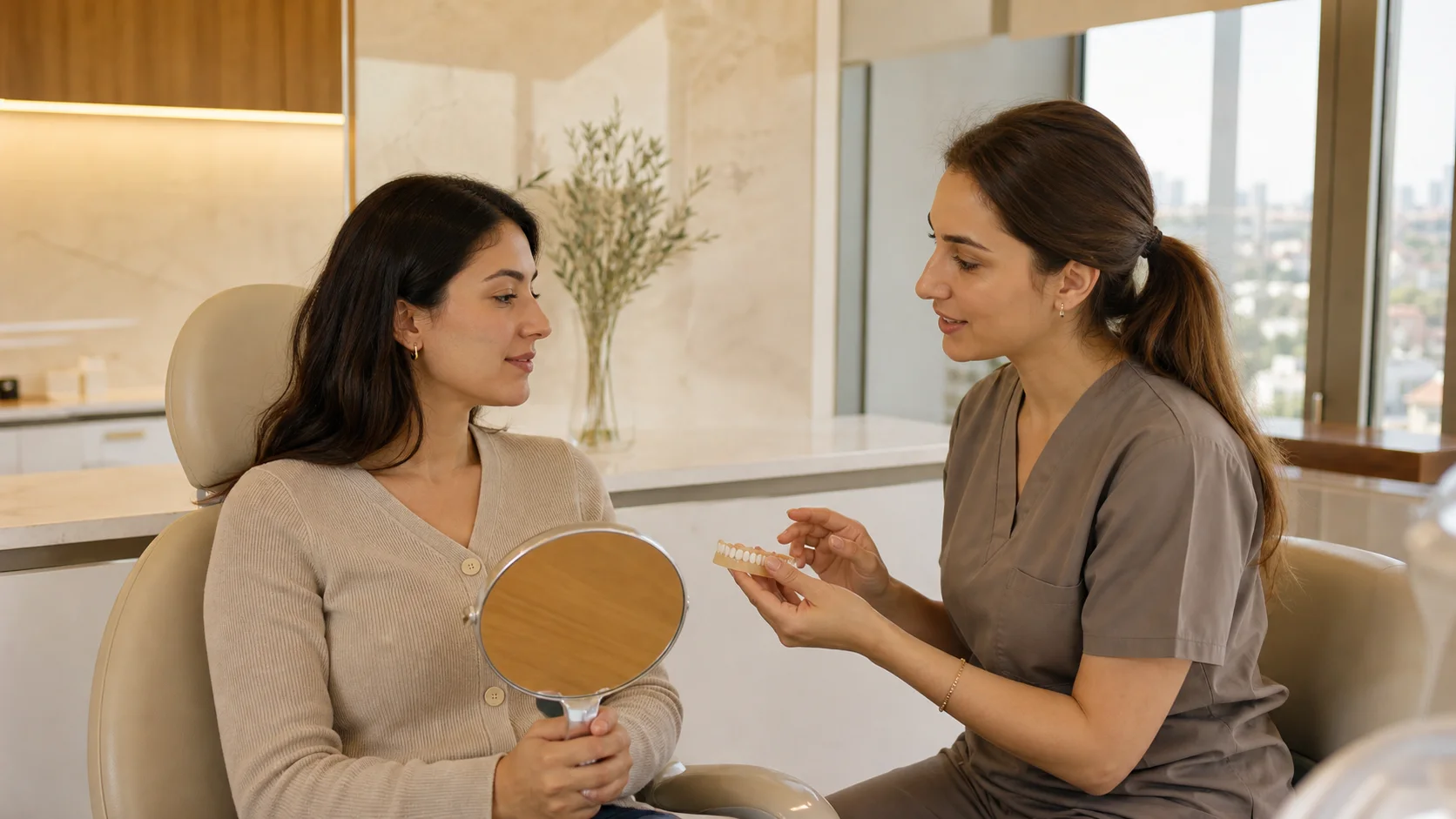
Dentist explaining the leaf veneer plan to his patient with a mirror and tooth model
01

The preventive approach begins with correct case selection, not just subtlety.

What is leaf dental veneer?

Laminate veneer
In what situations can it be applied?

Porcelain laminate veneer is a thin ceramic restoration that attaches to the visible surface of the front teeth. The procedure decision is not made based solely on aesthetic expectations.

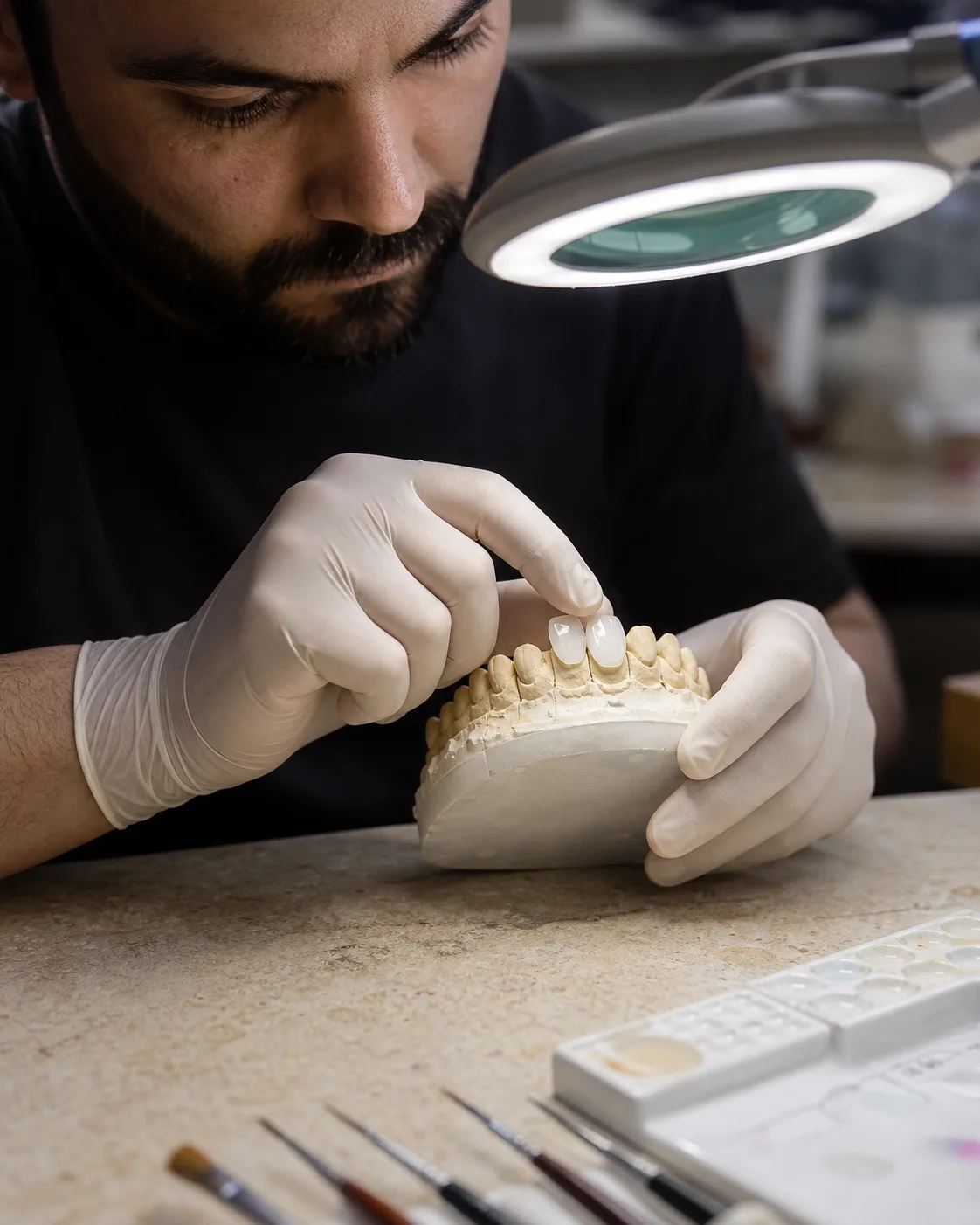
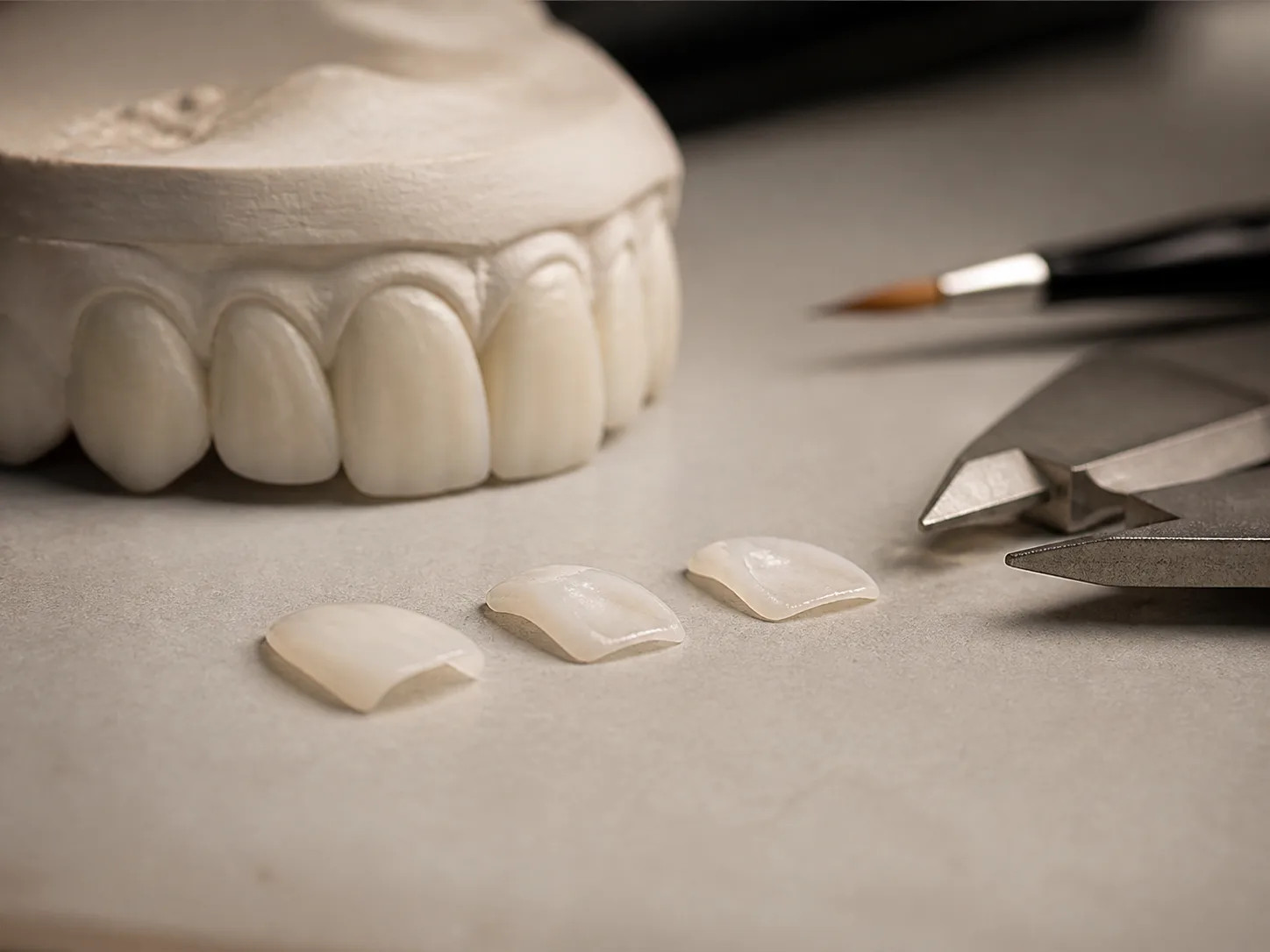
Laboratory control on the tooth model of thin porcelain laminate veneers
The thickness, edge boundaries and surface character of the porcelain are prepared separately for each tooth.

The aim of the laminate veneer plan is not to make the tooth appear larger or uniform. The aim is to create a proportion compatible with the face, natural light behavior and cleanable edges.

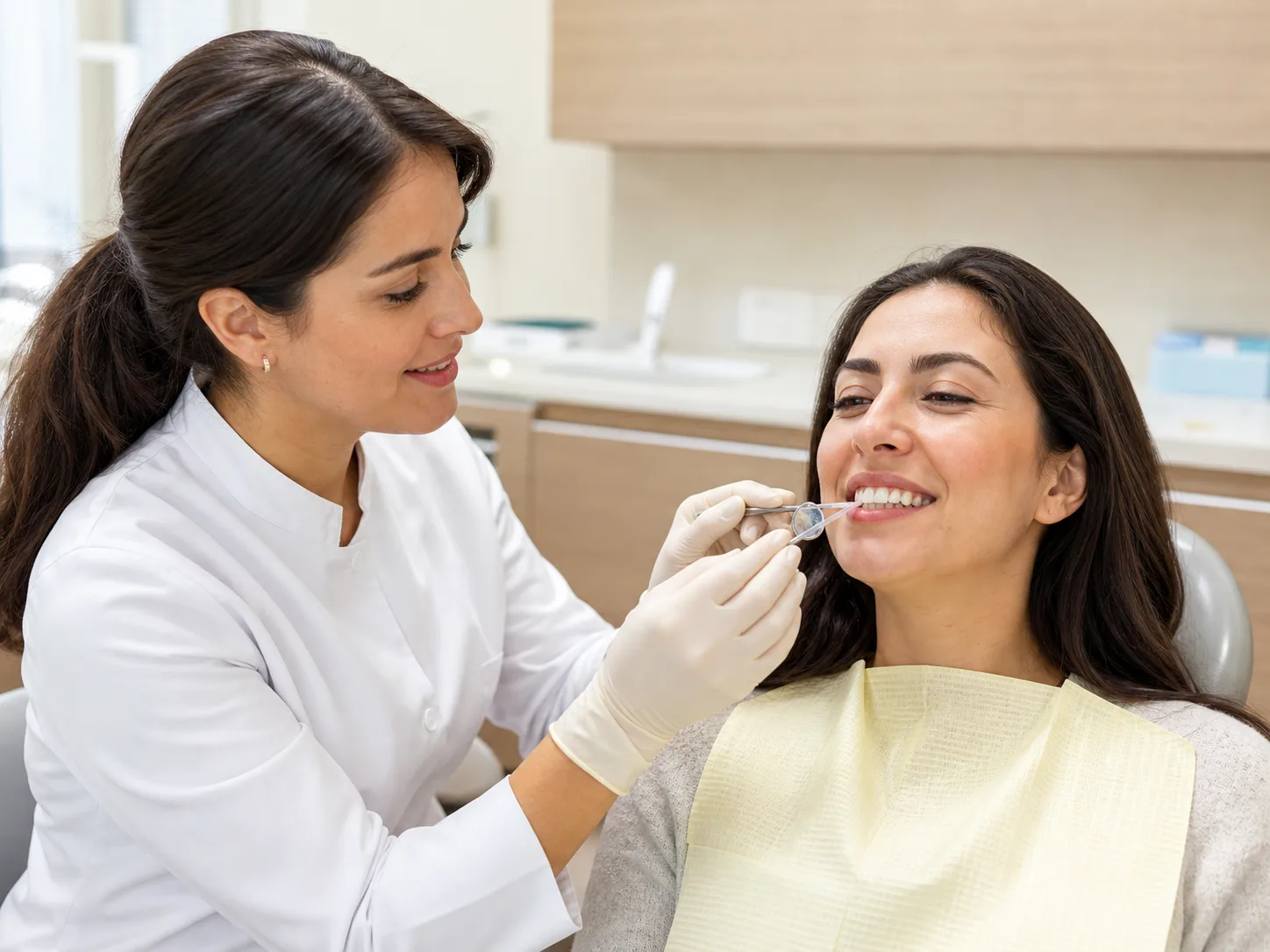
In the first examination, we evaluate the amount of enamel, existing fillings, gum health and bite. Conditions such as the position of the teeth, advanced discoloration or clenching may make a different approach more suitable instead of laminate.

In appropriate cases, tooth form can be evaluated before ceramic production through digital recording, photography, wax-up and mock-up stages. The amount of preparation is determined according to the current form of each tooth and the targeted change.

The “no-cut” procedure is not correct in every case.Controlled preparation at the enamel level may be required to avoid overcontouring and provide adequate space for the ceramic.

01
enamelRobust bonding surface
02
ColorInfrastructure and ceramic harmony
03
OranRelationship between face, lips and teeth
04
biteContacts and the effect of clenching teeth
Treatment process

Leaf tooth coating process
There are four stages from design to pasting.

The order of procedure and the number of sessions may vary depending on the current condition of the teeth and the necessary preliminary treatments.

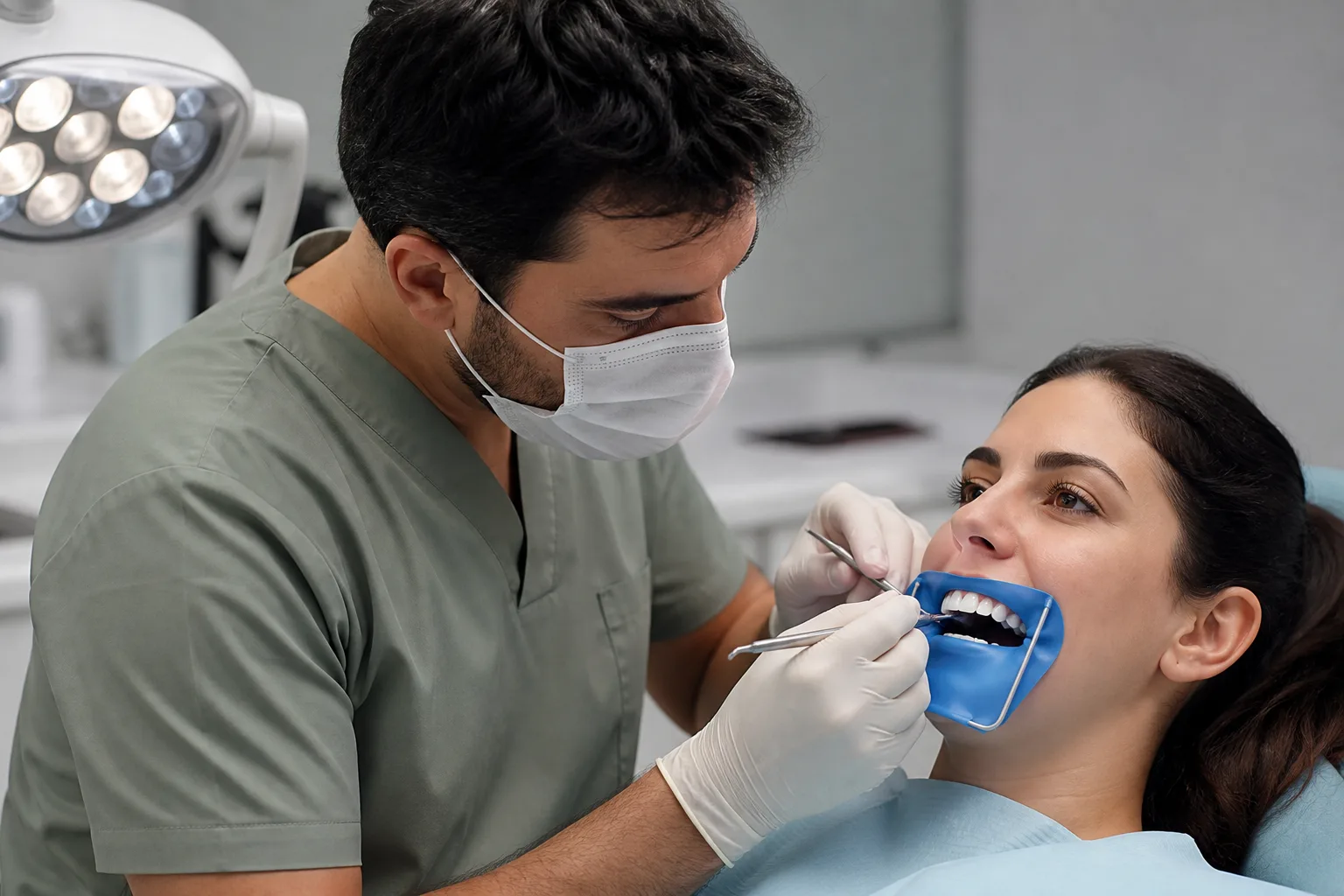
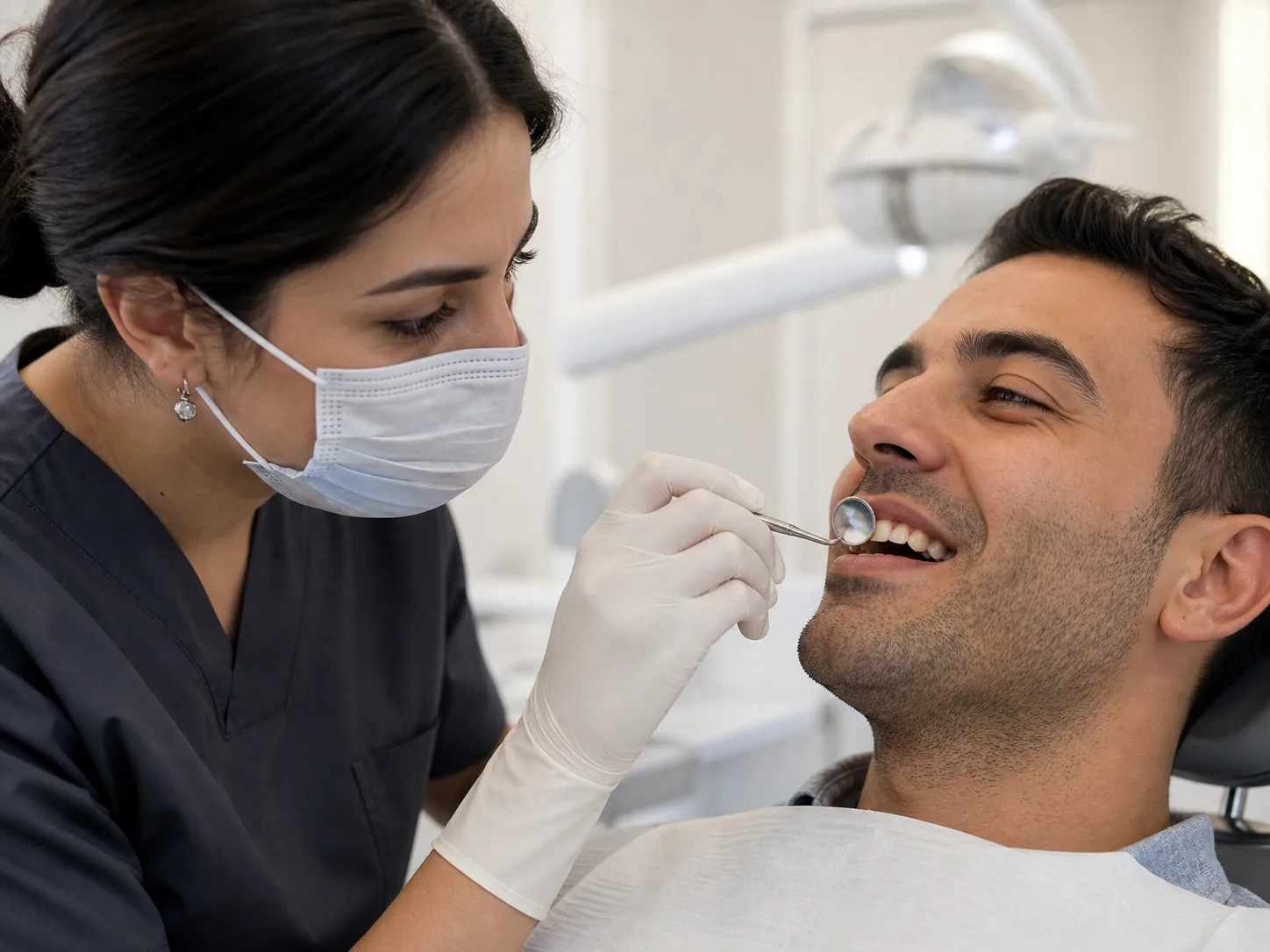
Clinical evaluation of front teeth before leaf veneerTaking standard smile photographs for leaf veneerLaboratory wax-up planning for porcelain laminate veneersPorcelain laminate veneer adhesive application phase
01 / InspectionEnamel tissue and bite
We evaluate it from a protective perspective.
01 — 04
  1. 01
    inspection

    Assessment and planning

    The amount of enamel, gum level, existing fillings, color change and bite relationship are examined clinically.

  2. 02
    Records

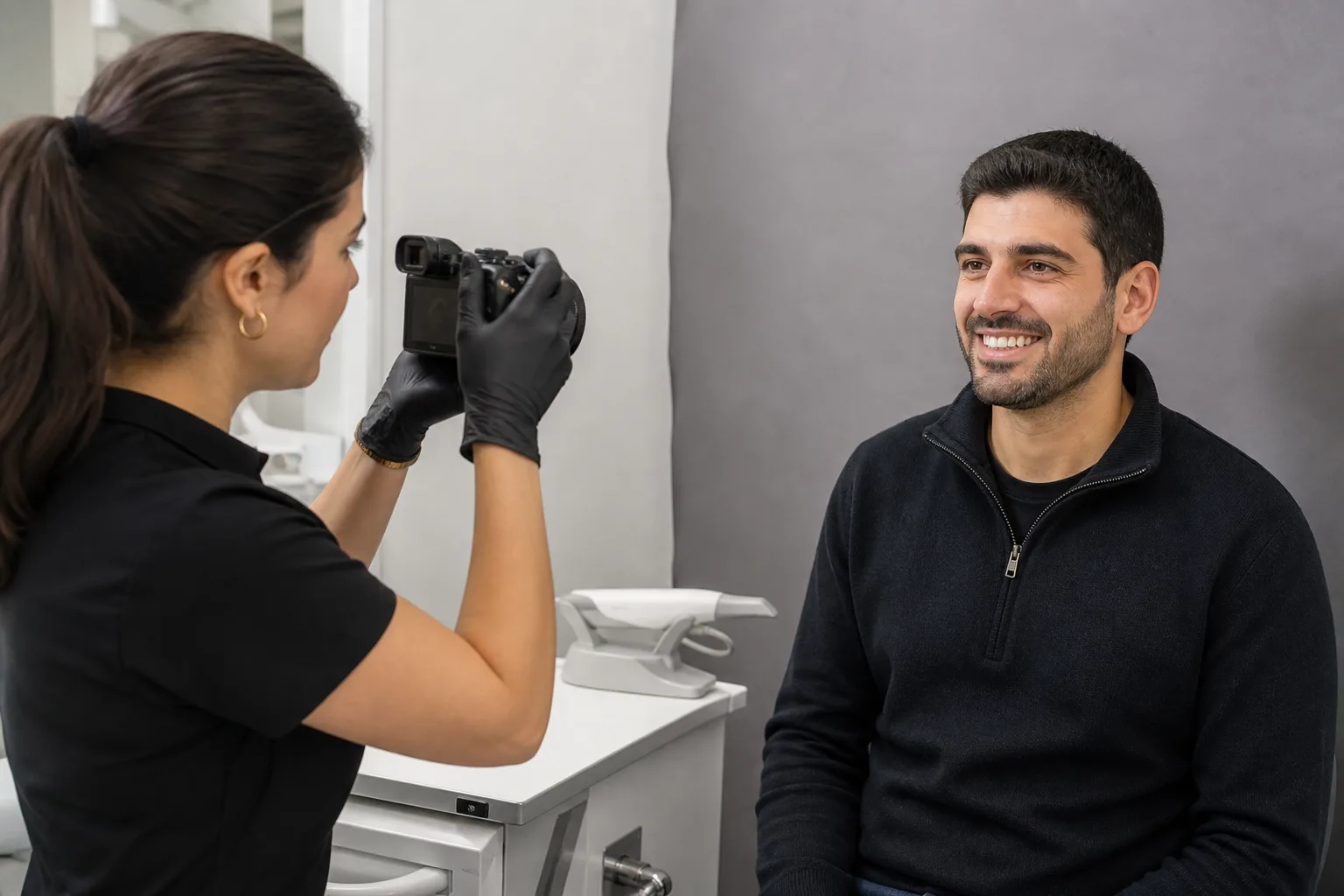
    Photo and measurement

    Relationship between face, lips and smile through photographs. The current form of the teeth is recorded with a digital or traditional impression.

  3. 03
    Design

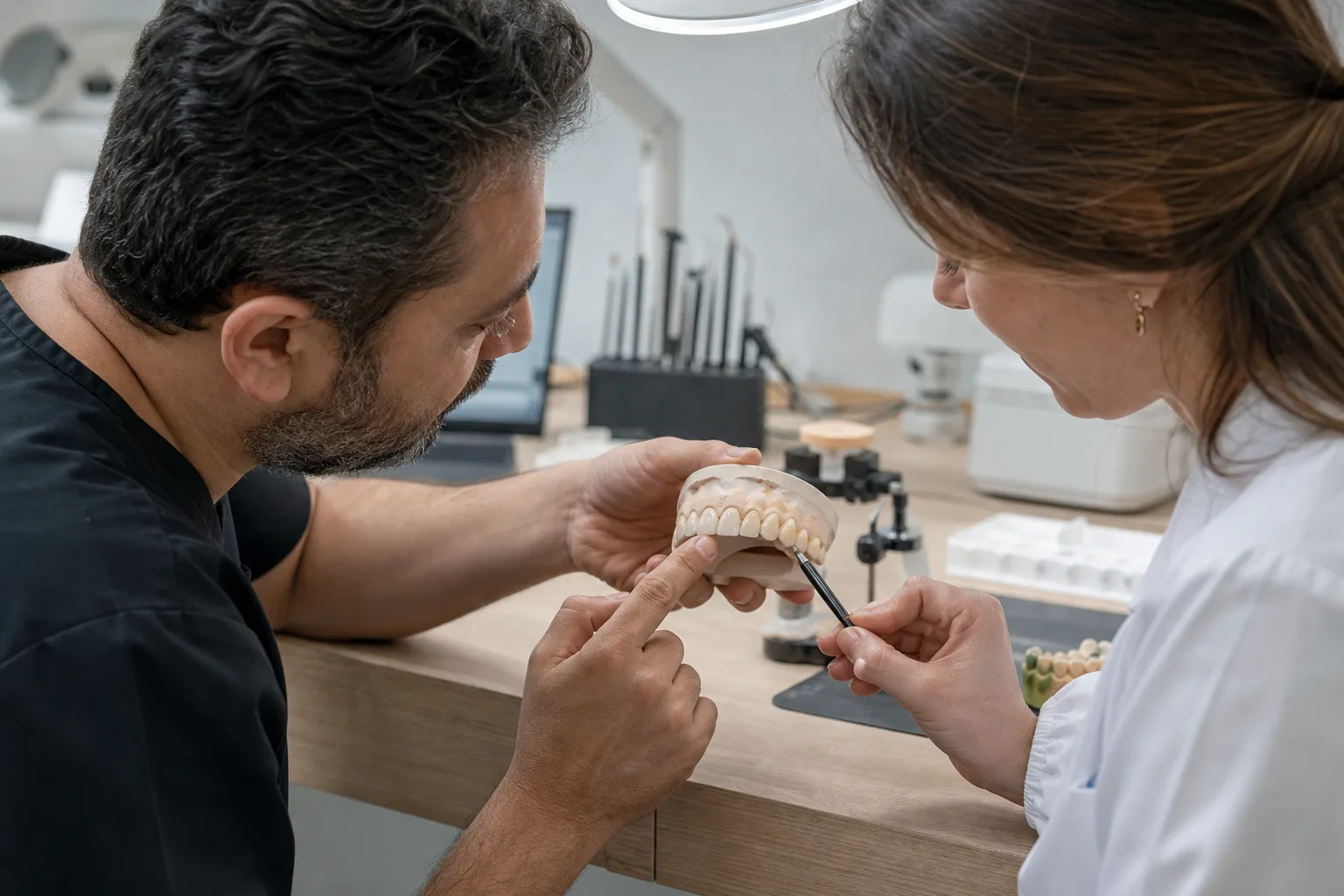
    Wax-up and mock-up

    The planned tooth form is prepared on the model; In appropriate cases, a preliminary evaluation is made in the mouth with a temporary mock-up.

  4. 04
    Clinical procedures

    Rehearsal and bonding

    After color, form, edge and bite check, porcelains are applied adhesively under appropriate isolation.

Planning details

In laminate veneer plan
five clinical details evaluated.

The amount of enamel, tooth color, planned form, ceramic thickness and bite conditions are evaluated together.

Clinical examination of the enamel surface before dental veneer
01 Preventive assessment
01 / Texture

enamel tissue

Bonding laminate veneers to enamel is important for the clinical plan. The existing enamel area and old restorations affect the amount of preparation.

The goal is to preserve as much intact enamel tissue as possible while providing sufficient space for the restoration.Assessment and planning
Preventive planning

Protecting enamel tissue,
It is possible with the right case selection.

No-prep laminate veneers can only be considered when the tooth form, position and color goal allow it. Adding ceramics when there is insufficient space may cause the teeth to appear thick and protruding or make cleaning difficult.

Our goal is not a “no-preparation” slogan, but a plan that preserves as much enamel as possible, creates the correct space for the ceramic and supports long-term cleanability.

Request a laminate evaluation

Frequently asked questions

About leaf tooth coating
frequently asked questions.

Suitability and amount of preparation are determined after clinical examination.

A porcelain laminate veneer is a thin ceramic restoration bonded to the visible surface of a front tooth. Colour, shape and surface characteristics are customised, while suitability is assessed according to available enamel and bite conditions.

Tooth form can be evaluated in eligible adults with spacing, limited discoloration, or minor positional irregularities. If there is advanced tissue loss, active gum disease, uncontrolled teeth clenching or significant bite problems, different treatments may be required first.

In some cases, progress can be made without or with very limited preparation. However, it is not correct to say "the tooth will never be cut" for every patient. Controlled preparation at the enamel level may be required to make room for restoration, regulate the borders, and prevent a swollen appearance.

A laminate veneer mostly covers the visible front surface of the tooth, while a full crown covers the tooth circumferentially. Which approach is appropriate is determined by the remaining intact tissue, existing restoration, coloration, closure and function needs.

Usage period; It depends on the correct case selection, enamel attachment area, bite, clenching, oral care and regular check-ups. It is not correct to give a single year range valid for every patient.

The fee is determined according to the number of teeth to be applied, the need for pre-treatment, the mock-up to be prepared, ceramic scope and laboratory stages. The exact plan and fee are shared after the clinical examination.