
direct restoration
composite filling
The tooth-colored material is applied in layers inside the mouth. It can be considered a conservative option in cases of limited tissue loss.
We assess the decayed or damaged area and restore form, colour and chewing function while preserving the remaining sound tooth tissue.
Filling evaluation ↗
Color selection is not the only choice. We evaluate the tooth along with its form, light transmittance and position in the mouth.
A dental filling restores the area left after decayed or damaged tissue has been removed. The aim is to re-establish the tooth’s natural form and chewing contact while preserving as much sound tissue as possible.

Two damages that appear to be the same size may not be resolved with the same restoration when they are in different parts of the tooth.
We review the tooth’s history of pain and sensitivity, then assess its surfaces, neighbouring teeth and bite contacts. Radiographs are used when necessary.
The depth of the decay, the strength of the remaining walls and the chewing load of the tooth; It determines whether a direct composite filling or a different restoration will be planned.
Not every dark area is decay, and not every sensitivity means that a filling is required.Diagnosis. It is determined by evaluating the complaint, clinical examination and necessary imaging findings together.
A composite filling should look natural, bond securely to the tooth, remain easy to clean and function in balance with the bite.

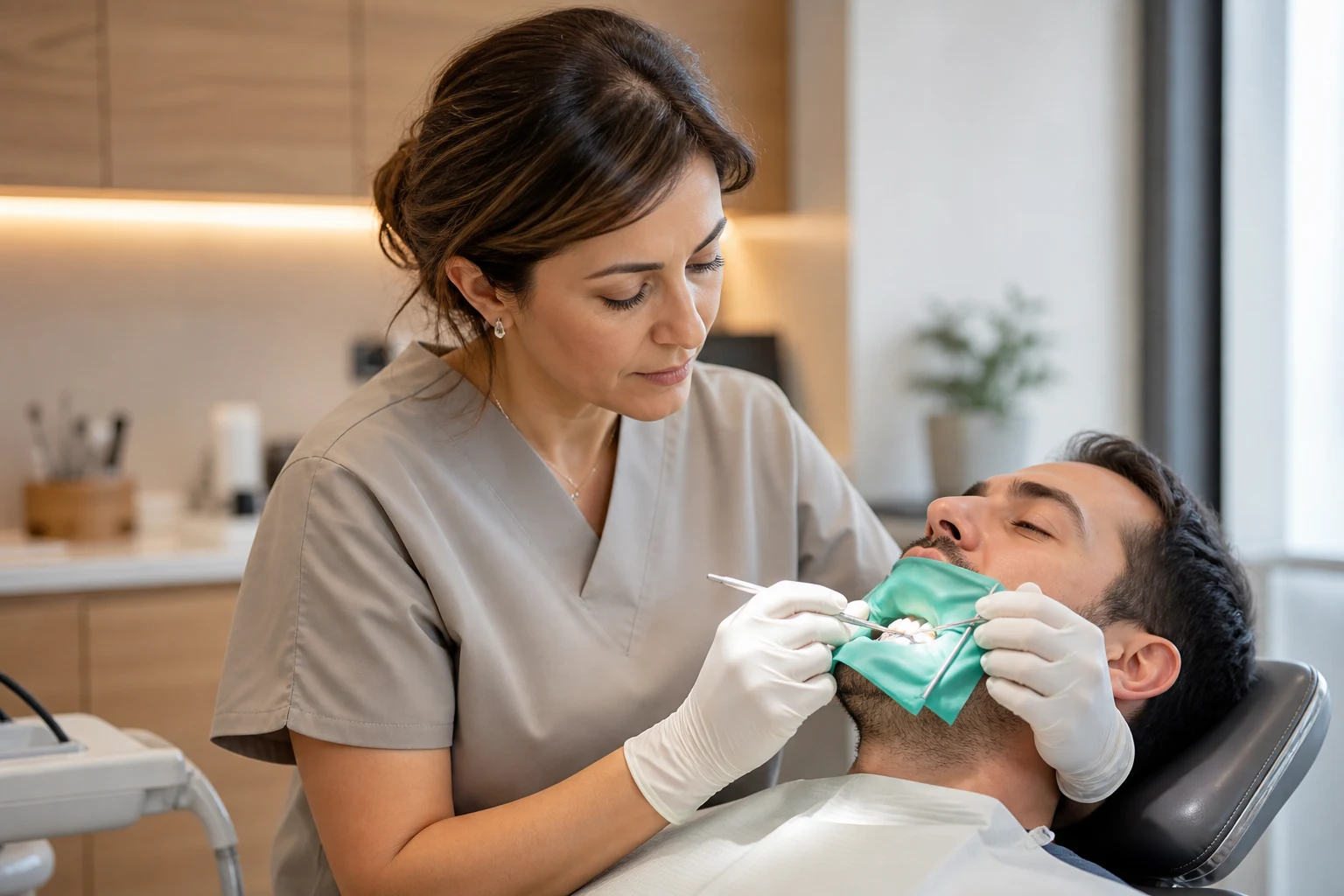
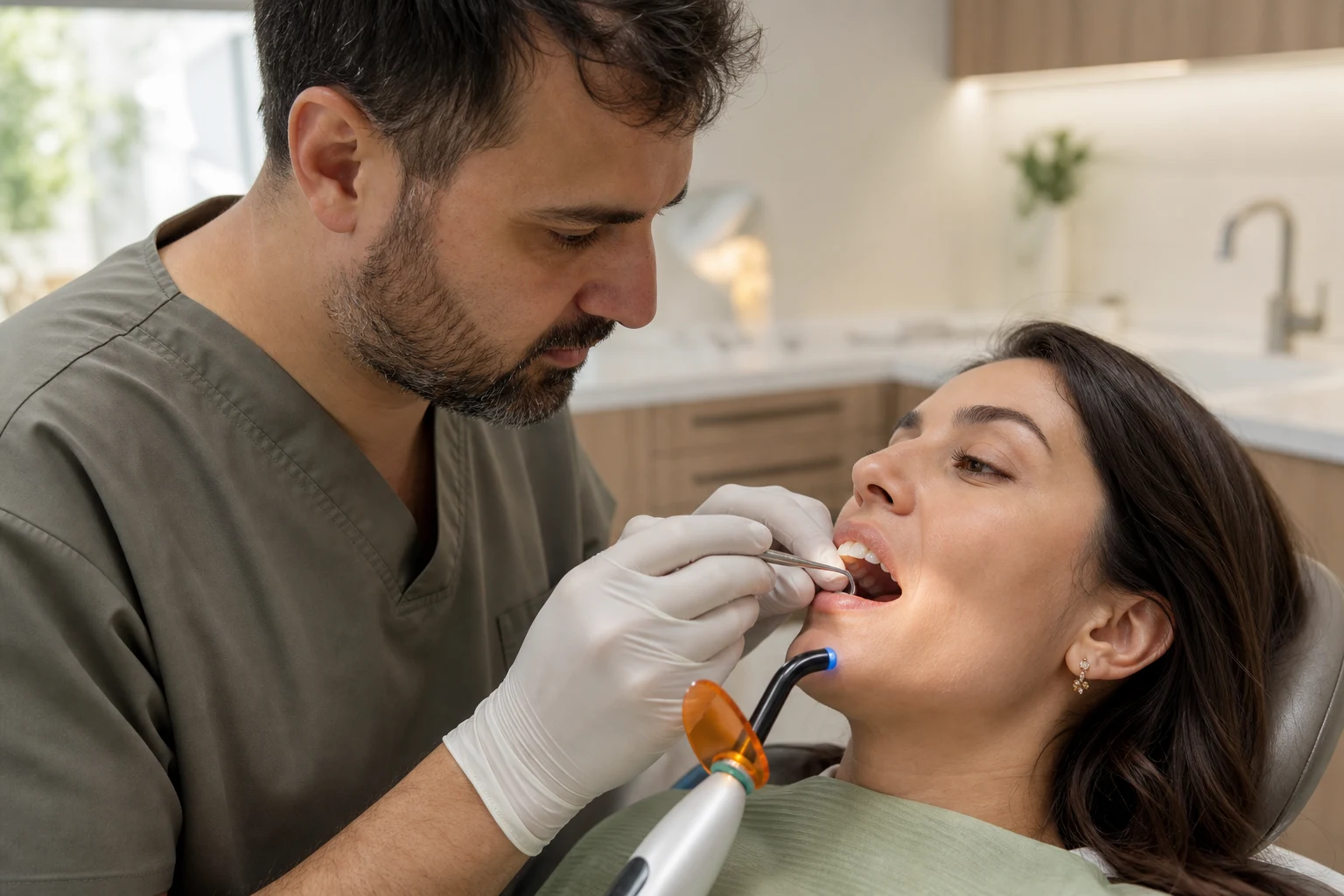

We evaluate the extent of the decay or fracture, old restorations and proximity to nerve tissue with clinical findings.
It removes damaged tissue in a controlled manner. We provide insulation that will keep the area where the composite will be bonded clean and dry.
It applies the material adapted to the tooth color in controlled layers. We create grooves, contact points and natural surface form.
We finish the edges of the restoration, polish the surface and check for premature contact during mastication.
Composite fillings applied inside the mouth can be evaluated for small and medium-sized tissue losses. For larger losses, indirect restorations prepared by laboratory or digital production may be more appropriate.

The tooth-colored material is applied in layers inside the mouth. It can be considered a conservative option in cases of limited tissue loss.
In case of more extensive tissue loss, restorations prepared outside the mouth can be planned to support the remaining walls of the tooth and the chewing surface.
In small fracture, shape or gap arrangements, color, surface texture and light transmittance are shaped according to the front area.
Not every old filling is replaced simply because of its age. Marginal harmony, fracture, secondary caries and clinical complaint are evaluated together.
Frequently asked questions
Filling requirement, suitable material and scope of process. It is determined after evaluating the depth of the decay and the remaining healthy tooth tissue.
Dental filling; It can be used in the repair of small cavities caused by caries, limited fractures and abrasions, or old restorations with impaired edge harmony. The appropriate procedure is determined after examining the remaining intact tooth tissue and clinical findings.
Composite filling is a resin-based restorative material that can be adapted to tooth color. Can be used on front or back teeth; After the procedure area is kept dry and clean, it is bonded to the tooth, shaped, hardened and polished.
No. The depth of the decay, the proximity of the tooth to the nerve tissue, the amount of remaining healthy tissue and the presence of a crack affect the choice of treatment. In case of larger material losses, different options such as root canal treatment, inlay-onlay or crown may be required.
Local anesthesia may be applied depending on the extent of the procedure and the sensitivity of the tooth. The aim is to carry out the treatment in a controlled and comfortable manner. The dentist should be informed if there is unexpected pain during or after the procedure.
Temporary sensitivity may occur during hot, cold or chewing, especially after deep restorations. If the complaint increases, lasts for a long time, or turns into pain on its own, clinical review is required.
There is no single lifespan that applies to every filling. Durability is influenced by restoration size, tooth position, clenching, oral hygiene and regular reviews; filling margins should be checked during routine examinations.