
Impacted dental surgery
Wisdom and impacted teeth
Follow-up or surgical planning is made by evaluating the eruption status, root structure and relationship with adjacent anatomical formations.
It evaluates the position of the tooth and surrounding tissues. We plan the necessary intervention together with anatomical structures, medical history and recovery process.
Surgical evaluation ↗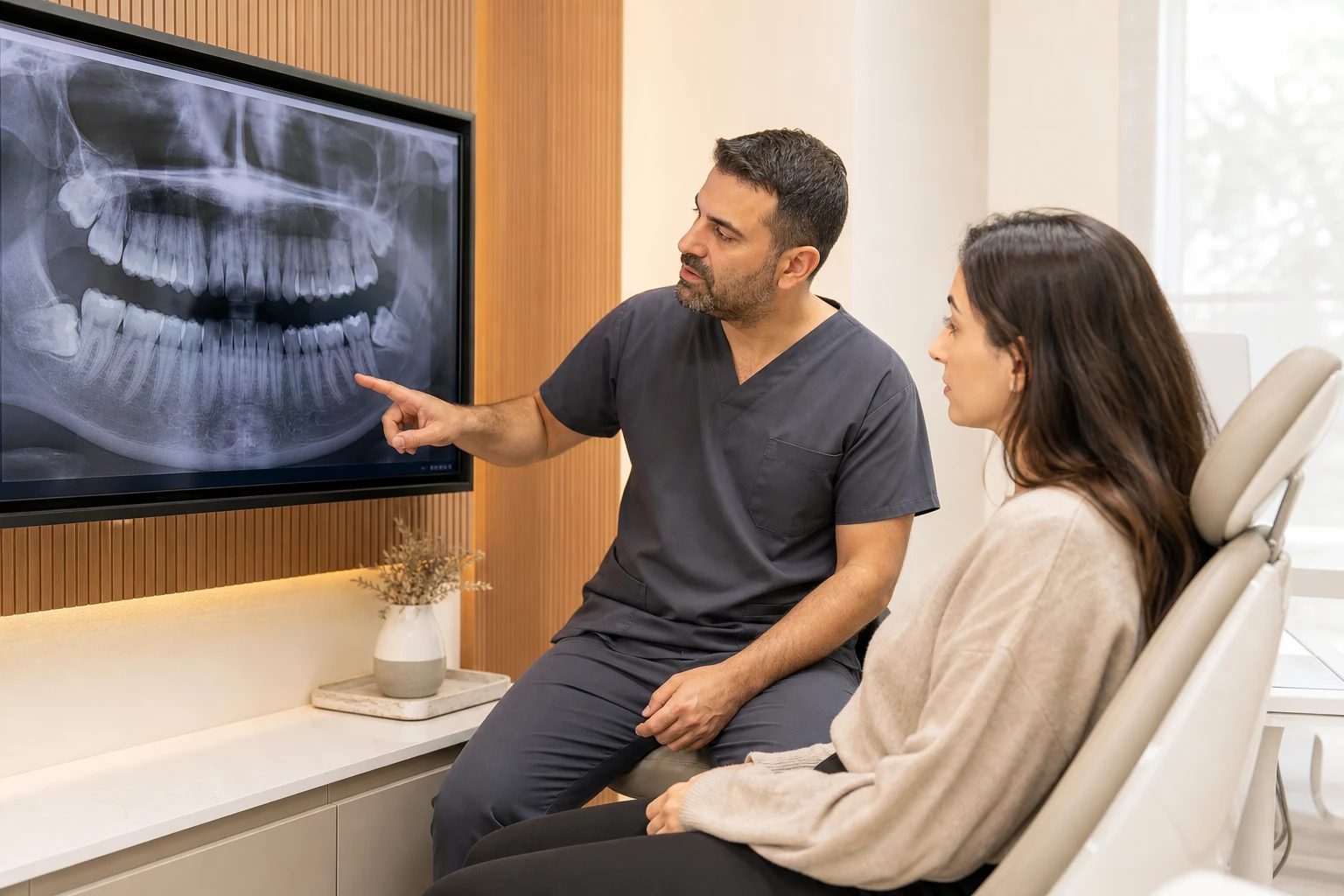
We evaluate tooth roots, adjacent teeth and important anatomical structures on the same plan.
Oral surgery covers procedures involving the teeth, jawbone and surrounding soft tissues. Each case is planned individually by considering the clinical findings together with the necessary imaging.
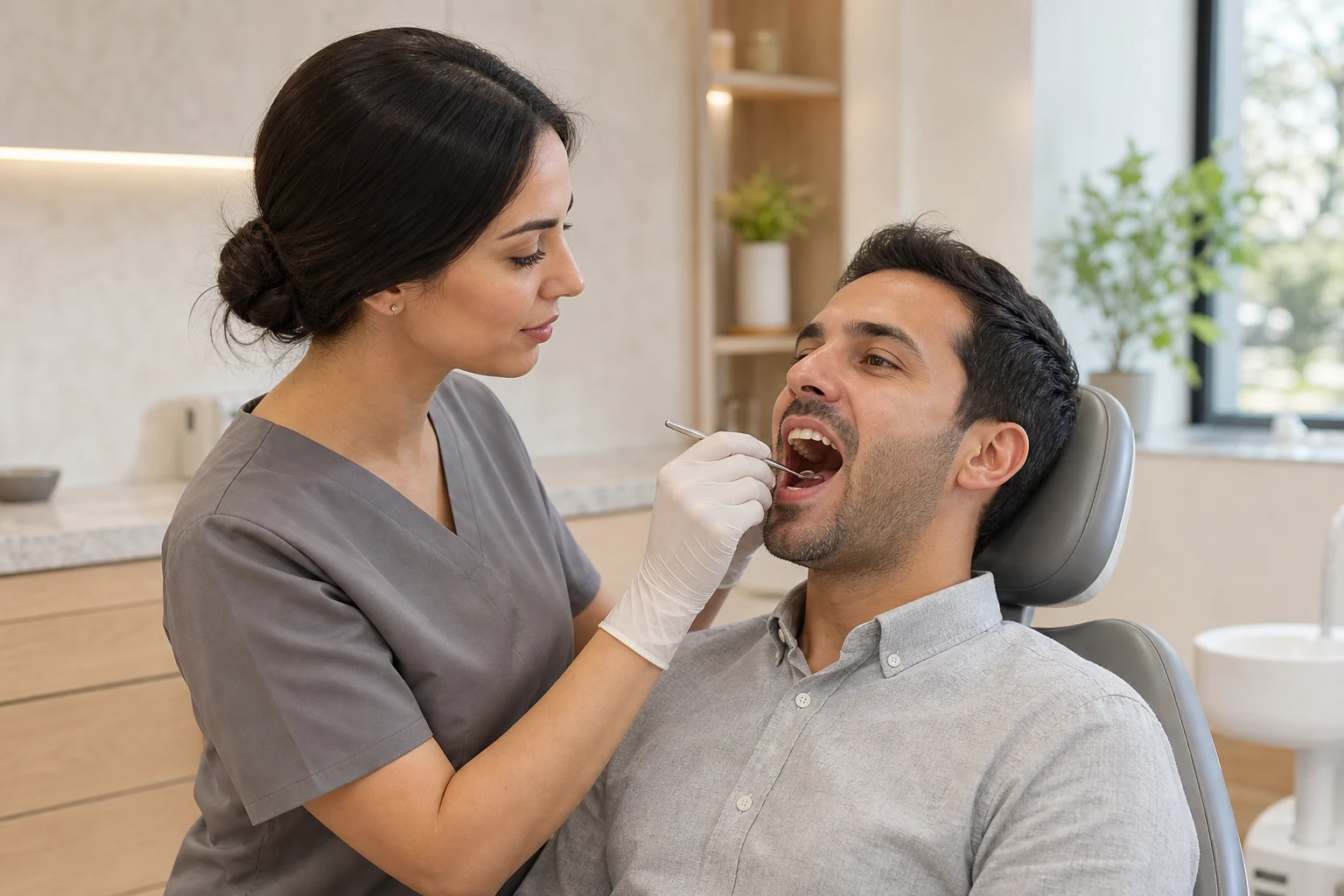
The surgical difficulty of two teeth that appear similar on radiograph may vary depending on the root structure and its relationship with adjacent anatomical formations.
We listen to when the complaint started, treatments received, medications used, and health conditions that may affect recovery. Then, we combine the intraoral findings with panoramic or three-dimensional imaging when necessary.
If surgery is not required, follow-up or a different treatment option. If necessary, we clearly share the scope of the procedure, anesthesia approach and review plan.
Not every impacted tooth requires surgery.Complaint, risk of infection and caries, its effect on the adjacent tooth and anatomical location are evaluated together.
The surgical plan includes not only the day of the procedure; It also covers health history, need for imaging, sterile preparation, and post-procedure check-up.

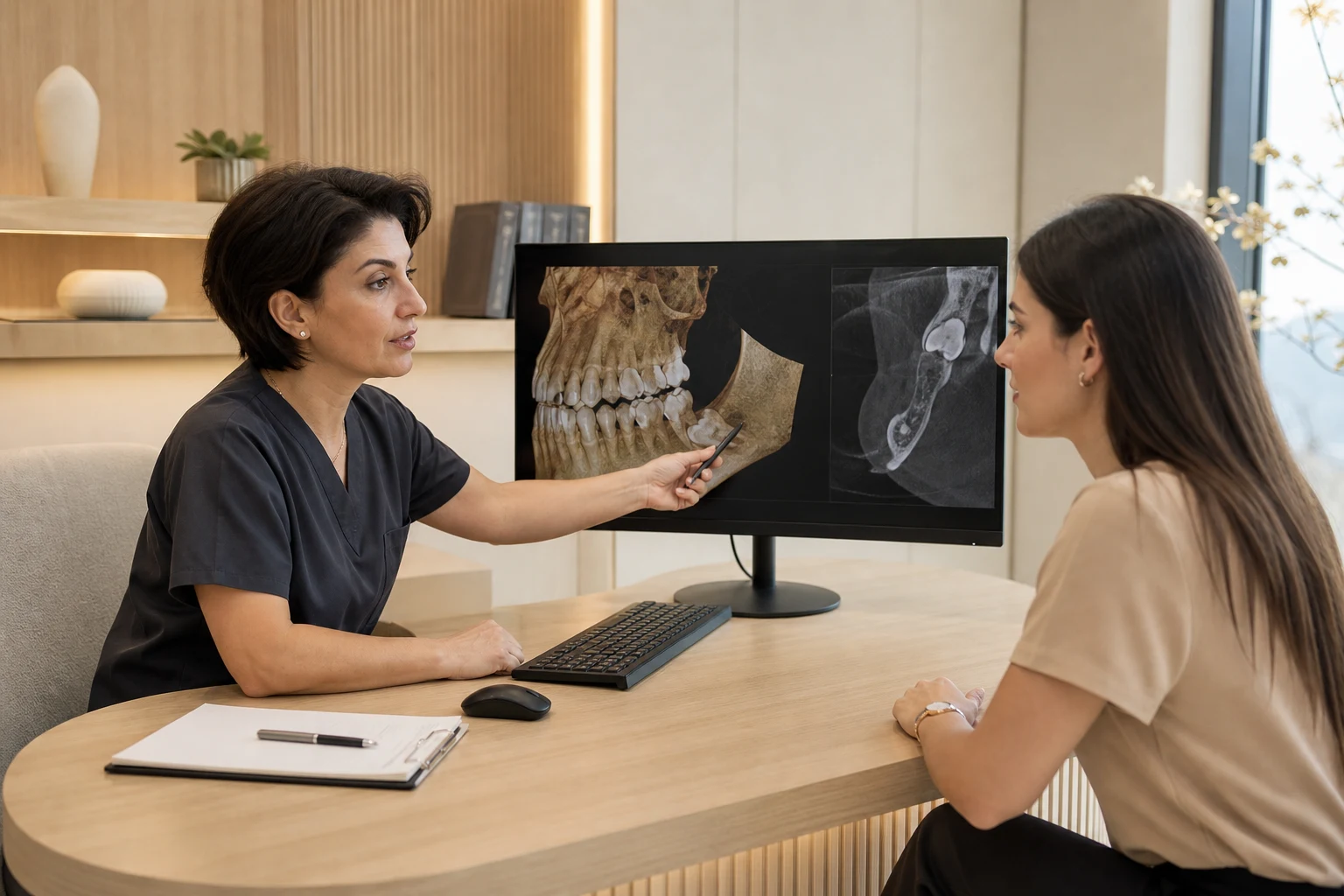
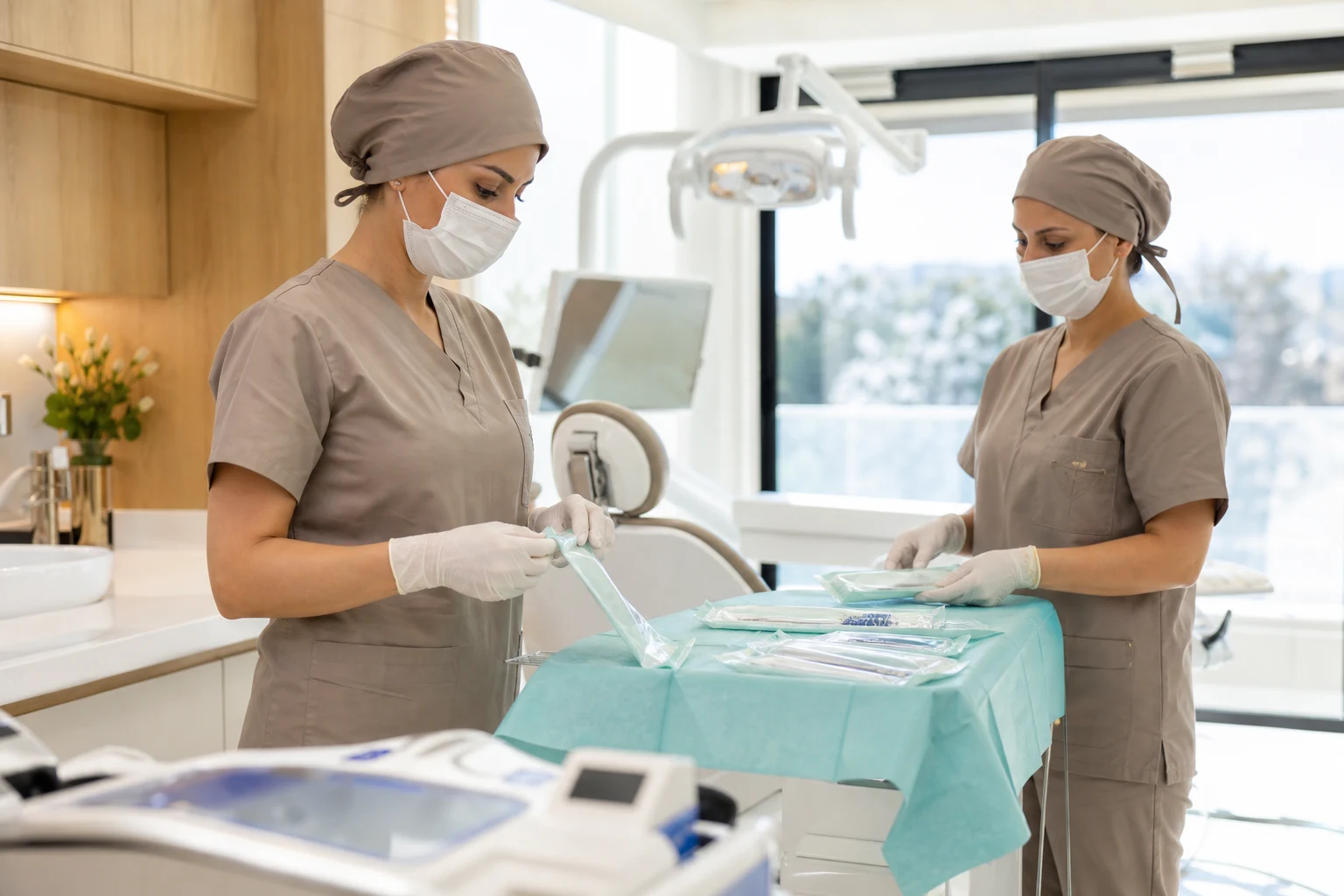

We record the patient’s symptoms, medications and health conditions that may affect healing, then complete the intraoral examination.
We evaluate the relationship of the roots with the nerve canal, sinus, bone and neighboring teeth through the necessary imaging.
We prepare the procedure area, apply appropriate anesthesia, and carry out the surgical steps according to the predetermined plan.
Explains procedure-specific care recommendations. We evaluate tissue healing and the course of complaints when deemed necessary.
The method to be applied. It is determined not only by the name of the procedure, but also by taking into account the location of the relevant tooth, surrounding tissues and the general health condition of the patient.
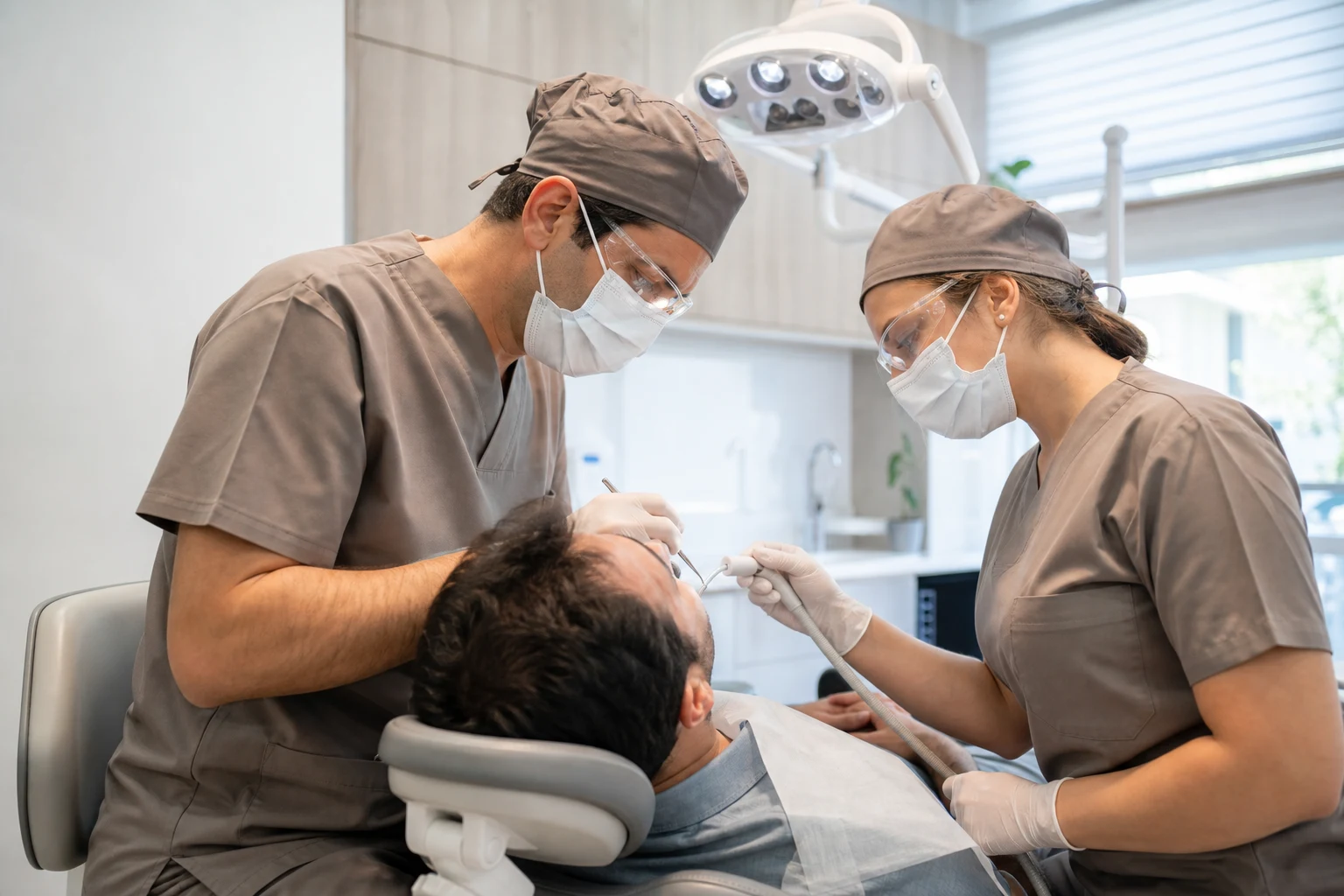
Follow-up or surgical planning is made by evaluating the eruption status, root structure and relationship with adjacent anatomical formations.
For teeth or roots that cannot be removed with normal extraction, a surgical approach that aims to protect the surrounding tissue is determined.
Formations detected during imaging or examination are examined in detail; When necessary, surgical sampling and pathological evaluation are planned.
The surgical stage is planned by evaluating the bone volume in the missing tooth area, anatomical boundaries and the prosthetic target.
Frequently asked questions
Scope of the procedure, anesthesia approach and recovery plan. It is determined individually after examination, imaging and medical history.
Surgical dental treatments; It may include teeth that cannot be removed by normal extraction, impacted or semi-buried wisdom teeth, root residues, evaluation of cyst-like formations in the mouth, implant surgery and necessary bone or soft tissue procedures. The appropriate procedure is determined after examination and imaging.
No. An extraction decision is not automatically made for every impacted wisdom tooth that does not cause a complaint. Pain, recurrent infection, caries, its effect on the adjacent tooth, cyst suspicion and the anatomical location of the tooth are evaluated together. The appropriate option of follow-up or surgery is planned.
It is not required for every patient. Cone-beam computed tomography may be requested when a panoramic radiograph does not show the relationship between the roots, nerve canal, sinus or neighbouring structures in sufficient detail. The dentist determines whether additional imaging is needed.
The procedure area is usually anesthetized with local anesthesia. Pressure may be felt during the procedure, but sharp pain is not expected. If discomfort occurs, the dentist should be notified. The anesthesia to be applied and the scope of the procedure are planned taking into account personal health status.
Depending on the extent of the procedure, pain, swelling, bruising or temporary limitation in opening the mouth may occur. The expected course and personalized care recommendations are explained after the procedure. The clinic should be contacted when there is increasing swelling, persistent bleeding, fever or increasingly severe pain.
Antibiotics are not routinely required after every surgical procedure. Decision. It is given by the dentist by evaluating the signs of infection, the scope of the procedure and the medical condition of the patient. Antibiotics should not be started or current treatment should not be changed without a dentist's recommendation.