
deep bruise
Tissue loss approaching the pulp
In cases where the decay has progressed into the living tissue of the tooth, the healing capacity of the pulp is evaluated in detail.
Root canal treatment is not only about relieving pain; the pulp, root anatomy and final restoration are planned together.
Endodontic evaluation ↗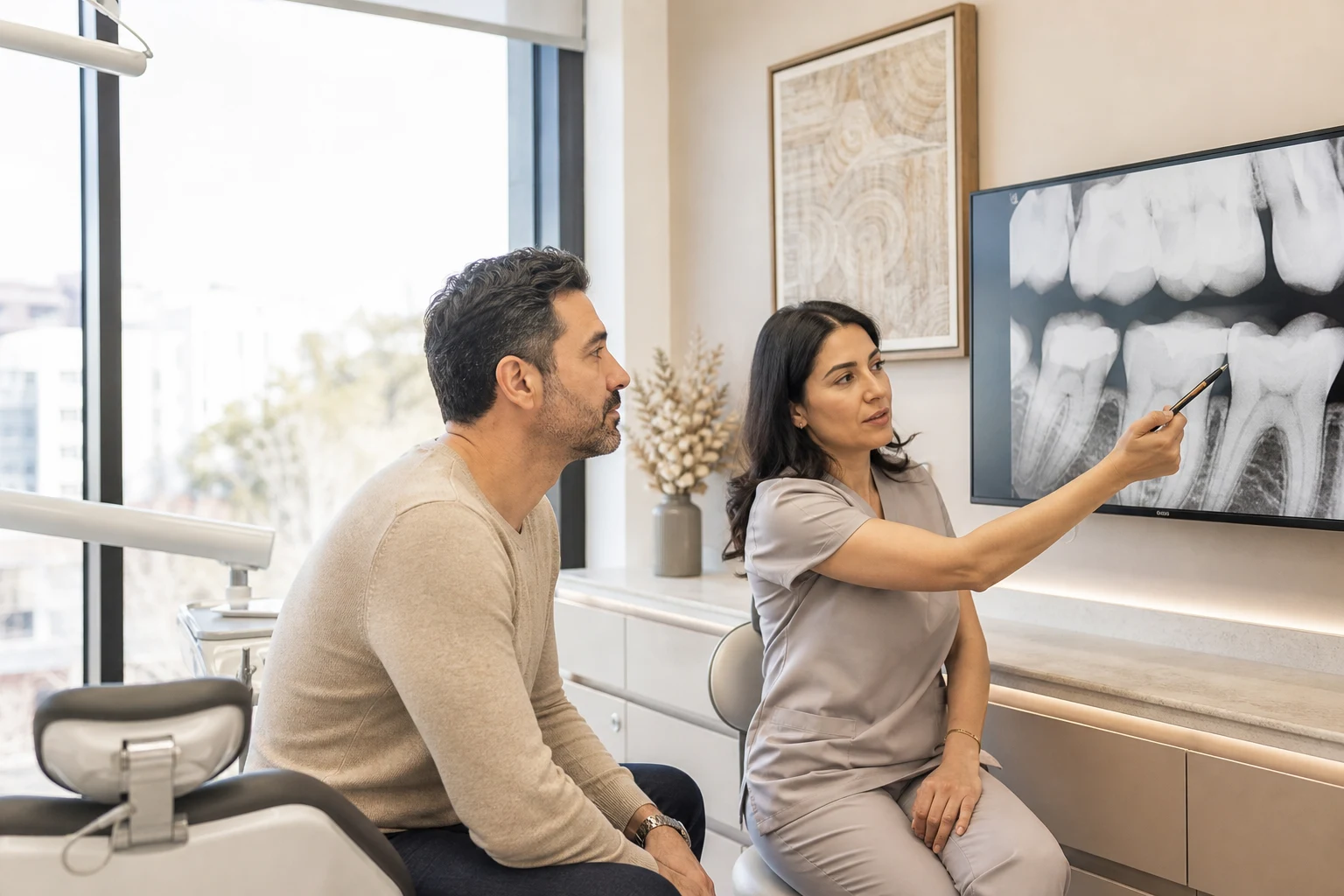
We listen to the symptoms and bring together the clinical examination and imaging findings in the same evaluation.
The pulp tissue in the center of the tooth can be damaged due to deep caries, cracks, fractures or trauma. Root canal treatment aims to keep the tooth in the mouth by removing the source of infection in appropriate cases.
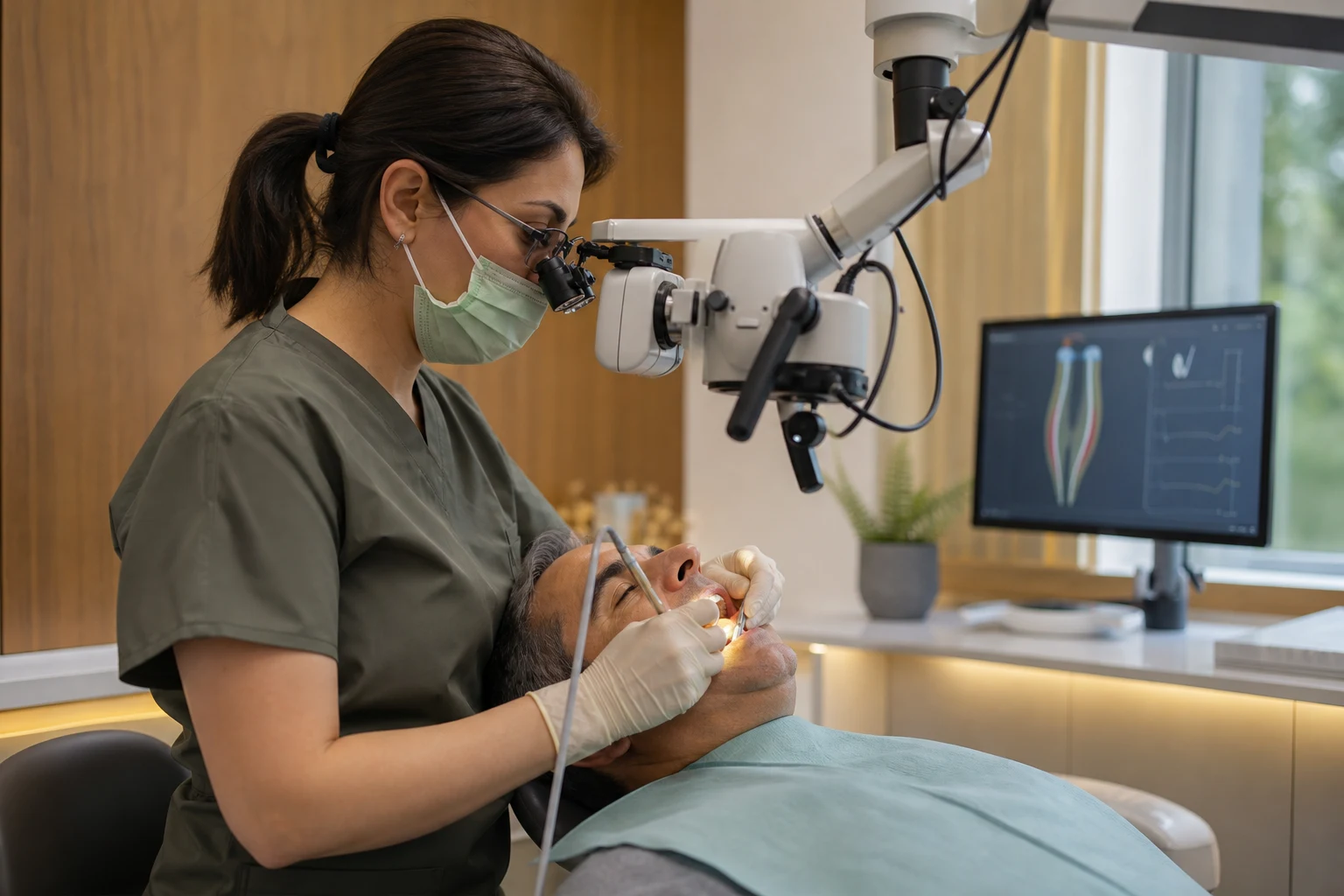
The location of the pain may not always indicate its source. For this reason, we look at the whole response of the tooth, not a single symptom.
During the examination, we evaluate tooth decay and tissue loss, hot-cold response, chewing sensitivity, surrounding gums and radiographic findings together.
If treatment is necessary, inflamed or infected pulp tissue is removed. The root canals are cleaned, shaped and aimed to be filled in a leak-tight manner.
Not every toothache means root canal treatment.Appropriate treatment decision. It is given after clinical examination, necessary tests and imaging.
Root anatomy and the amount of remaining sound tooth tissue differ from one patient to another. Although the main treatment stages are similar, the detailed plan is individual.
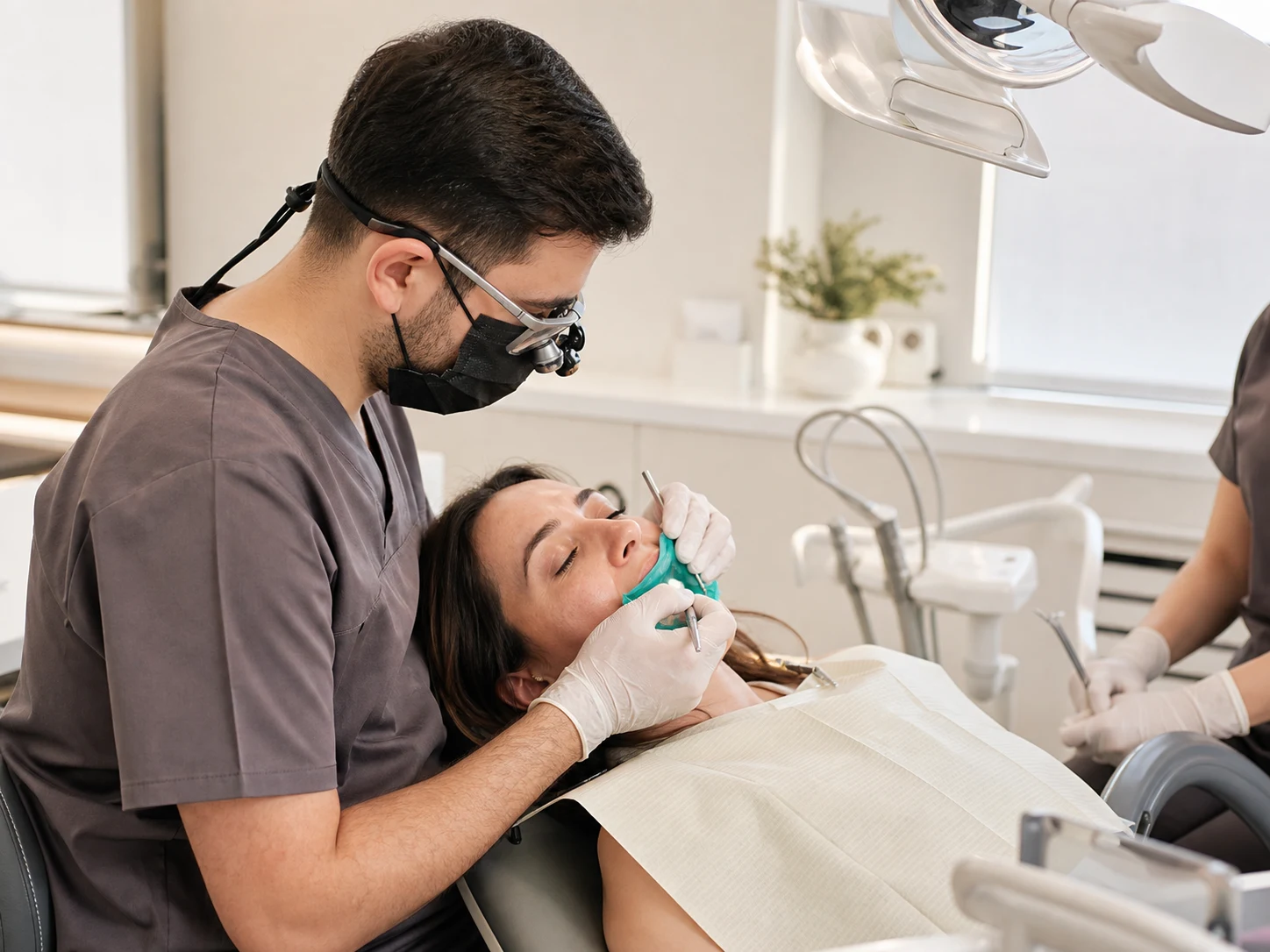
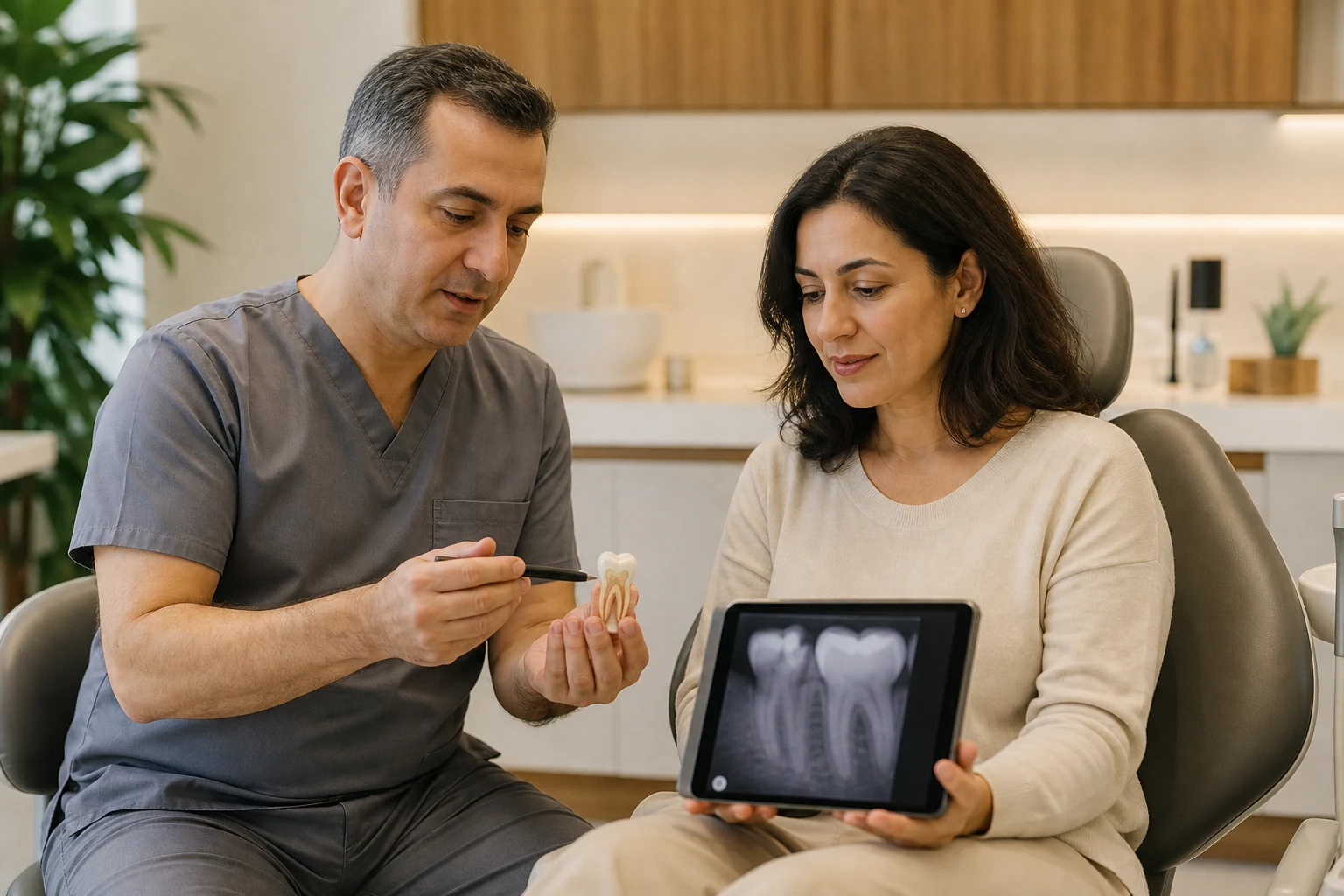
We discuss the symptoms and use clinical tests and any necessary radiographs to identify the tooth responsible.
After local anesthesia, we isolate the tooth and prepare a controlled treatment area separated from saliva.
It removes inflamed or infected tissue. We clean and shape the root canals in accordance with the filling.
It fills the prepared channels. We plan the option of filling, onlay or crown depending on the remaining tooth tissue.
Similar complaints may be caused by different dental problems. The decision for root canal treatment is made based on the duration and severity of the symptoms, as well as the vitality of the tooth and surrounding tissue findings.
In cases where the decay has progressed into the living tissue of the tooth, the healing capacity of the pulp is evaluated in detail.
Whether the pulp tissue is affected after an impact, crack or fracture is examined through clinical tests and imaging.
Sensitivity that persists after the stimulus is removed or pain that begins spontaneously is investigated for the pulp.
Swelling around the gums, sensitivity, or root tip changes seen on radiography are evaluated together.
Frequently asked questions
The canal structure of the tooth, infection status and restoration need vary from person to person. The exact treatment plan is determined after the examination.
Root canal treatment. It is the process of removing inflamed or infected dental pulp, cleaning and shaping the root canals, and bite them with a suitable canal filling material. The aim is to keep the natural tooth in the mouth in appropriate cases.
The procedure is mostly performed under local anesthesia. Contrary to severe pain before the treatment, the aim is to maintain comfort during the procedure. Short-term sensitivity may occur after treatment; In case of increasing or ongoing complaints, the dentist should be informed.
Number of sessions; It may vary depending on the canal anatomy of the tooth, the status of the infection, previous procedures and the need for restoration of the tooth. The final plan is shared after clinical and radiographic evaluation.
The same restorative decision is not appropriate for every tooth. For posterior teeth with substantial tissue loss, an onlay, overlay or crown may be considered to reduce fracture risk and support chewing function.
How long the tooth remains functional depends on factors including the amount of sound tissue, the seal of the final restoration, oral hygiene and regular reviews. The restoration and follow-up after root canal treatment are therefore just as important as the canal procedure itself.
If there is a problem that does not heal or develops later in a tooth that has previously had root canal treatment, re-canal treatment may be considered. The appropriate option is selected after examining the restoration of the tooth, canal structure and surrounding tissues.