

Prosthetic Dental Treatments,
It completes the function of missing or damaged teeth.

It evaluates the remaining teeth, oral tissues and bite together. We plan crown, bridge, removable prosthesis and implant options according to personal needs.

Prosthetic evaluation
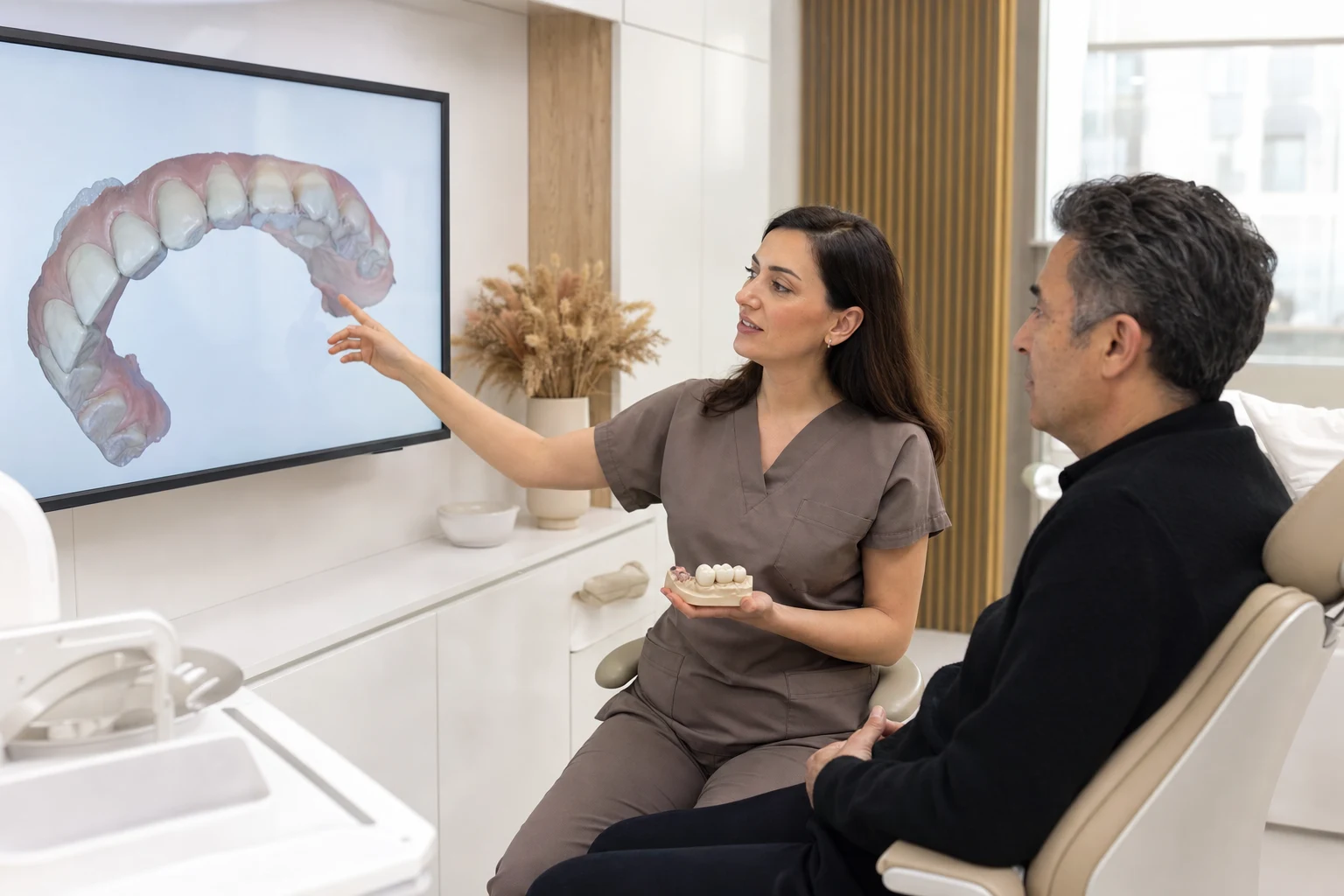
Dentist explaining prosthetic treatment plan through digital tooth model
Function and appearance together

The form of restoration should not only be determined by the gap. We design it according to your smile, chewing pattern and relationship with opposing teeth.

Prosthetic dental treatment

Crowns, bridges and prostheses
In what cases is it planned?

Prosthetic treatment; It involves replacing missing teeth or teeth with advanced tissue loss with fixed or removable restorations. The type of solution is determined after examining the supporting tissues in the mouth and personal usage conditions.

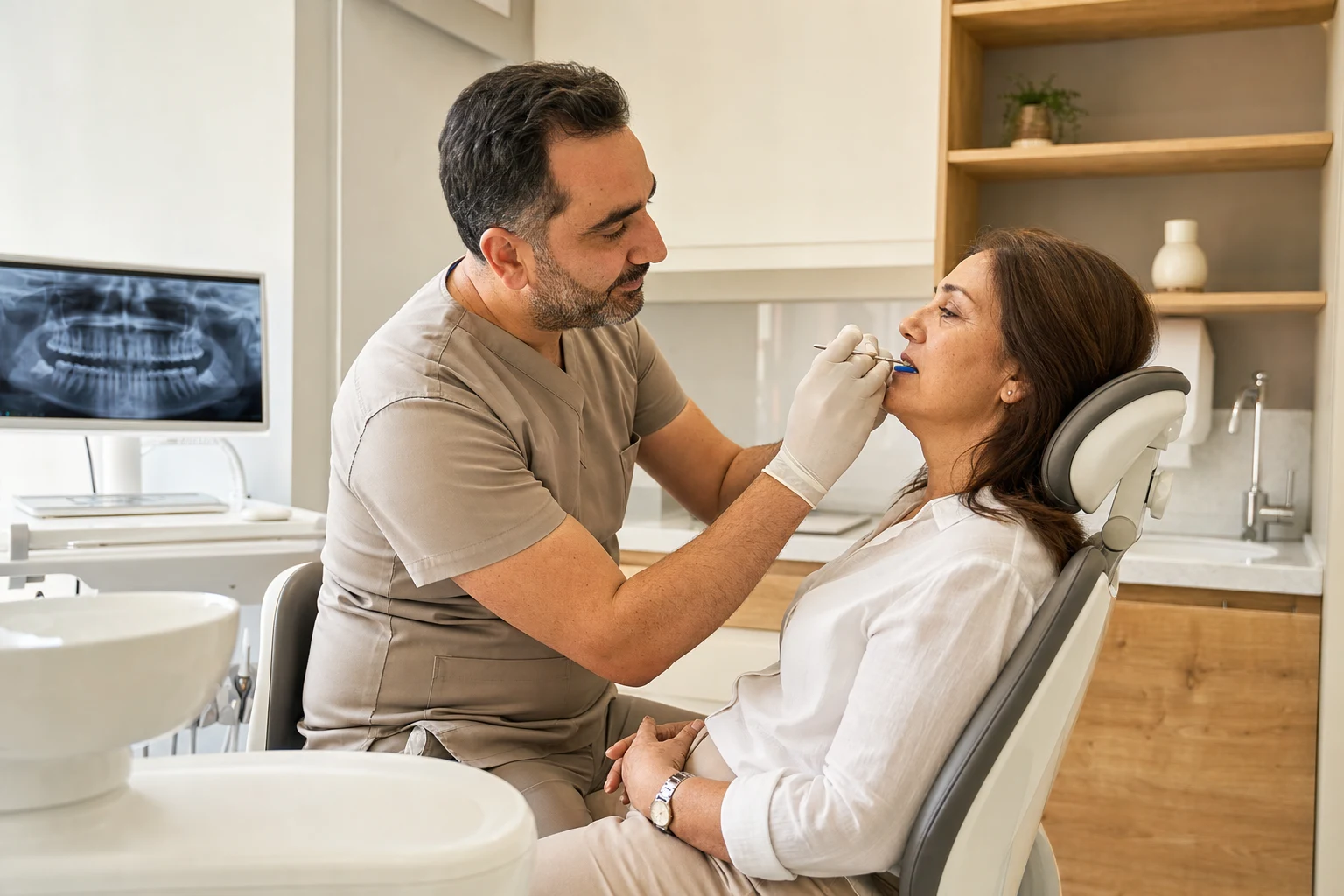
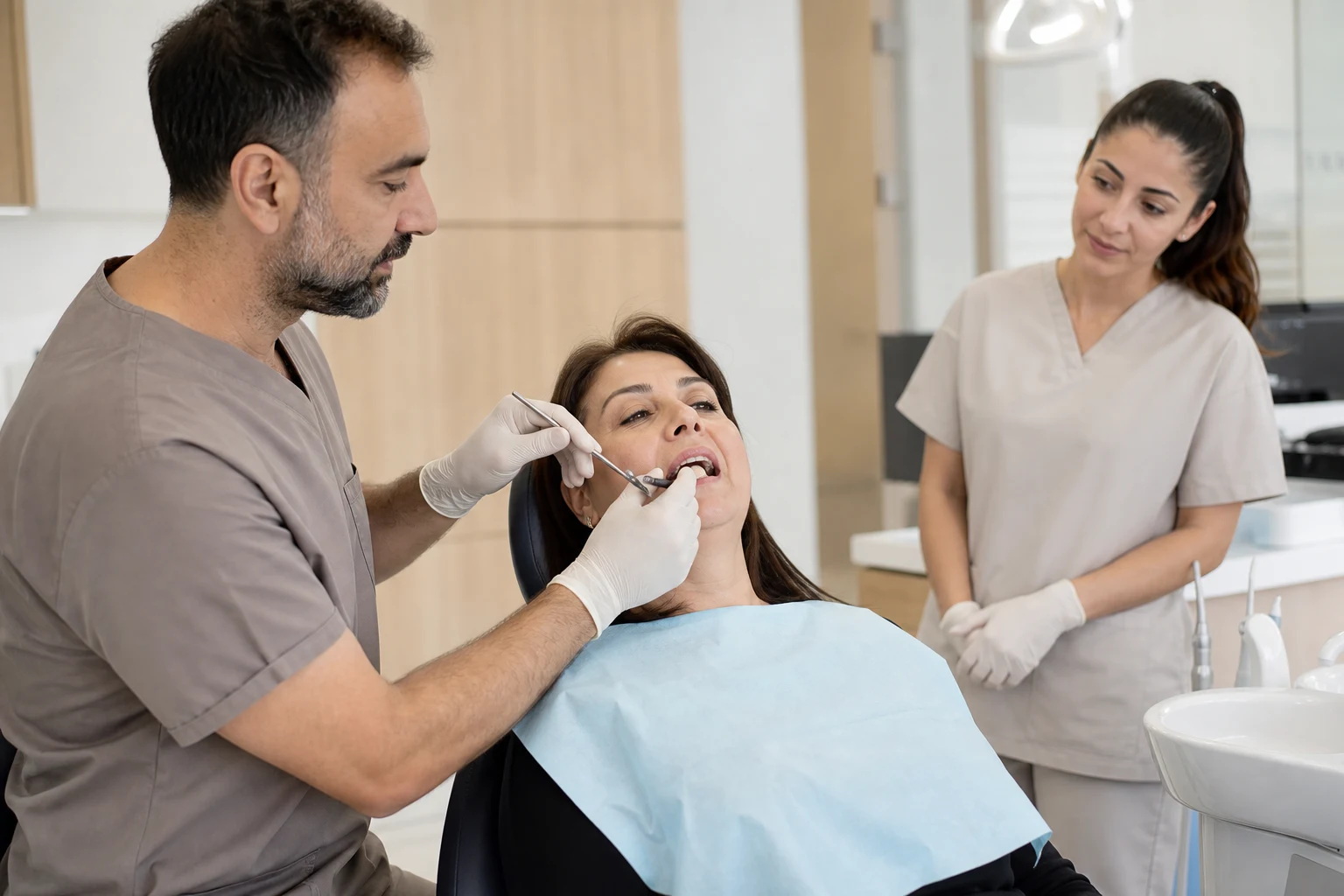
Dentist checking bite contacts with articulation paper
The bite relationship includes not only the appearance of the restoration; It also affects chewing comfort and load distribution.

The same number of missing teeth does not require the same prosthetic option for every patient.

The strength of the remaining teeth, gums, bone support, location of the missing area and contacts in the opposite jaw are evaluated with clinical and radiographic records.

Speech, chewing, aesthetic expectations, daily cleaning and prosthesis use conditions are also part of the plan. Suitable options; shared along with its benefits, limitations, and maintenance requirements.

Planning begins before restoration.If the supporting teeth and oral tissues are not healthy, the necessary treatments can be planned before the prosthetic stage.

01
Support tissuesRemaining teeth, gum and bone condition
02
missing spacePosition, length and adjacent teeth
03
biteChewing direction and opposing contacts
04
Personal treatment stagesCleanliness, harmony and personal expectation
From size to delivery

Prosthetic treatment process
It includes measurement, rehearsal and fit checks.

Prosthetic restoration is a gradual process in which clinical records and laboratory production go together. Fit, color, form and closure are re-evaluated at each check-up.

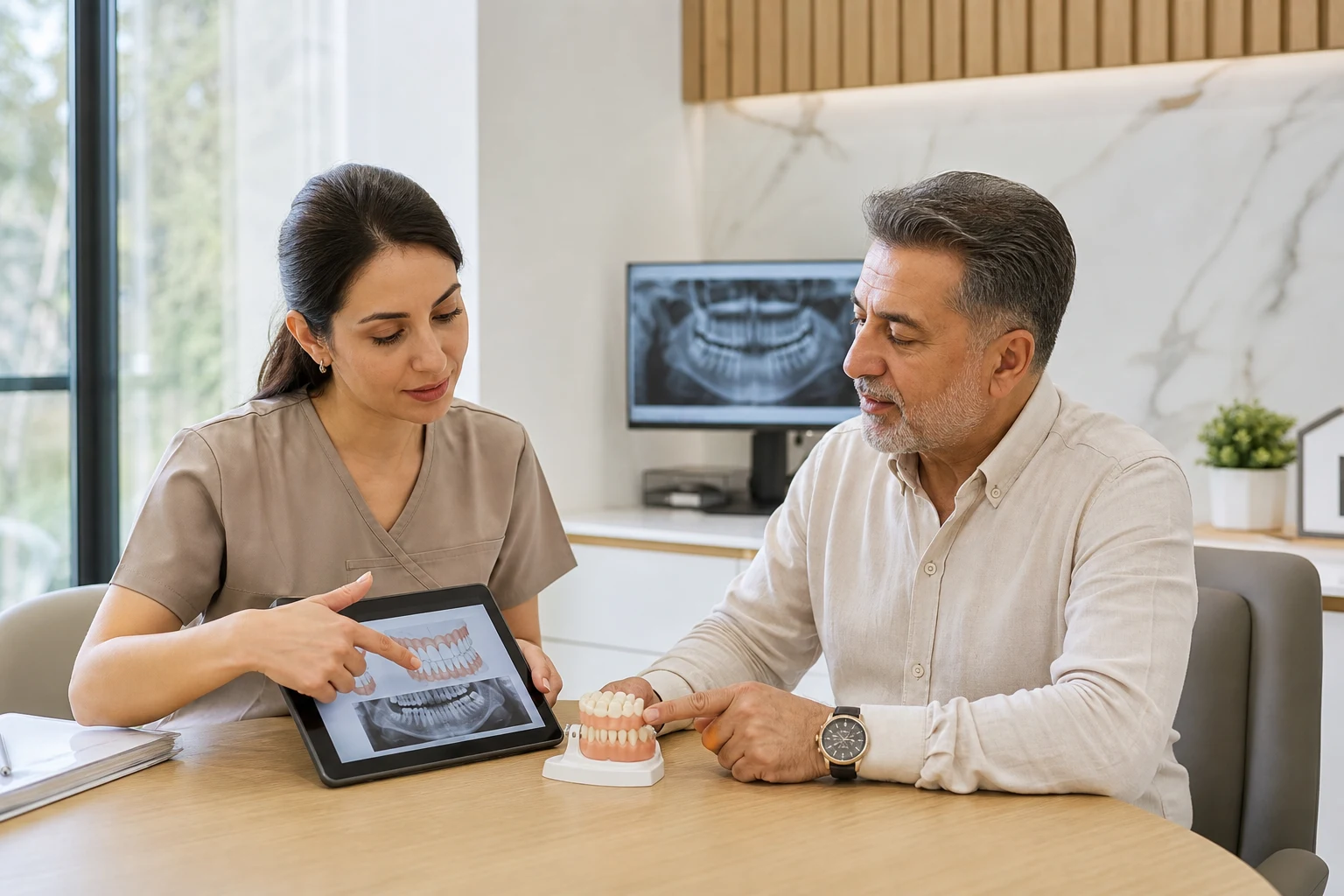
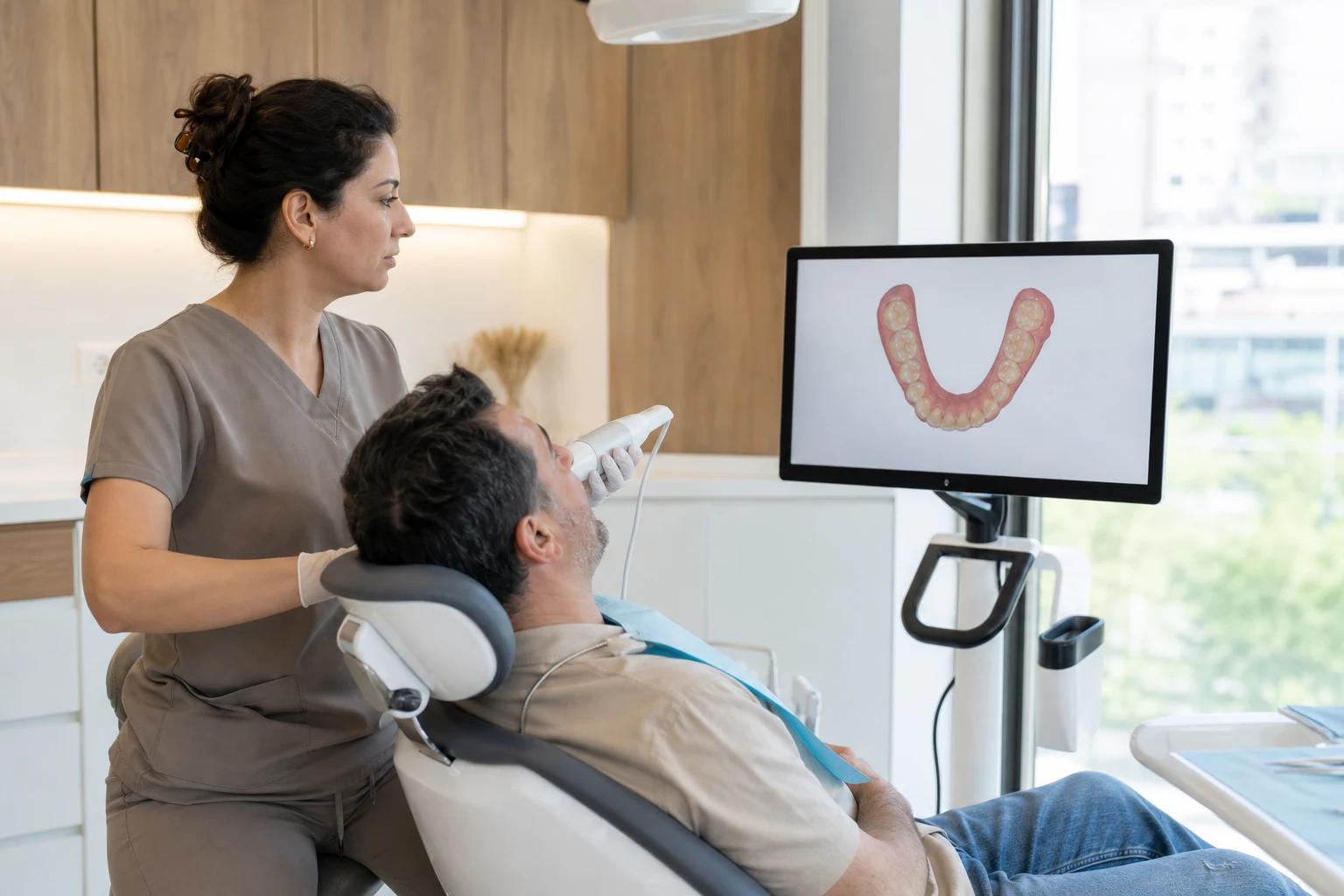
Dentist explaining prosthetic options on a tooth model Dentist creating a digital impression record with an intraoral scanner Dentist determining the restoration color with a color scale Clinical team checking restoration fit and closure during the fitting phase
01 / EvaluationNeeds and options
We clarify at the same table.
01 — 04
  1. 01
    Inspection and planning

    Evaluation of supports

    It examines the missing or damaged area, remaining teeth, oral tissues and bite. We compare applicable options.

  2. 02
    Measurement and digital scanning

    Recording of mouth structure

    Depending on the planned restoration, traditional impressions or intraoral scans are taken. We create the relationship between the jaws and the necessary clinical records.

  3. 03
    Aesthetics and materials

    Color and form planning

    The color, form and suitable material of the restoration are determined by evaluating the position of the tooth, visible area, opposing forces and neighboring teeth.

  4. 04
    Clinical checks

    Fit review and delivery

    Edge fit, contacts, aesthetics and closure are checked. After the necessary arrangements, the restoration is delivered and the maintenance plan is explained.

Treatment options

Fixed and removable options
prosthetic options.

Options do not have to be direct alternatives to each other. A single method or a combination of methods can be planned by evaluating the number of missing teeth, supporting tissues and personal use conditions.

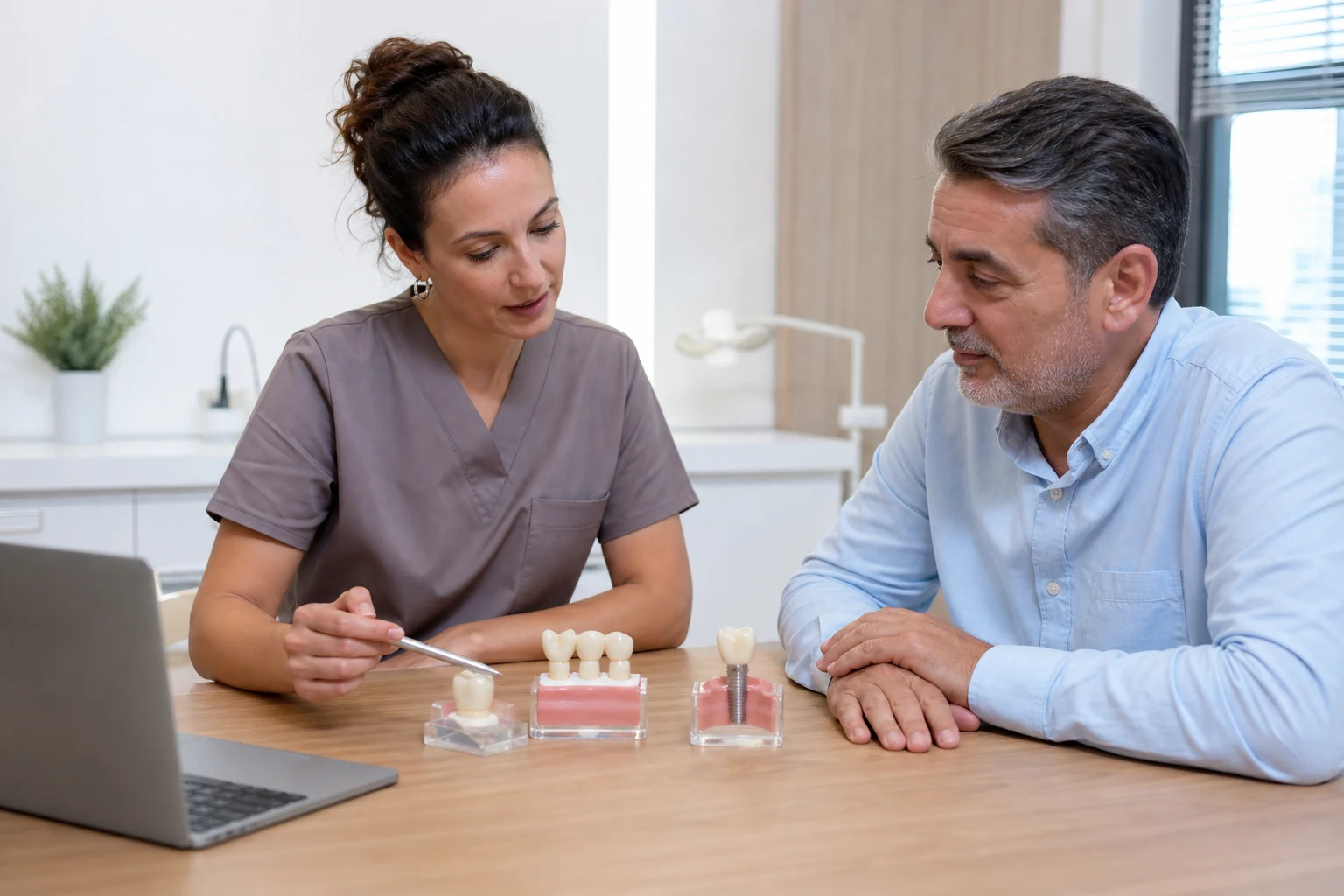
Dentist explaining crown, bridge and implant-supported fixed restoration models to the patient
01 / Fixed restorations

fixed in mouth
crown and bridge options

Fixed restorations are attached to the teeth or implants and are not removed by the patient. Support, design and material to be used. It is selected by taking into account tissue loss, missing area, closure and cleanability.

Crown
It rearranges the form and function of the appropriate tooth with advanced tissue loss.
bridge
It completes the missing tooth area by receiving support from the evaluated adjacent teeth or implants.
over implant
It can be planned as a single crown or bridge, depending on the healing and support conditions of the implant.
02 / Personal treatment stages

According to the number of missing teeth
removable solutions

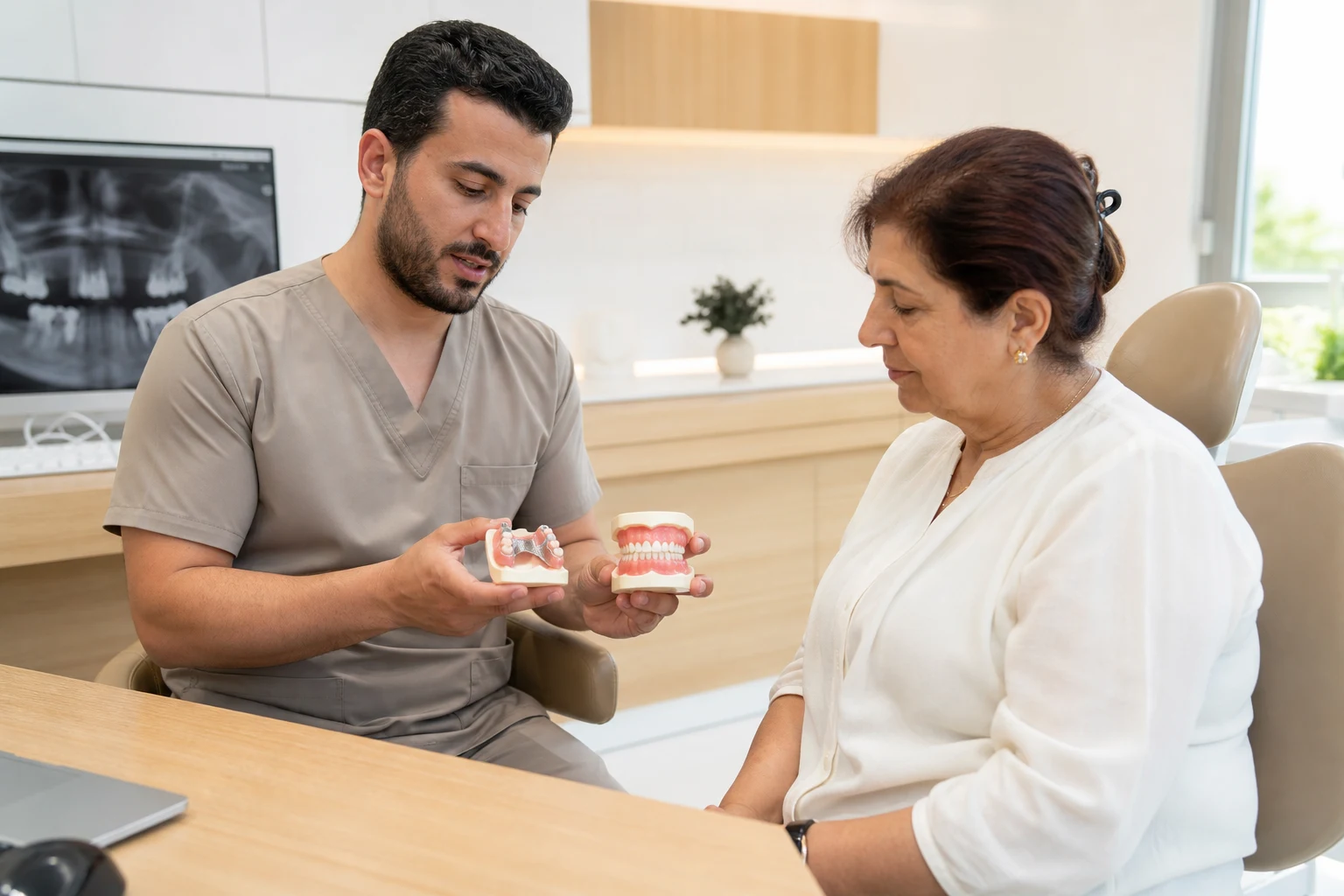
Removable dentures can be considered when the number and distribution of teeth remaining in the mouth are not suitable for a fixed solution. Adaptation to oral tissues, retention, speaking, chewing and the patient's ability to clean the prosthesis are considered together.

partial denture
Support and retention is planned for partial missing teeth where there are natural teeth in the mouth.
Full denture
In cases where all teeth in one jaw are missing, it is specially prepared for the oral tissues.
implant supported
In appropriate cases, it can be evaluated to increase the support and retention of the removable prosthesis.
Dentist explaining partial and full removable denture models to the patient

Frequently asked questions

Prosthetic treatments:
Curiosities.

Crown, bridge, implant and removable prosthesis options. It is evaluated individually after clinical examination and necessary imaging.

Prosthetic dental treatments; It covers the completion of lost teeth or teeth with advanced tissue loss with crowns, bridges, removable prostheses or implant-supported restorations. Planning is not only focused on the missing area. It is done according to the remaining teeth, gums, bite, chewing need and cleanability.

A crown is a restoration that covers the visible part of a suitable tooth and rearranges its form and function. A bridge replaces one or more missing teeth with support from adjacent teeth or implants. Which option is appropriate is determined after the supporting tissues are examined.

There is no single correct option. The condition of adjacent teeth, bone volume, gum health, bite, general health, suitability for surgery and personal expectations are evaluated together. If the implant option is considered, the surgical and prosthetic stages are planned to complement each other.

Adjustment time varies from person to person. In the first period, a feeling of fullness, difference in speech, or swelling in certain areas may occur. Compliance areas are evaluated during post-delivery checks. It is important to use the prosthesis in accordance with clinical recommendations and clean it regularly.

The impression or digital scan creates a record of the oral tissues. During rehearsals, the edge compatibility, color and form of the restoration, its contact with neighboring teeth, and its conversation and bite relationship are checked. Necessary arrangements are made at these stages before permanent delivery.

In fixed restorations, in addition to tooth brushing, the bridge and interfaces must be cleaned with appropriate auxiliary products. Removable dentures are removed and cleaned using the recommended method. Regular clinical checks of the abutment teeth, implant surroundings and oral tissues are part of the plan.