
General Dental Examination and Treatments,
Evaluates teeth, gums and bite.

It examines teeth, gums, oral tissues and bite together. We create a clear treatment sequence ranging from urgent needs to preventive care.

Examination appointment
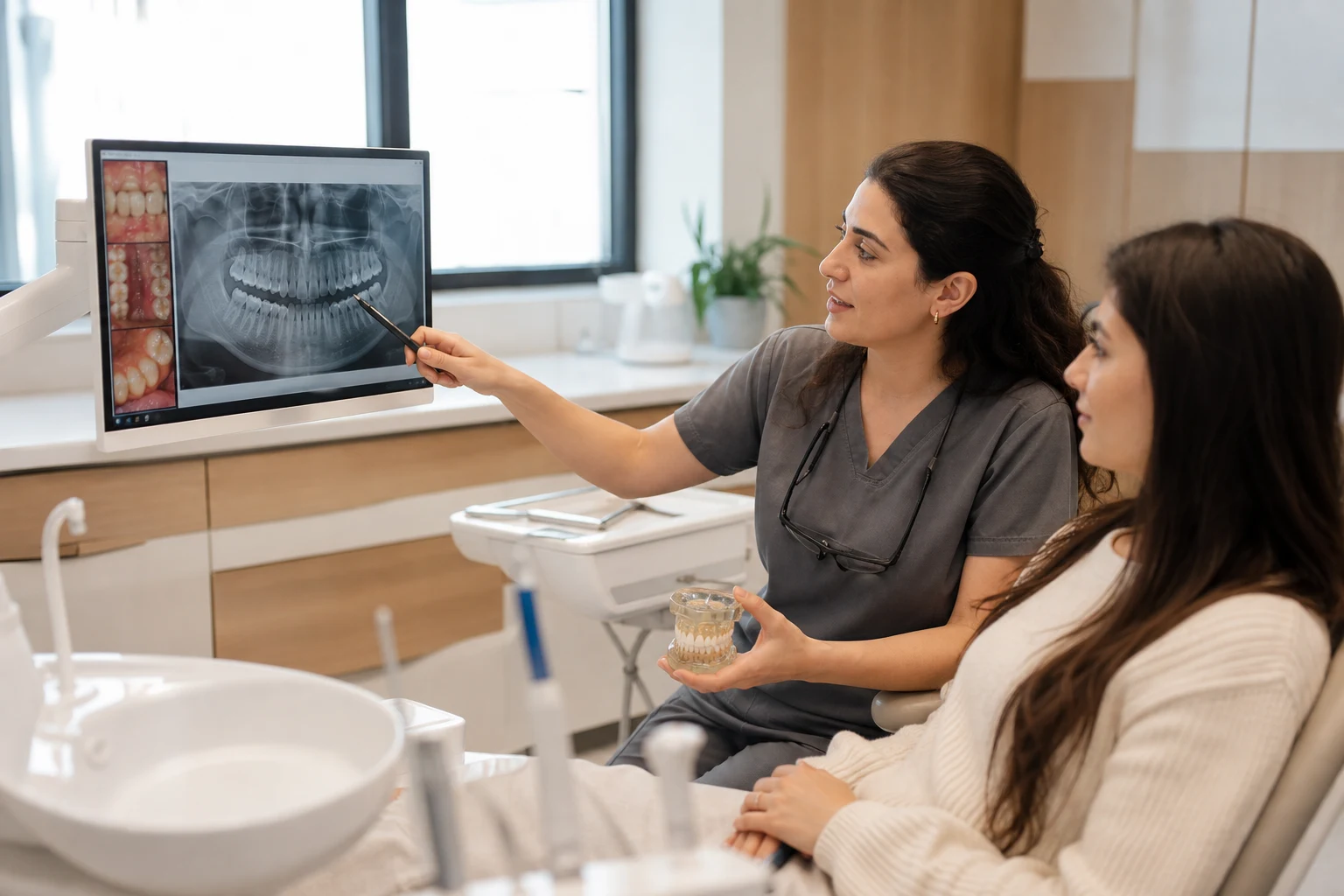
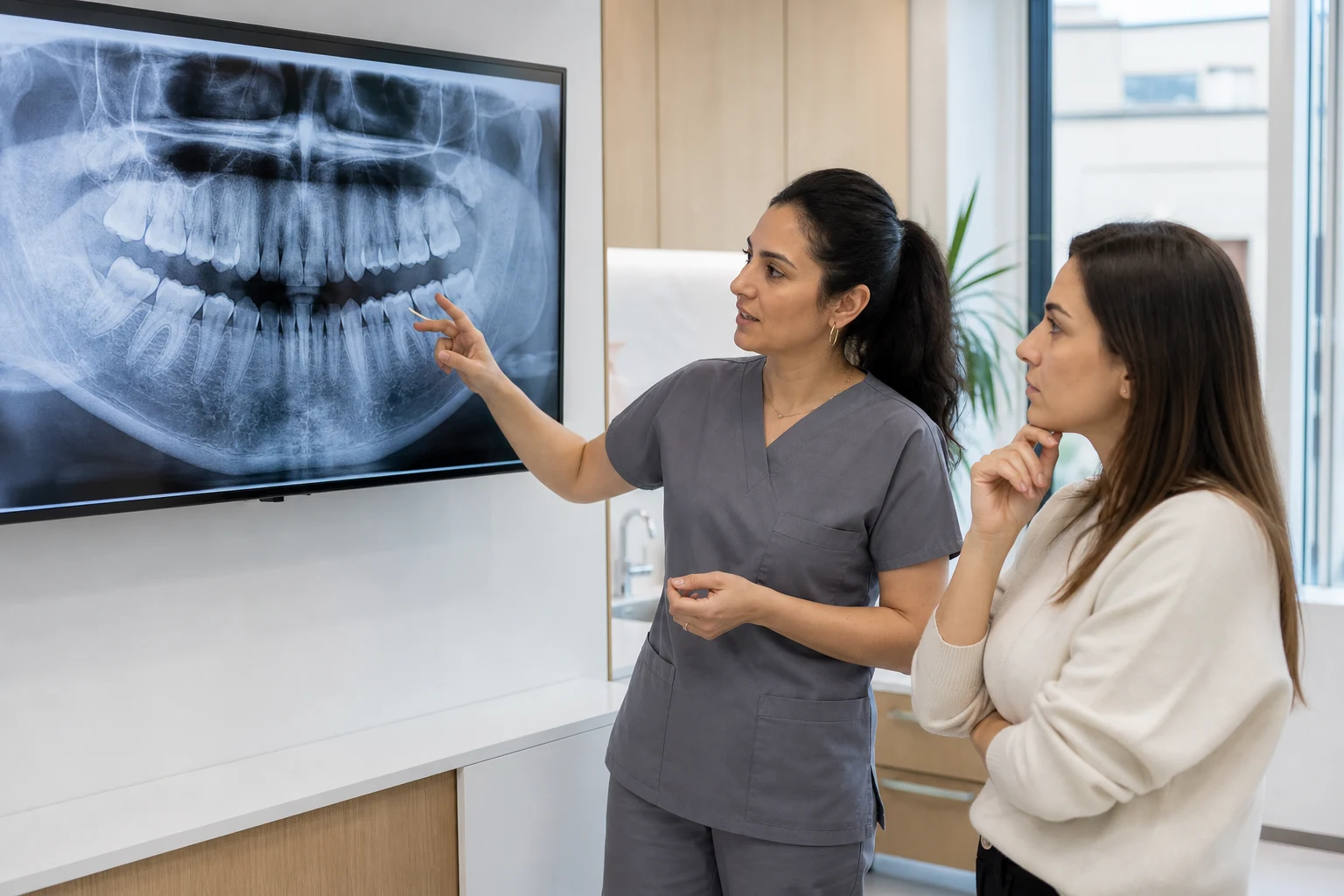
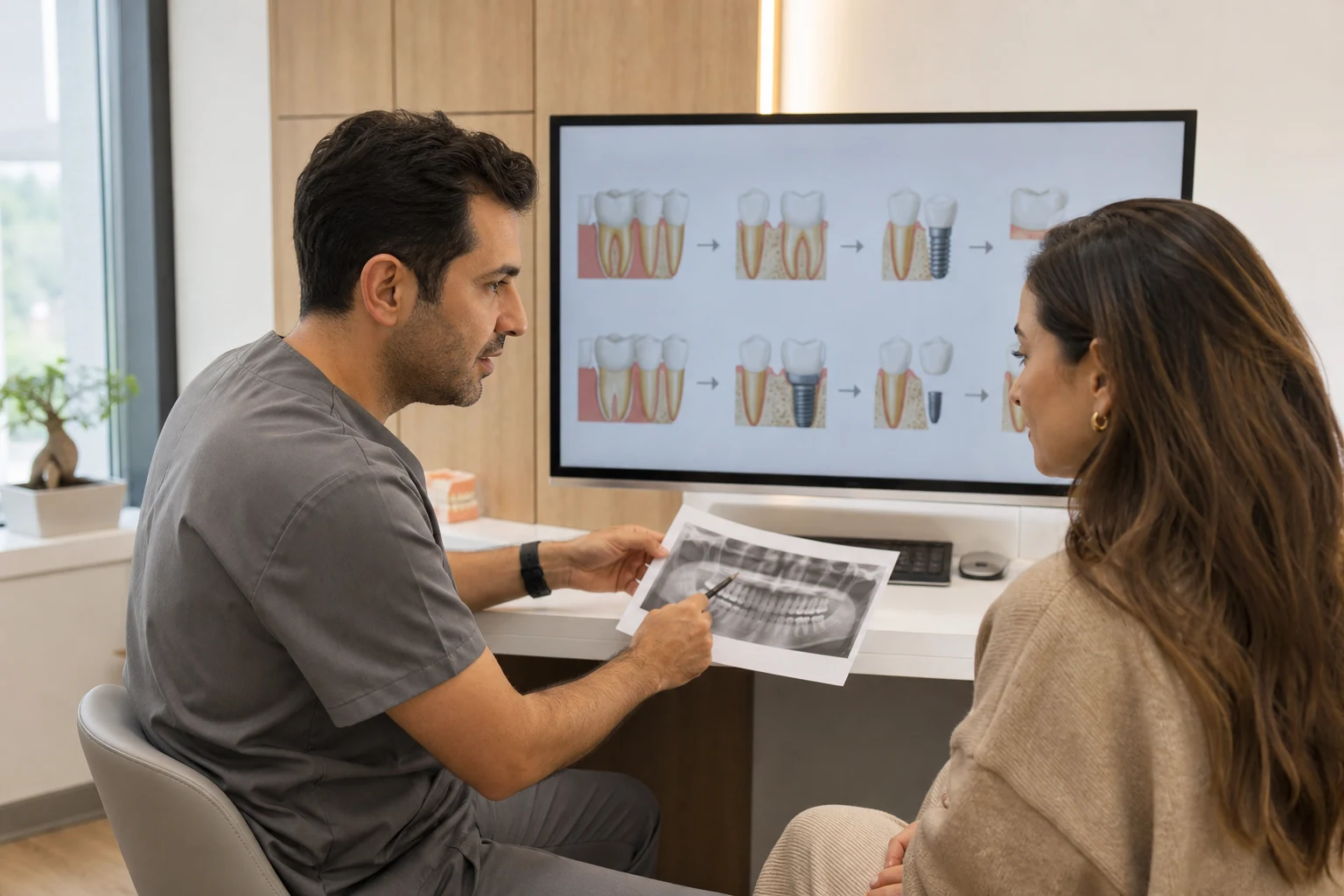
Dentist explaining general dental examination via panoramic x-ray
First understand the current situation

We do not consider the complaint alone, but together with the teeth, gums and bite relationships that may affect it.

general dentistry

During general dental examination
Which tissues are examined?

General dental examination; While investigating the cause of existing complaints, it brings together caries that have not yet caused symptoms, gum findings, old restorations and the need for preventive care in the same evaluation.

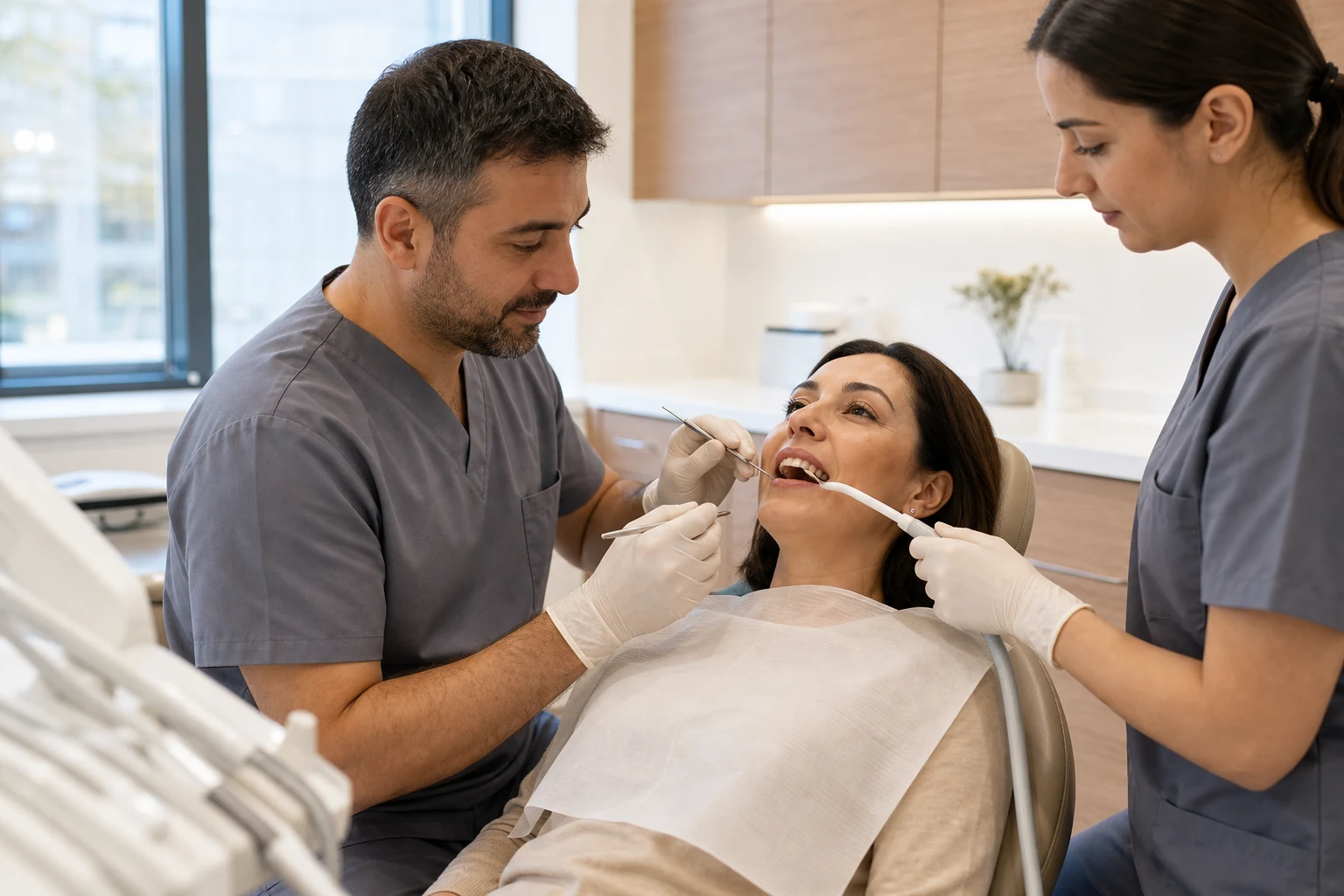
The clinical team examines the teeth and oral tissues in detail
During the examination, gums, oral soft tissues and existing restorations are examined as well as tooth surfaces.

A good plan is not just about “what action to take?” not to the question “why and in what order?” It also answers the question.

We listen to your health history, medications you use, previous dental treatments and your current complaint. Then, we clinically evaluate the teeth, gums, oral tissues, bite and jaw area.

When imaging is required, the appropriate method is selected only for areas that may affect the treatment decision. Once the findings are gathered, options, priorities, and follow-up requirements are shared with you.

No symptoms does not always mean there is no problem.Changes noticed in the early period can be managed with preventive or more limited approaches.

01
teethDecay, wear, cracks and restorations
02
gumsBleeding, recession and support tissues
03
biteContacts, wear and jaw circumference
04
personal riskGrooming, habits and health history
Inspection process

From the first examination to the treatment plan
four basic steps.

The purpose of each step is different: health history provides the basis for safe treatment, clinical and radiographic records support the diagnosis, and personal risk assessment supports the preventive follow-up plan.

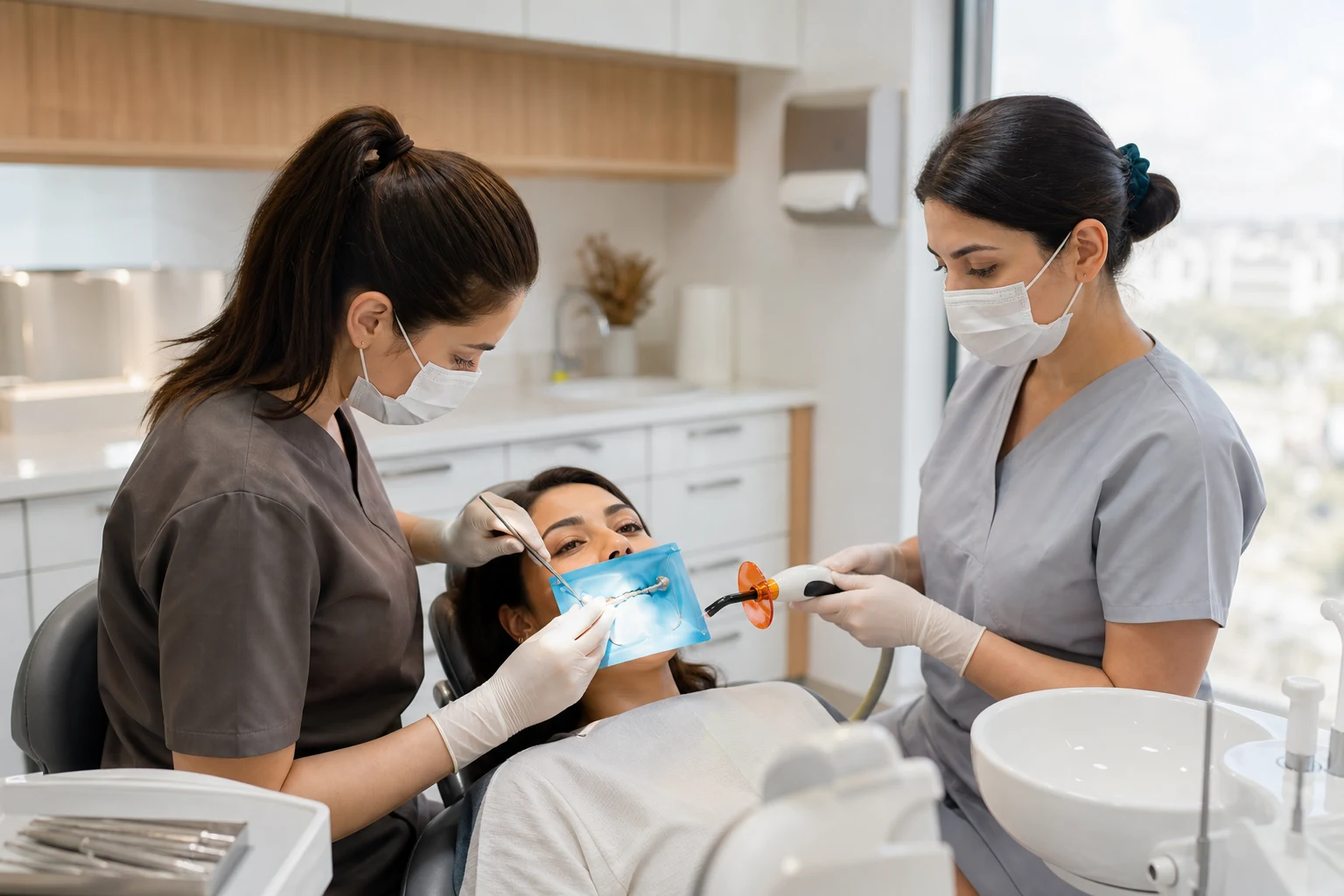
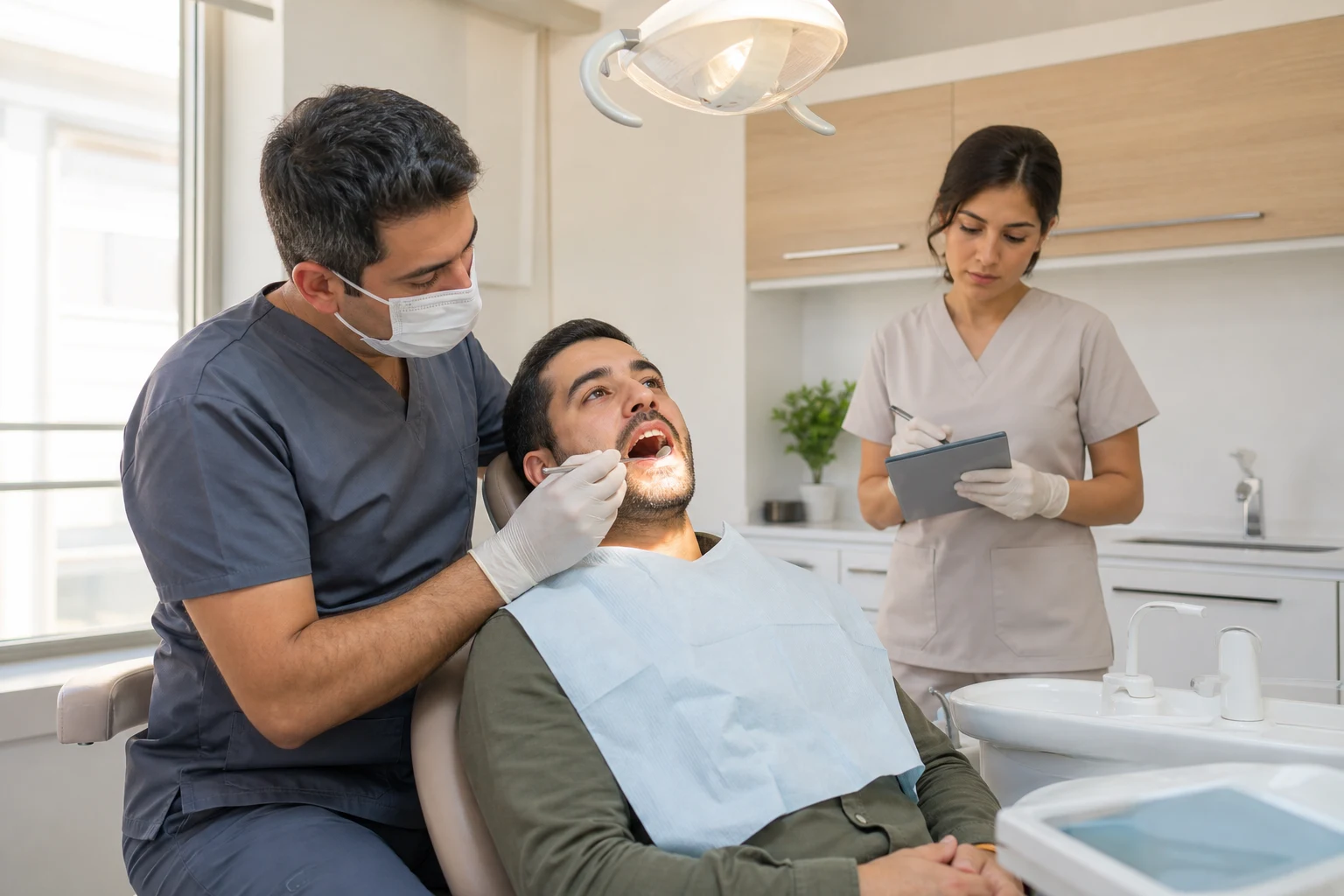
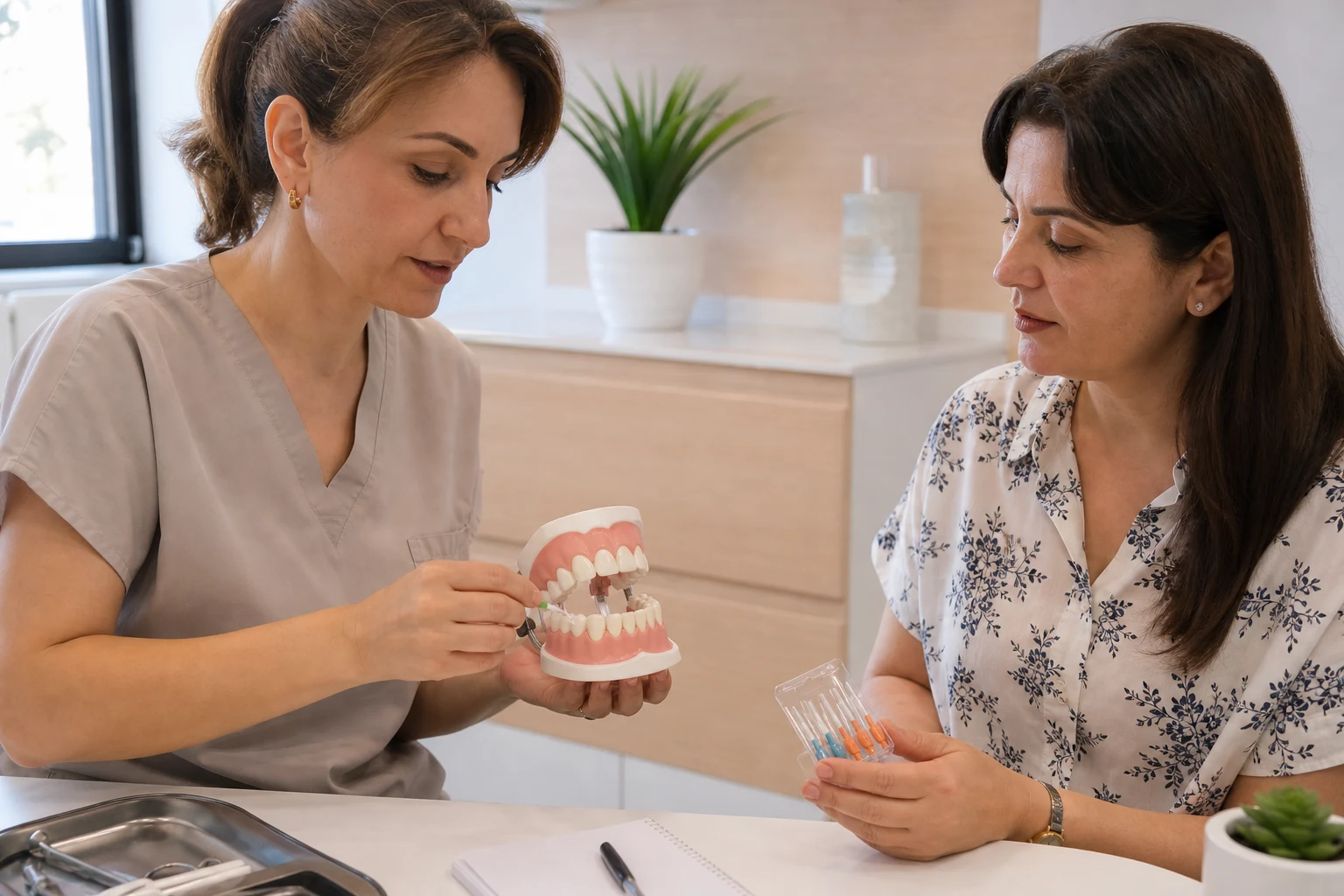
Dentist listening to patient's health and dental treatment history Dentist evaluating panoramic x-ray with patient Dentist explaining interface cleaning on a tooth model Dentist explaining treatment priorities through images
01 / InterviewYour complaint and health history
We listen in detail.
01 — 04
  1. 01
    health history

    Meeting and listening

    We record your complaint, previous dental treatments, medications you use, and health conditions that may affect the treatment.

  2. 02
    Assessment and planning

    Oral and dental examination

    Clinically examines teeth and oral tissues. We choose the appropriate imaging method to support diagnosis in the necessary areas.

  3. 03
    risk assessment

    Determination of caries and gum risk

    Risk of caries and gum disease. We evaluate it together with care habits, nutrition, current restorations and health history.

  4. 04
    Priority and tracking

    Personal treatment plan

    We prioritise the findings according to urgency and timing, then clearly explain the options, estimated number of visits and review requirements.

Preventive dentistry

Preventive dentistry,
It aims to protect healthy tissue.

General dentistry; It starts with regular inspection and preventive maintenance. When a problem is detected, treatment options that protect the tooth and surrounding tissues as much as possible are planned in the appropriate order.

Frequently asked questions

General dental examination:
Curiosities.

The scope of the examination, imaging needs and review interval are determined according to current findings and personal oral-health risks.

After your complaint and health history are listened to, the teeth, fillings and restorations, gums, intraoral soft tissues, bite and jaw area are evaluated clinically. When necessary, appropriate imaging methods are used to support the diagnosis and treatment plan.

Some caries, gum problems and intraoral changes may not cause significant pain in the early period. Regular inspection; It helps recognize existing problems early, determine the need for preventive care, and monitor oral health.

No. Need for x-ray. It is determined by taking into account clinical findings, complaints, previous images, age and personal risk status. Appropriate imaging is requested only when it is necessary to evaluate an area not visible by examination or to support a treatment decision.

Review intervals are personalised according to the risk of decay and gum disease, existing restorations, oral hygiene, smoking, relevant systemic conditions and previous findings.

Priority is given to conditions that may cause pain, infection or progression. Gum care, decay and root canal treatment, surgery, prosthetic care and aesthetic stages are then sequenced to support one another. The plan may be adjusted according to examination findings.

Severe or increasing pain, swelling in the face or around the mouth, trauma, uncontrollable intraoral bleeding, and broken or dislodged restorations should be evaluated as soon as possible. Rapidly spreading swelling combined with difficulty breathing or swallowing requires immediate medical attention.