
preventive maintenance
Fluorine varnish and fissure sealant
Depending on the child's risk of caries and the eruption of the teeth, professional fluoride procedure or fissure sealants that protect the grooves of the back teeth may be planned.
It takes into account the child's age, temperament and adaptation that day. We plan the examination and treatment steps without rushing and in understandable language.
child examination ↗
It explains the small steps in a way that the child can understand. We see the parent as a natural part of the process.
Pediatric dentistry; It monitors oral and dental health from the eruption of the first tooth until adolescence. The aim is not only to treat the existing caries, but also to provide the child and his family with a sustainable preventive care regime.
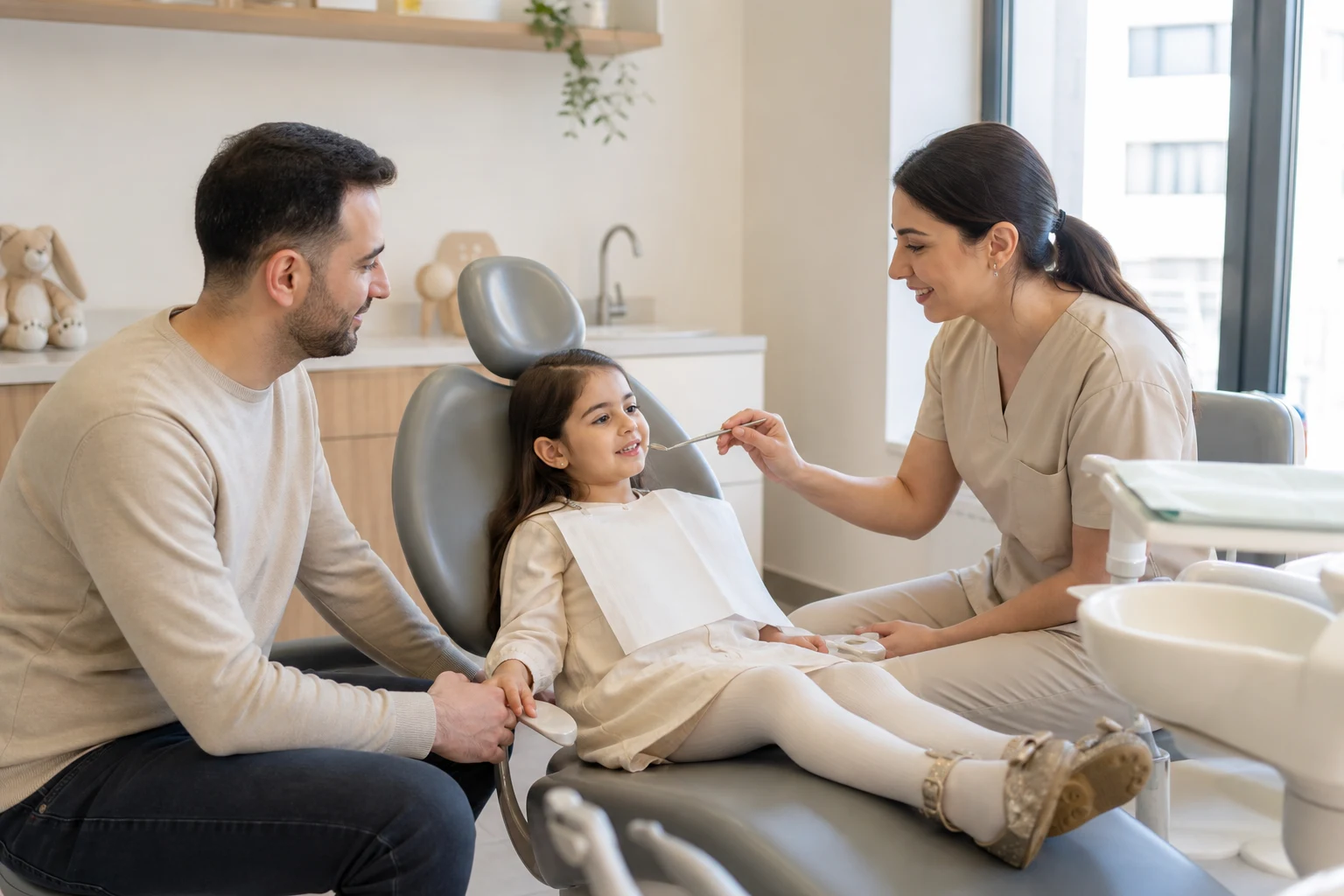
A child's first relationship with the dentist can influence how they approach subsequent appointments.
Observes age, previous experiences and level of adaptation; First, we simply talk and introduce the tools used. We continue the examination in short steps that the child can tolerate.
We evaluate the eruption order of the teeth, signs of decay and trauma, gums, bite, brushing style and eating habits together.
Not every appointment has to move at the same pace.If there is no emergency, introduction and treatment appointments can be scheduled separately to establish trust.
Children vary in age, clinical need, and response to the new environment. We pace the appointment according to the child while maintaining the same clinical standards.

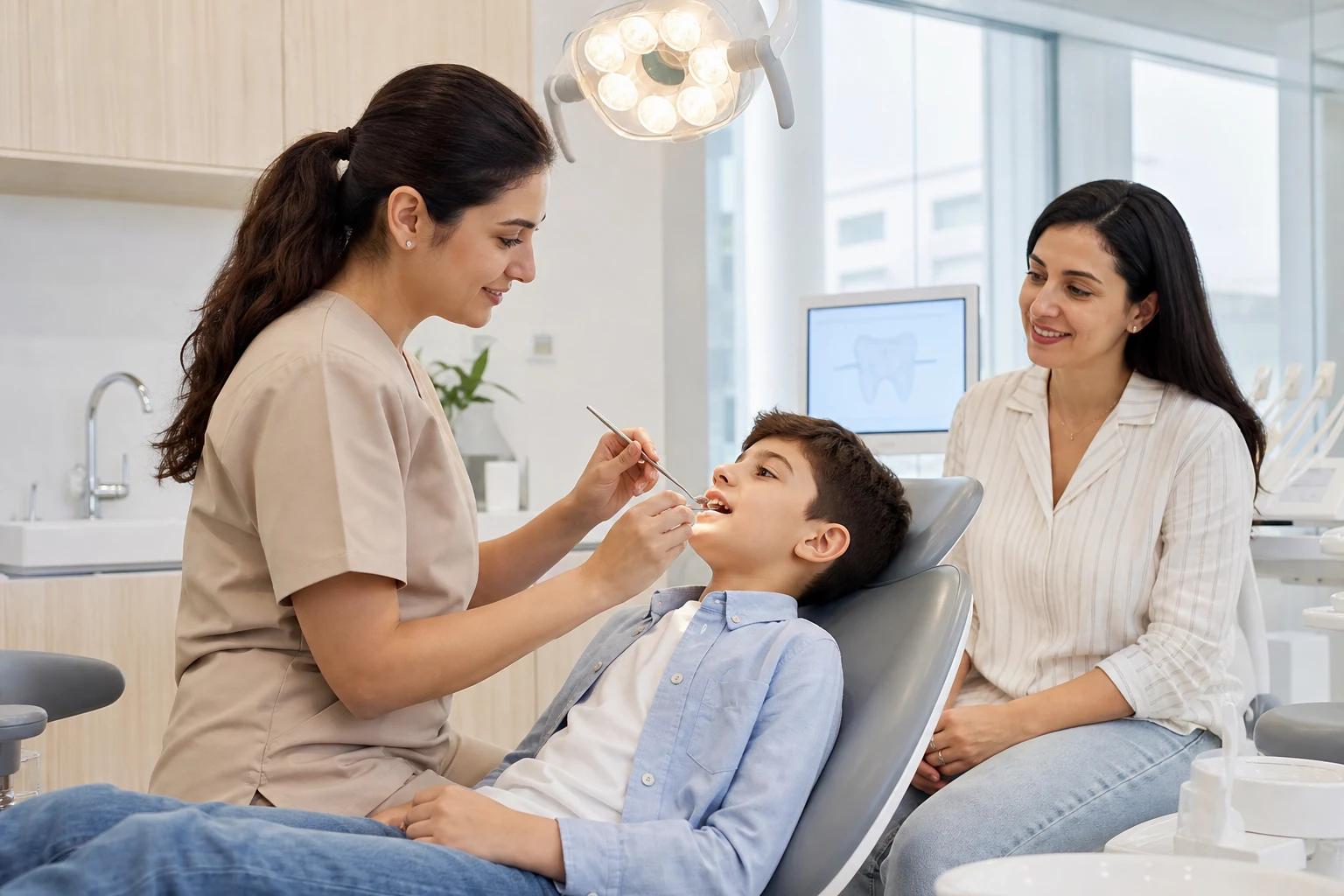
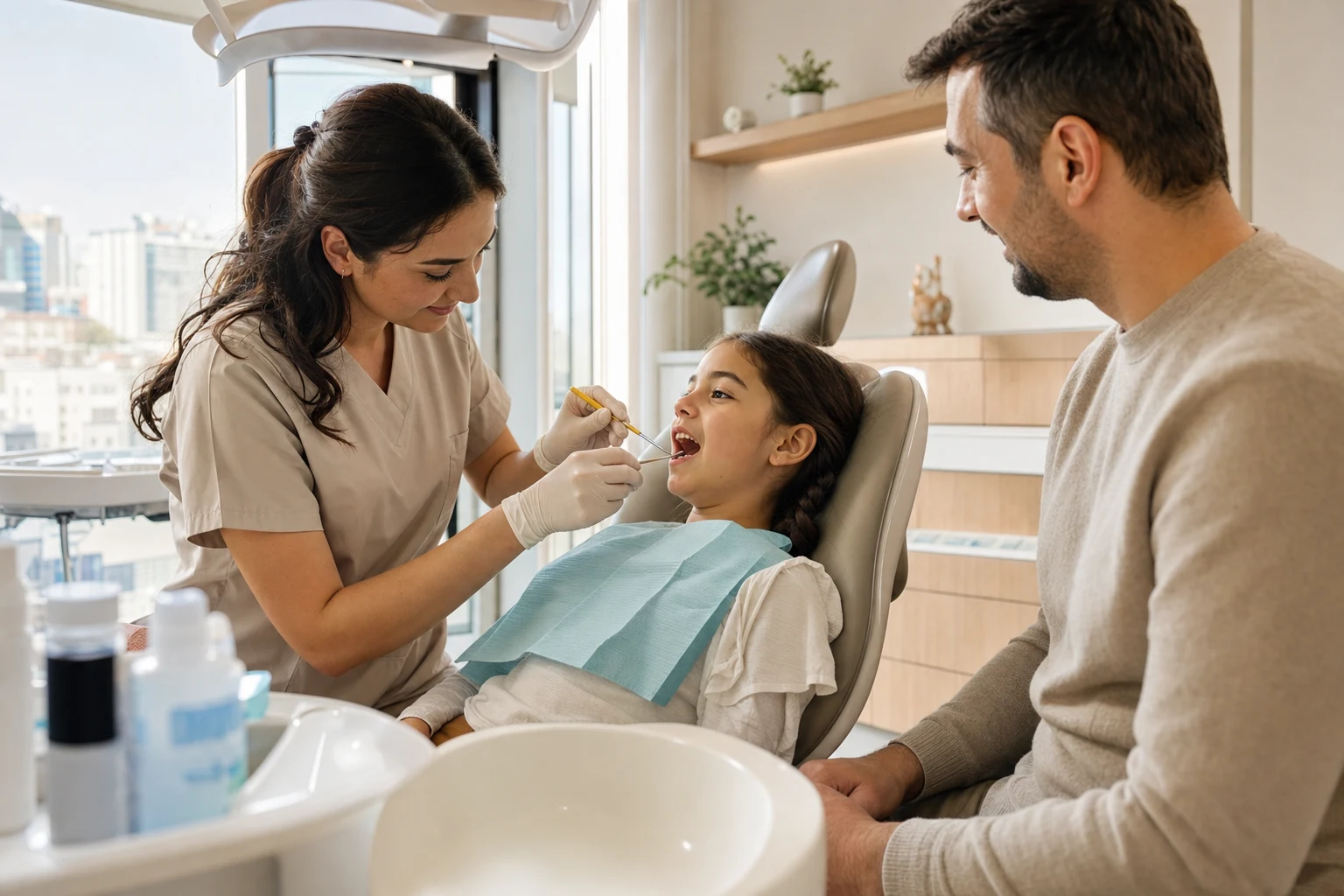

Talks to the child and parent. We introduce the mirror, the chair and the simple steps of the examination with age-appropriate words.
We clinically examine the eruption status of the teeth, caries findings, plaque accumulation, gums and bite.
We share care recommendations, necessary protective practices and treatment needs, if any, with the family based on the risk of caries.
We check the eruption of teeth, preventive practices and progress in home care at intervals appropriate to the child's risk status.
A child’s plan considers how long the primary tooth should remain, the development of the permanent teeth, the extent of decay and the amount of treatment the child can comfortably manage in one visit.
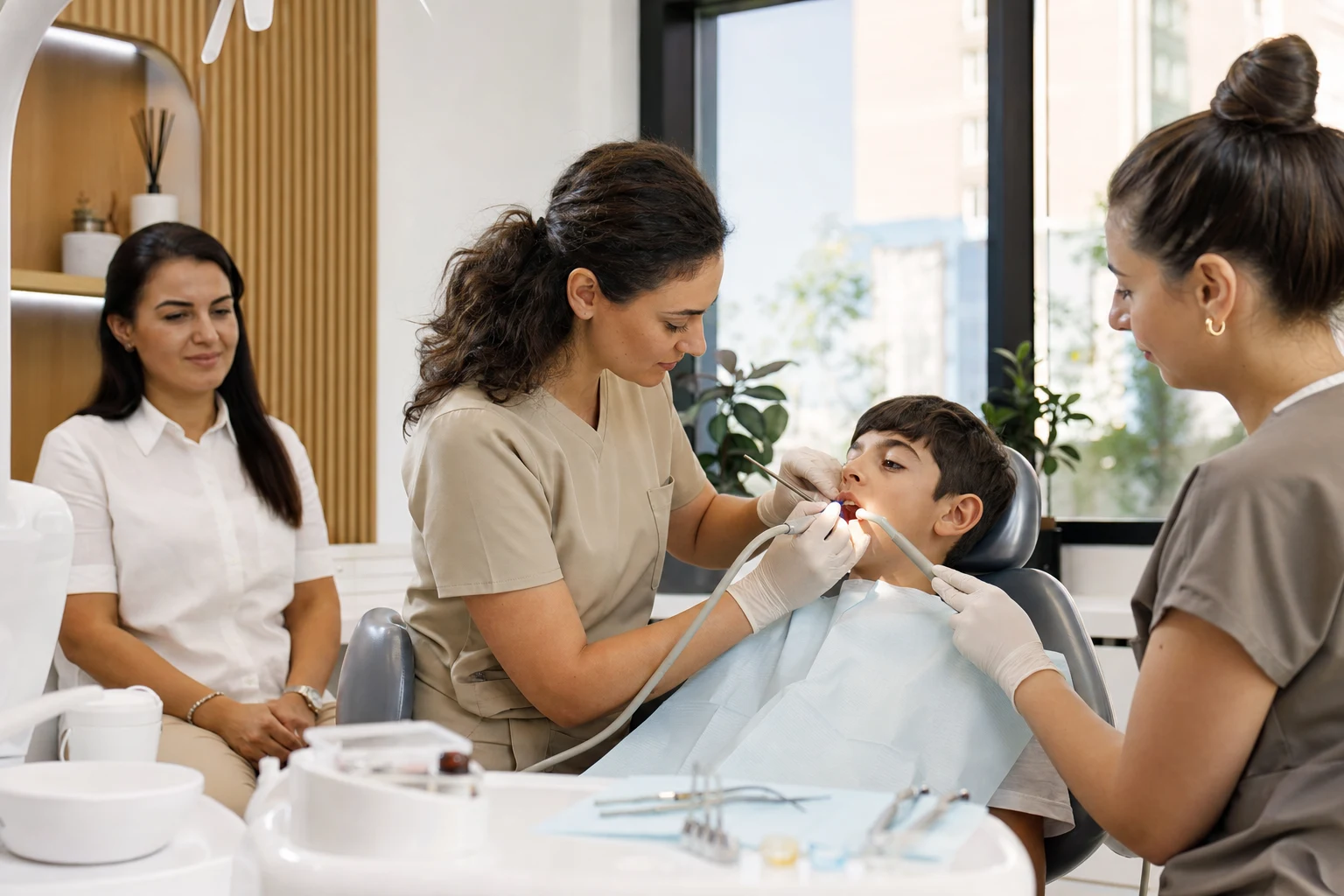
Depending on the child's risk of caries and the eruption of the teeth, professional fluoride procedure or fissure sealants that protect the grooves of the back teeth may be planned.
Restorative options to protect the baby tooth are determined by evaluating the depth of the decay, remaining healthy tissue and the time the tooth falls out.
In case of a fracture, loosening or displacement of a tooth, the necessary examination and follow-up is planned by distinguishing between primary and permanent teeth.
Findings such as early loss of primary teeth, crowding or delayed eruption are observed; When necessary, a placeholder or relevant specialist evaluation is planned.
What parents ask
First visit, preventive practices and treatment plan. It is personalized after evaluating the child's age, clinical need and compliance level.
It is recommended to meet the dentist after the first tooth emerges and around the first age at the latest. Early visit; Rather than treating an existing problem, it is planned to discuss oral care, evaluate the risk of caries, and support the child's adaptation to the clinic environment.
Milk teeth contribute to chewing, speaking, aesthetics and preserving space for permanent teeth. Untreated decay can lead to pain, infection and feeding difficulties. Appropriate treatment. The timing of tooth loss is determined by evaluating the extent of decay and the child's development.
Describe the visit in short, positive sentences and avoid words that may cause anxiety, such as “injection”, “pain” or “extraction”. A simple explanation such as “The dentist will count your teeth” may be more helpful. Avoiding negative stories about dental visits in front of the child can also support a calm experience.
No. Need for fluoride varnish and fissure sealant. It is determined by evaluating the child's age, risk of decay, eruption of teeth, oral care and nutritional habits. The preventive plan and frequency of implementation are not the same for every child.
X-rays are only requested when clinical examination is not sufficient and will affect the diagnosis or treatment plan. The imaging technique appropriate to the child's age and needs is selected; unnecessary repetitions are prevented.
Number of sessions; It varies depending on the procedures to be performed, the child's age, cooperation and the time he can comfortably tolerate in one session. At the first meeting, urgent needs and treatment priorities are determined and a personal appointment plan is prepared.