Implant Treatment,
It provides artificial root support in the missing tooth area.

We consider the bone, gum, bite and the tooth on the implant to be made as parts of the same plan.

Implant evaluation
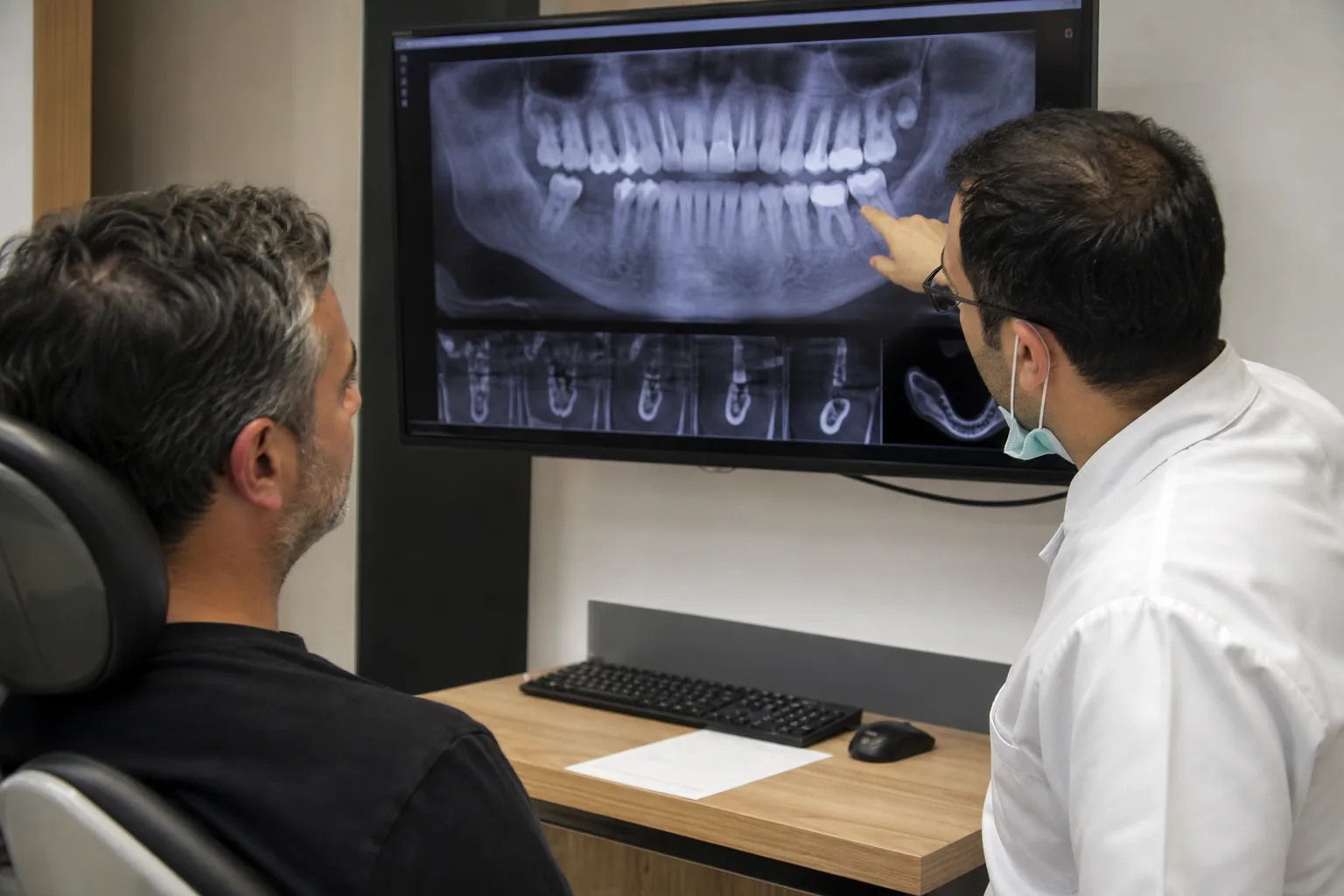
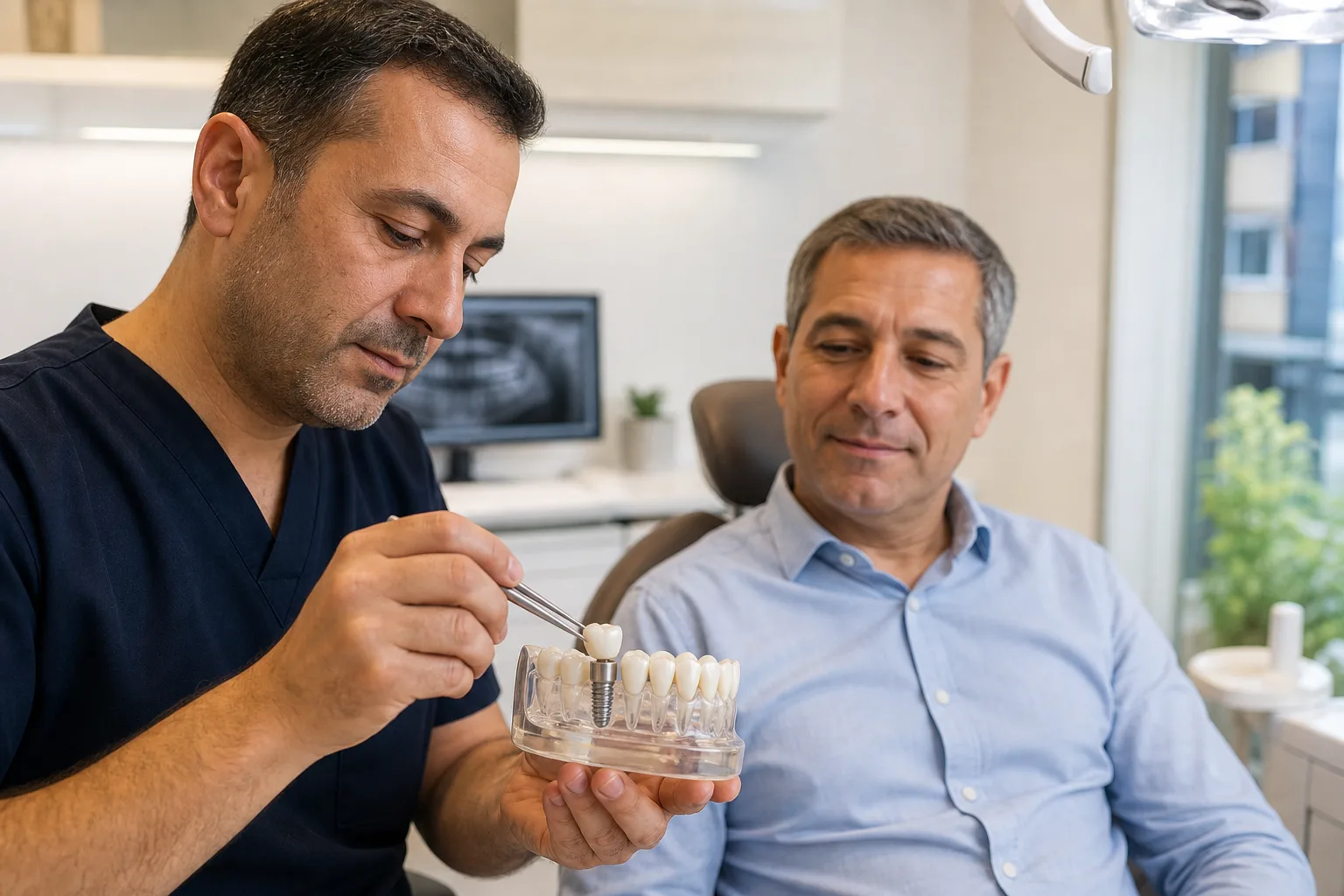
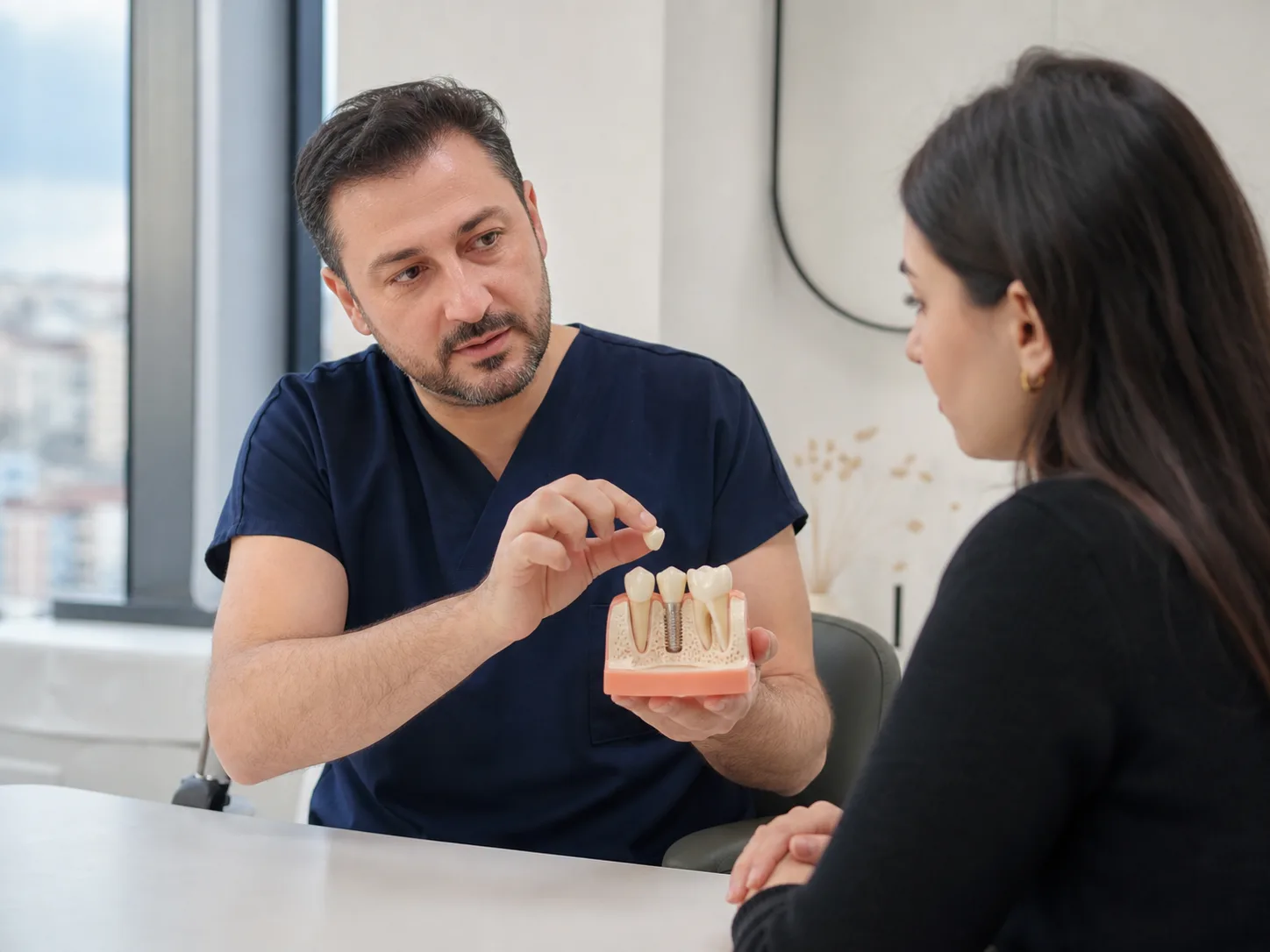
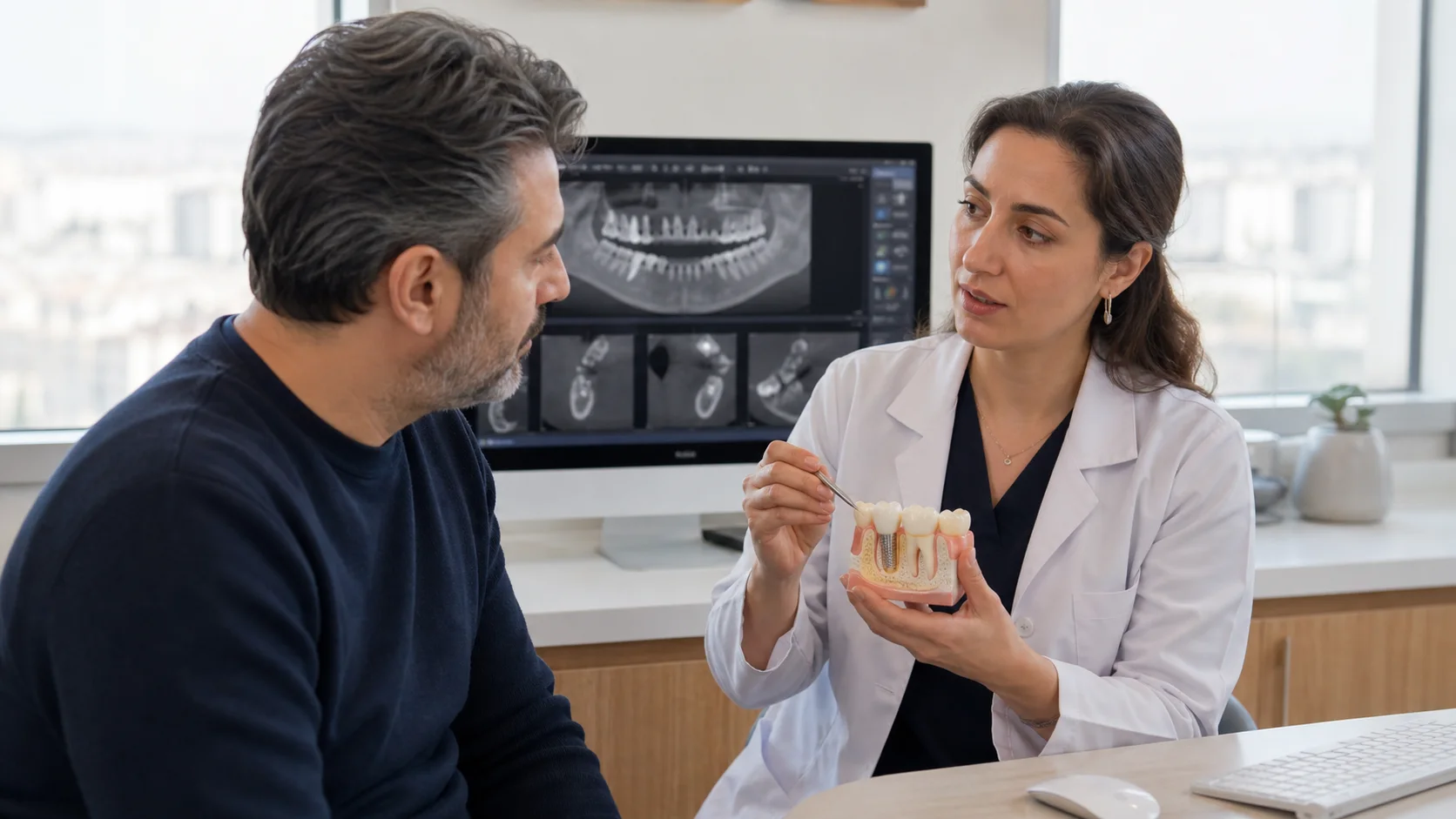
Dentist explaining the implant model and jaw image to his patient
01

A good implant plan starts with where the permanent tooth should be before surgery.

What is implant treatment?

Dental implant,
Treatment includes the implant body and the implant-supported restoration.

The implant body is placed in the missing tooth root area. The visible tooth is completed with a connecting piece and a personalized restoration.

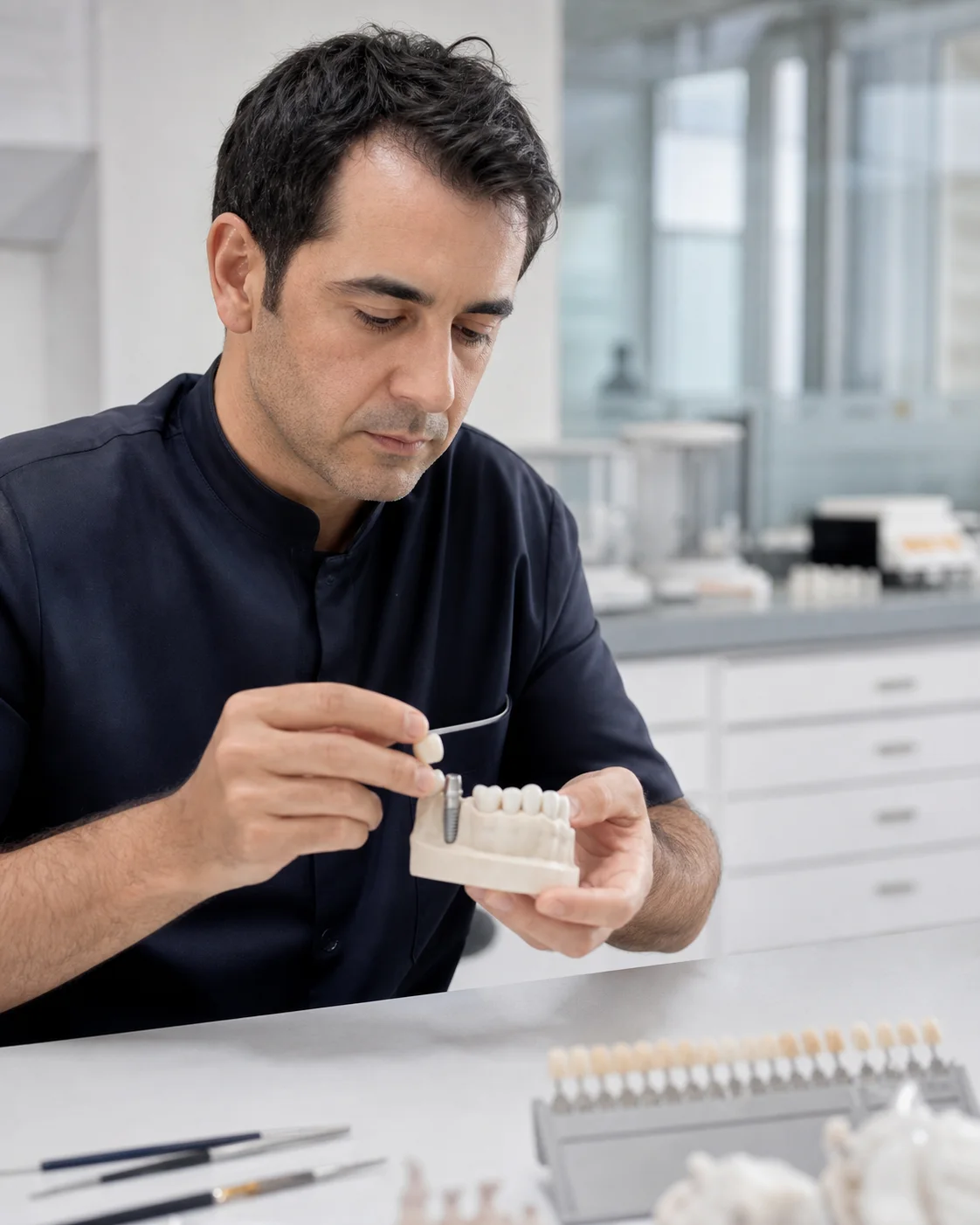
Dentist examining the implant-supported crown on the model
The orientation of the implant, its connection piece, and the tooth on it are designed according to the same functional goal.

We do not see implant treatment as simply placing a screw in the missing area. Conclusion; It depends on the compatibility of the bone, gum, implant and superstructure.

At the first meeting, we evaluate the cause of the deficiency, adjacent teeth, oral hygiene, gum health, occlusion and general health history. When necessary, bone and surrounding anatomical structures are examined with three-dimensional imaging.

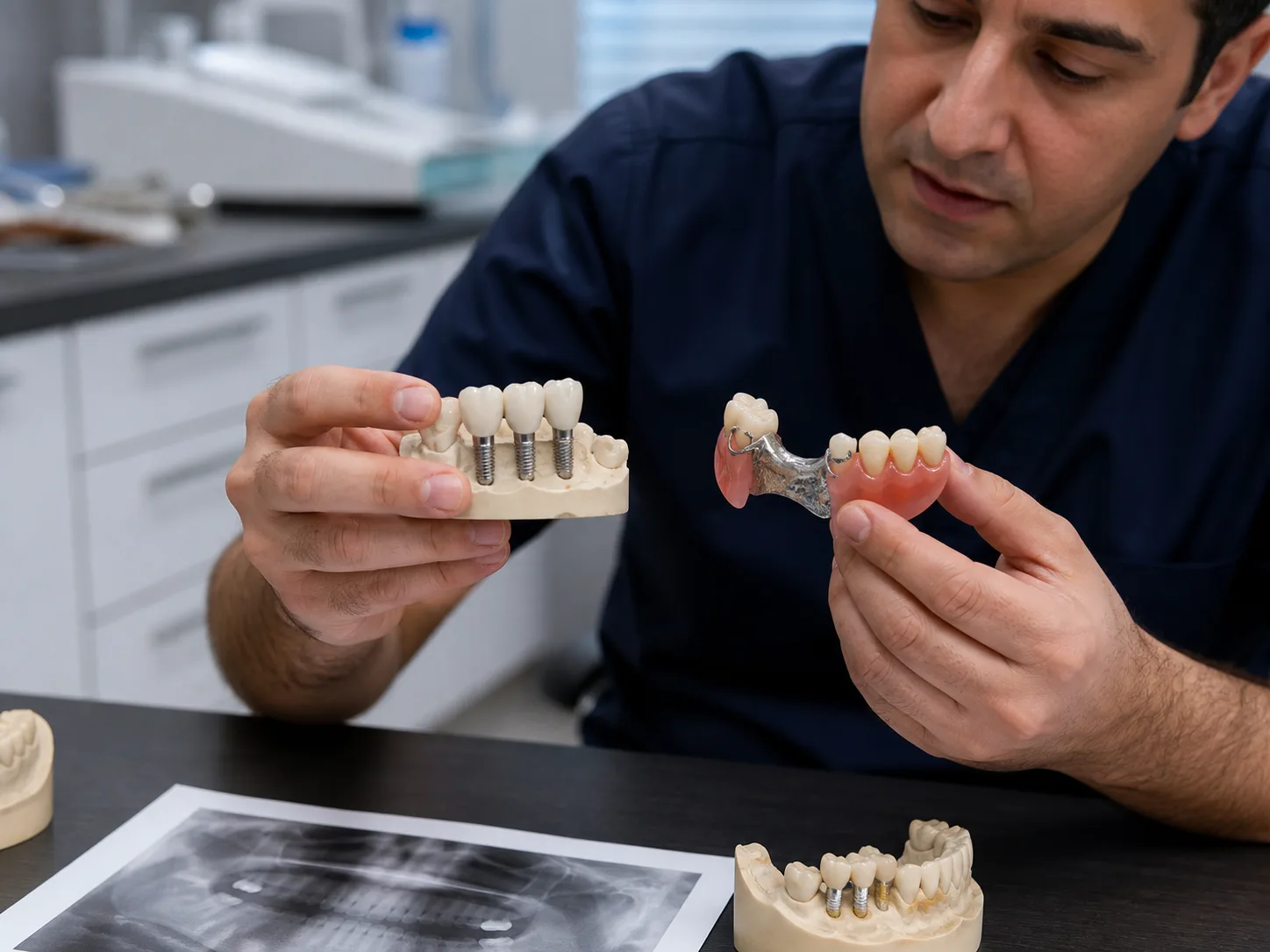
Plan; They can range from a single tooth crown to more comprehensive solutions that support an implant-supported bridge or removable prosthesis. The number of implants, placement style and superstructure are not the same in every patient.

Implants are not the only solution for every missing tooth.Bridge, removable prosthesis or different approaches. It is evaluated together with tissue conditions, health status and expectations.

01
healthHistory, medications and recovery
02
BoneVolume and anatomical boundaries
03
textureGum health and care
04
Final restorationForm, bite and cleaning
Treatment process

Implant treatment process
It includes surgical and prosthetic stages.

Procedure order and waiting periods may vary depending on tissue conditions and individual healing response.

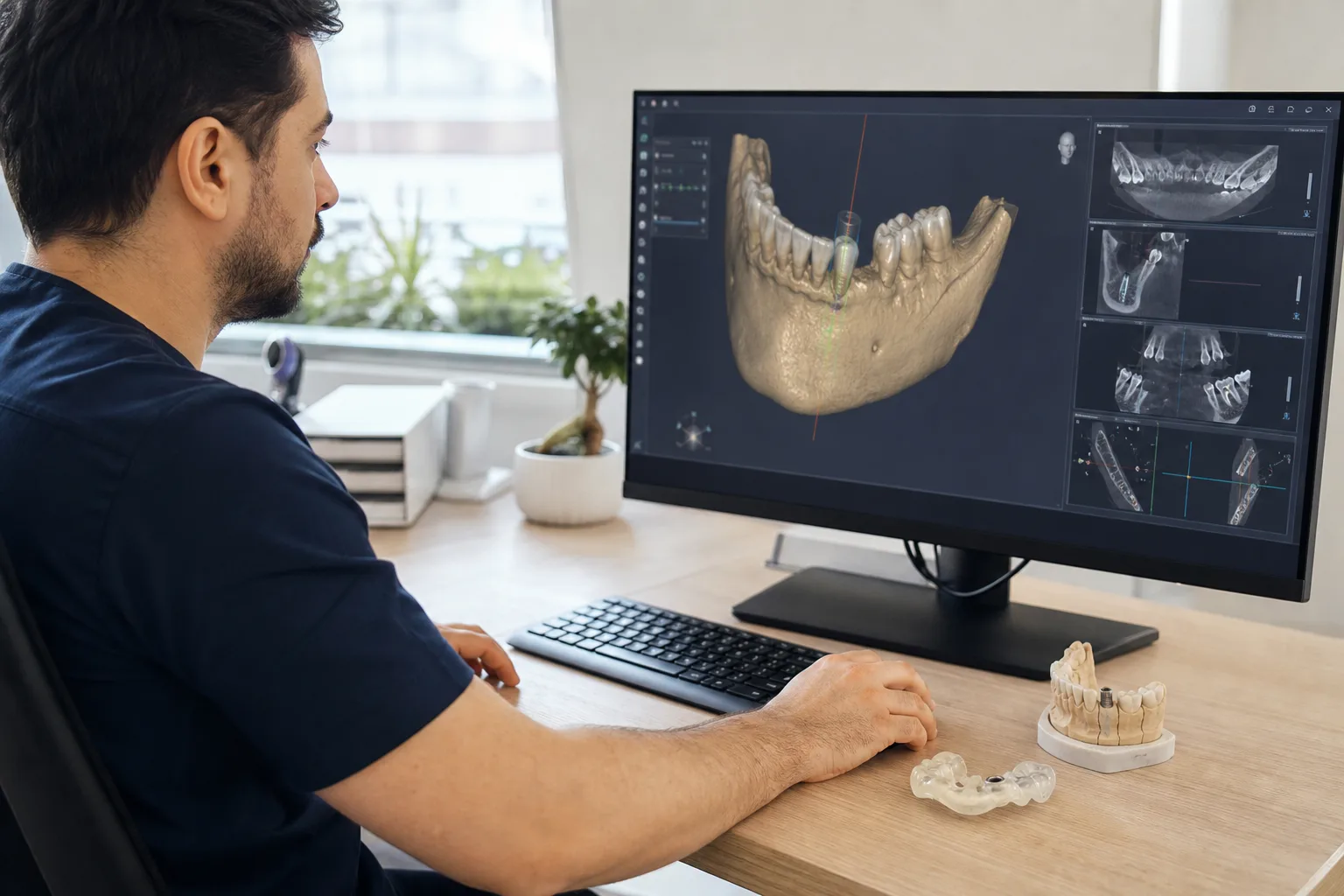
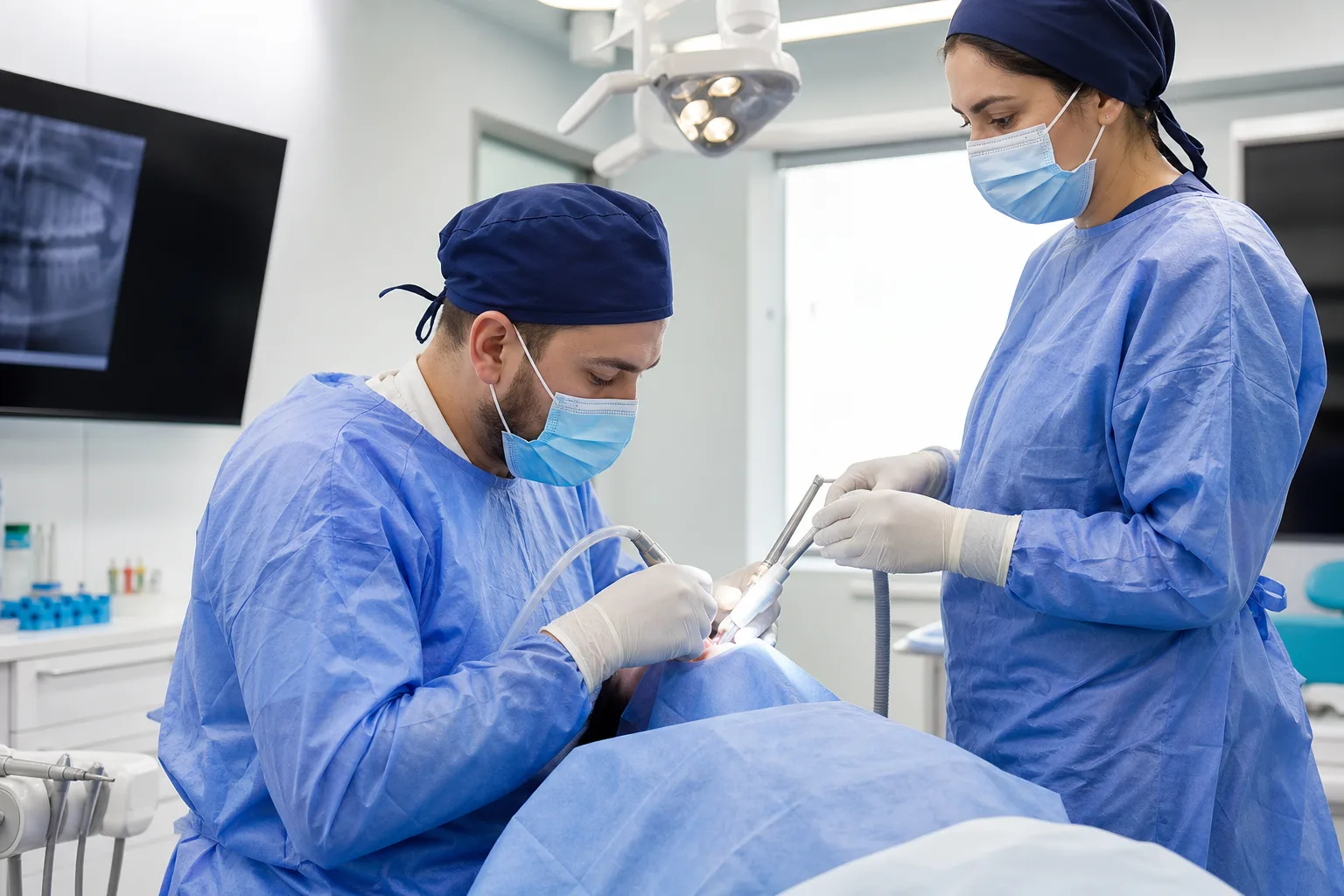
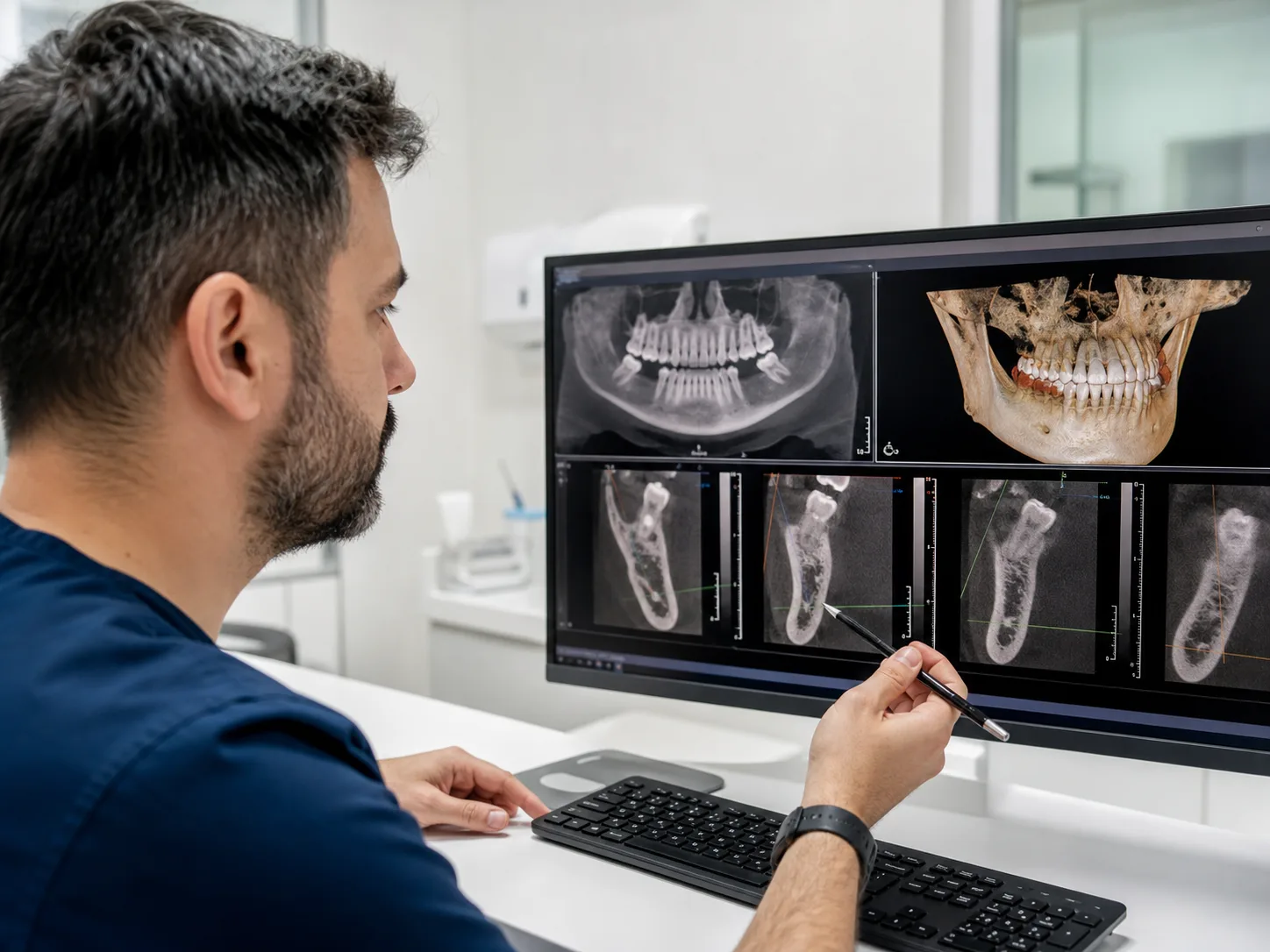
Dentist examining three-dimensional jaw image with the patient before implant treatmentDentist planning three-dimensional dental implant location on computerDental implant surgery performed in a sterile clinical environmentDentist checking implant-mounted ceramic tooth on model
01 / InspectionBone, adjacent structures and closure
We consider it in the same evaluation.
01 — 04
  1. 01
    inspection

    Clinical and radiographic evaluation

    The missing tooth area, adjacent teeth, gum health, bite and general health history are examined together; Necessary imaging records are evaluated.

  2. 02
    Planning

    Surgical and prosthetic design

    The position of the implant is planned not only according to the bone, but also by taking into account the emergence point of the tooth to be made, its cleanability and chewing forces.

  3. 03
    Surgery

    Placement of the implant

    The planned area is prepared with appropriate anesthesia and sterile working order. The implant is placed in a single or phased approach depending on clinical conditions.

  4. 04
    Final restoration

    Healing follow-up and final restoration

    Tissue healing is monitored. At the appropriate stage, impressions or digital records are taken to design the crown, bridge or prosthesis, which is completed after a bite check.

Planning details

In implant planning
five clinical elements evaluated.

Number of implants and superstructure design. It is determined according to examination, health history and necessary imaging findings.

Dentist evaluating bone volume in three-dimensional image before dental implant
01 Three-dimensional evaluation
01 / Bone

Bone volume

Bone width and height. It is examined together with anatomical structures such as nerves, sinuses and adjacent roots.

Not only the amount of bone, but also the placement of the implant in the appropriate position for the prosthetic target determines the plan.Implant evaluation
Restorative objective

implant location,
It is planned according to the final restoration to be made.

Having space in the bone alone does not mean the correct location. Direction and depth of the implant; It affects the shape of the tooth to be made, gum emergence, cleanability and the transfer of chewing forces.

Therefore, it establishes the surgical plan backwards from the permanent superstructure target; When necessary, we evaluate digital planning and surgical guide options.

Request an implant consultation

Frequently asked questions

About implant treatment
frequently asked questions.

Treatment suitability and duration are determined after clinical examination and necessary imaging.

A dental implant is a medical device that is placed in the jawbone in the area of a missing tooth and provides support for superstructures such as a crown, bridge or removable prosthesis. The implant body, the connection piece, and the implant-supported restoration are different components of the treatment.

Suitability is evaluated according to general health status, medications used, smoking, oral hygiene, active gum disease, bone amount and superstructure to be made. Not every missing tooth is automatically treated with an implant; Alternatives are considered together in the examination.

Duration; It varies depending on the need for extraction, bone and soft tissue conditions, number of implants, need for additional surgery, and healing response. While some cases proceed in a shorter course, in some cases a months-long recovery period may be required between surgery and permanent superstructure.

The surgical procedure is performed under appropriate anesthesia. Swelling, tenderness, or pain may occur afterwards; Its level and duration vary depending on the patient and the scope of the procedure. In case of unexpected or increasing complaints, the clinic should be contacted.

No. A graft or other bone augmentation procedure may only be considered when the existing bone is not sufficient to accommodate the implant with proper location and surrounding tissue support. The need is determined after clinical and radiological examination.

Fee. The number and system of implants varies depending on the bone and gum conditions of the region, additional surgical procedures that may be required, the scope of the temporary dental plan and permanent superstructure. The exact plan and fee are shared after the examination.