Restorative and Endodontic Treatments,
It repairs dental tissue and treats root canals.

We evaluate the tooth as a whole, from decay to pulp, from the remaining healthy tissue to closure.

Let's evaluate your teeth
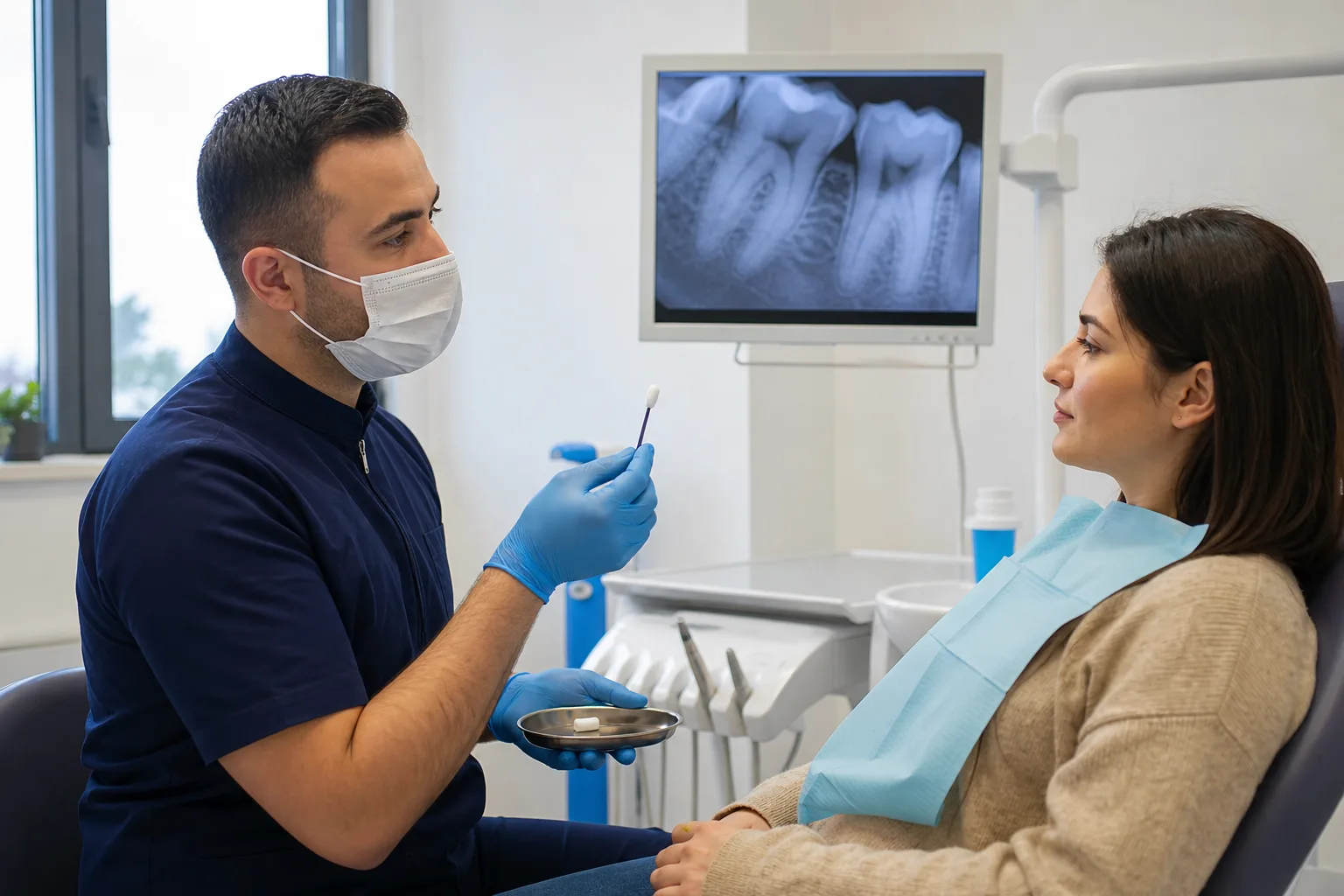
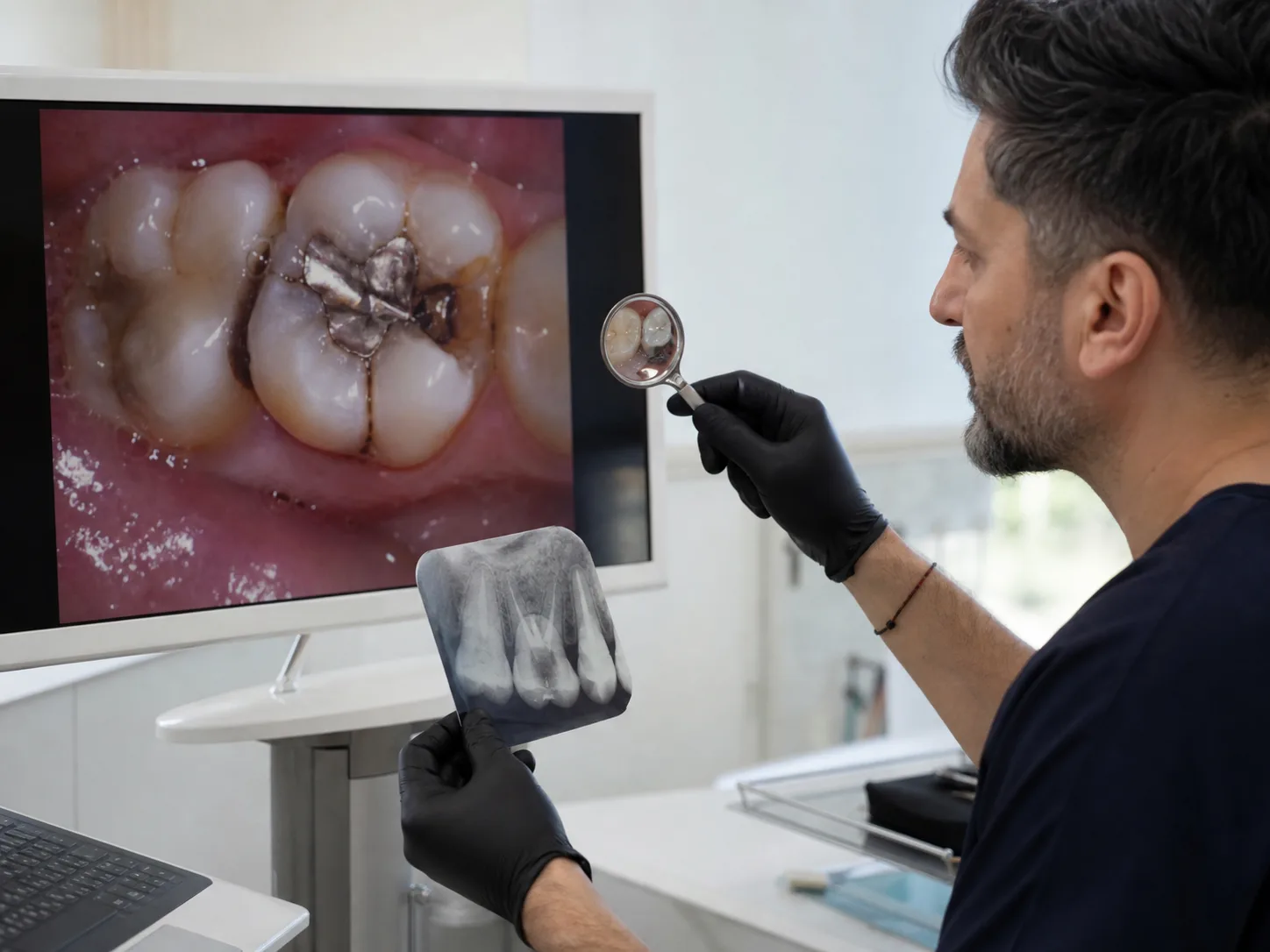
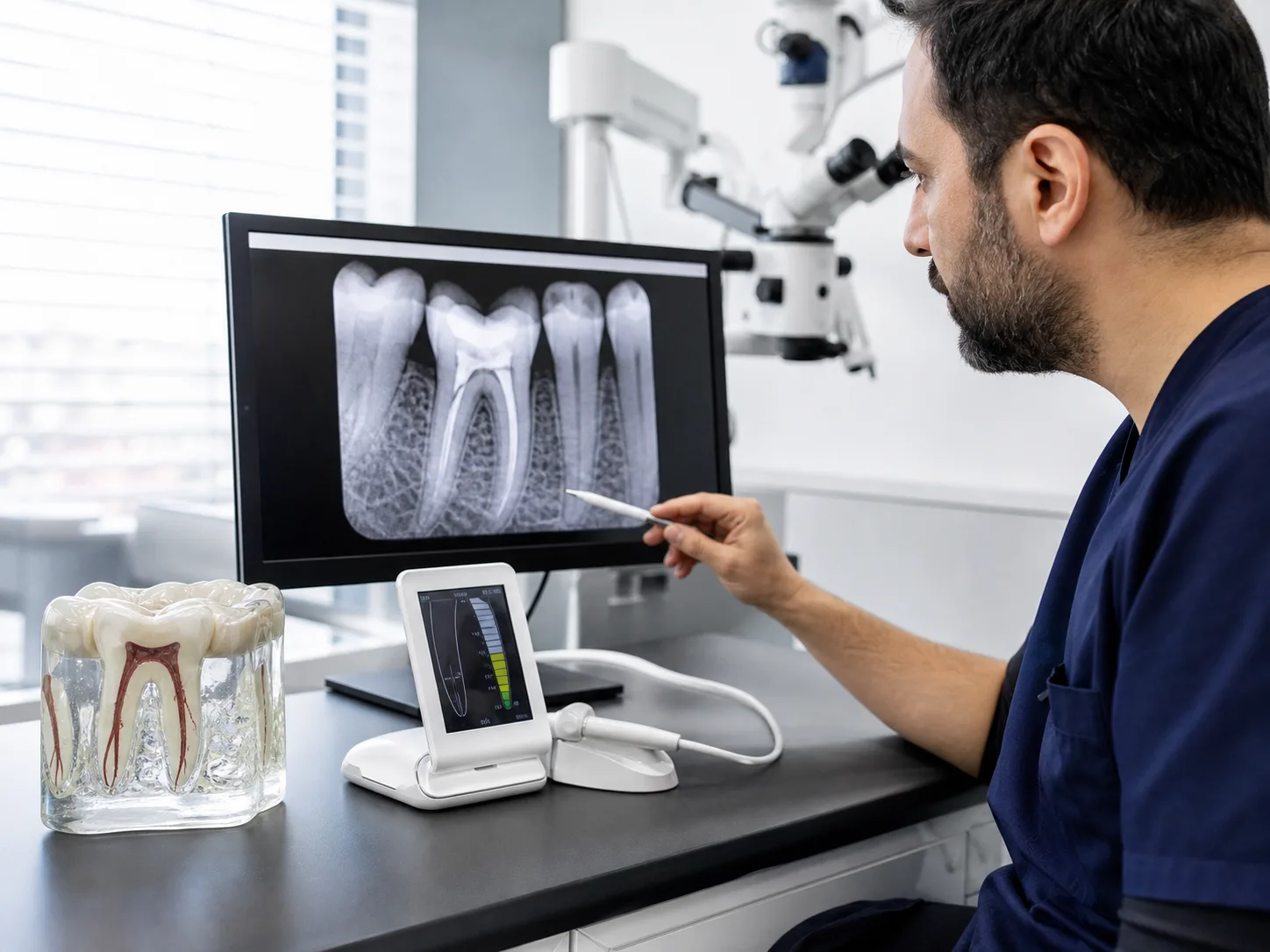
Dentist examining a dental x-ray and explaining restorative and endodontic treatment options to his patient
01

Our goal is not only to repair the damaged tissue, but also to preserve the healthy structure of the tooth as much as possible.

What is restorative and endodontic treatment?

Restorative treatment and endodontics
In what situations is it applied?

Restorative treatments rebuild lost tooth tissue; Endodontics intervenes in the pulp and root canals of the tooth when necessary.

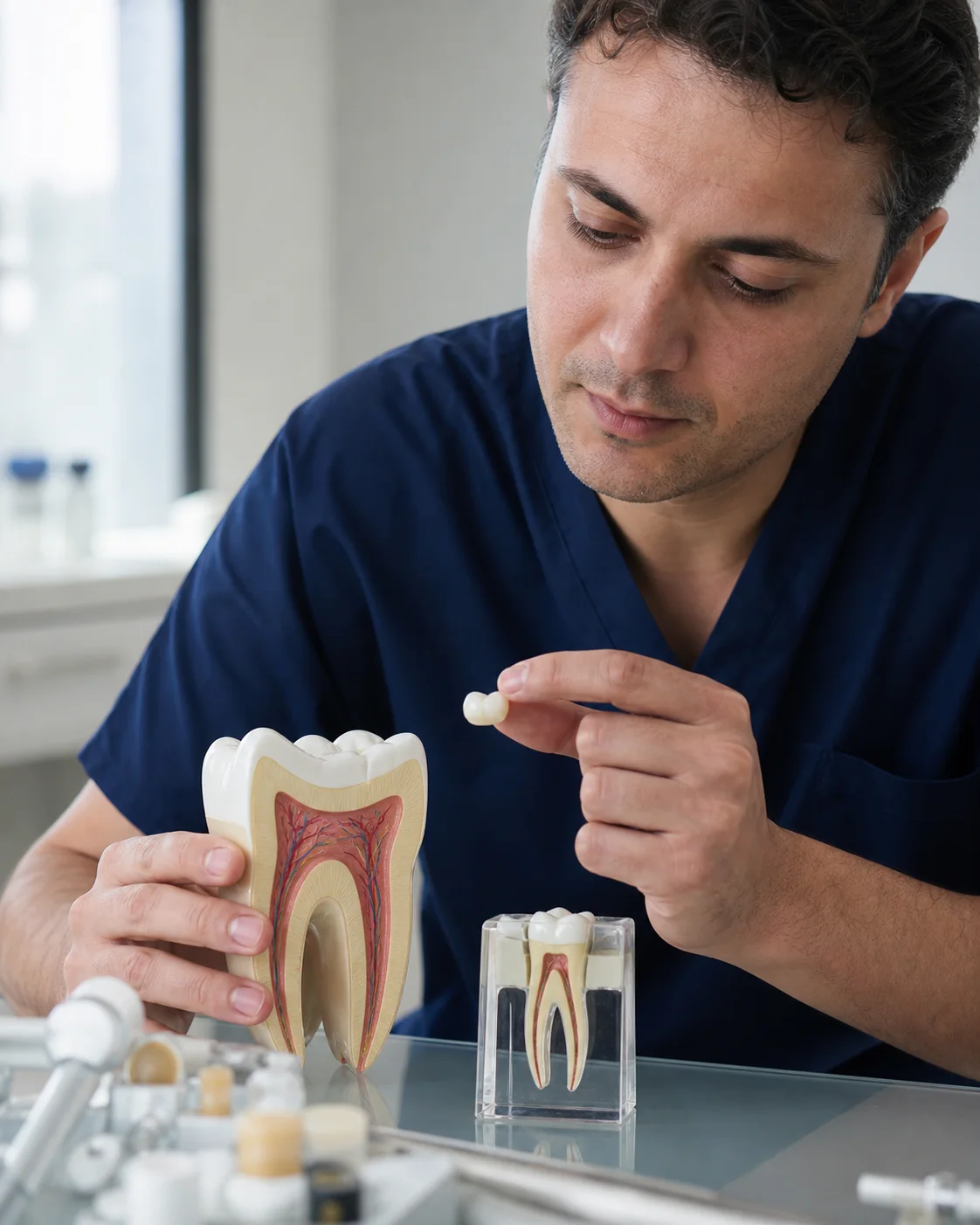
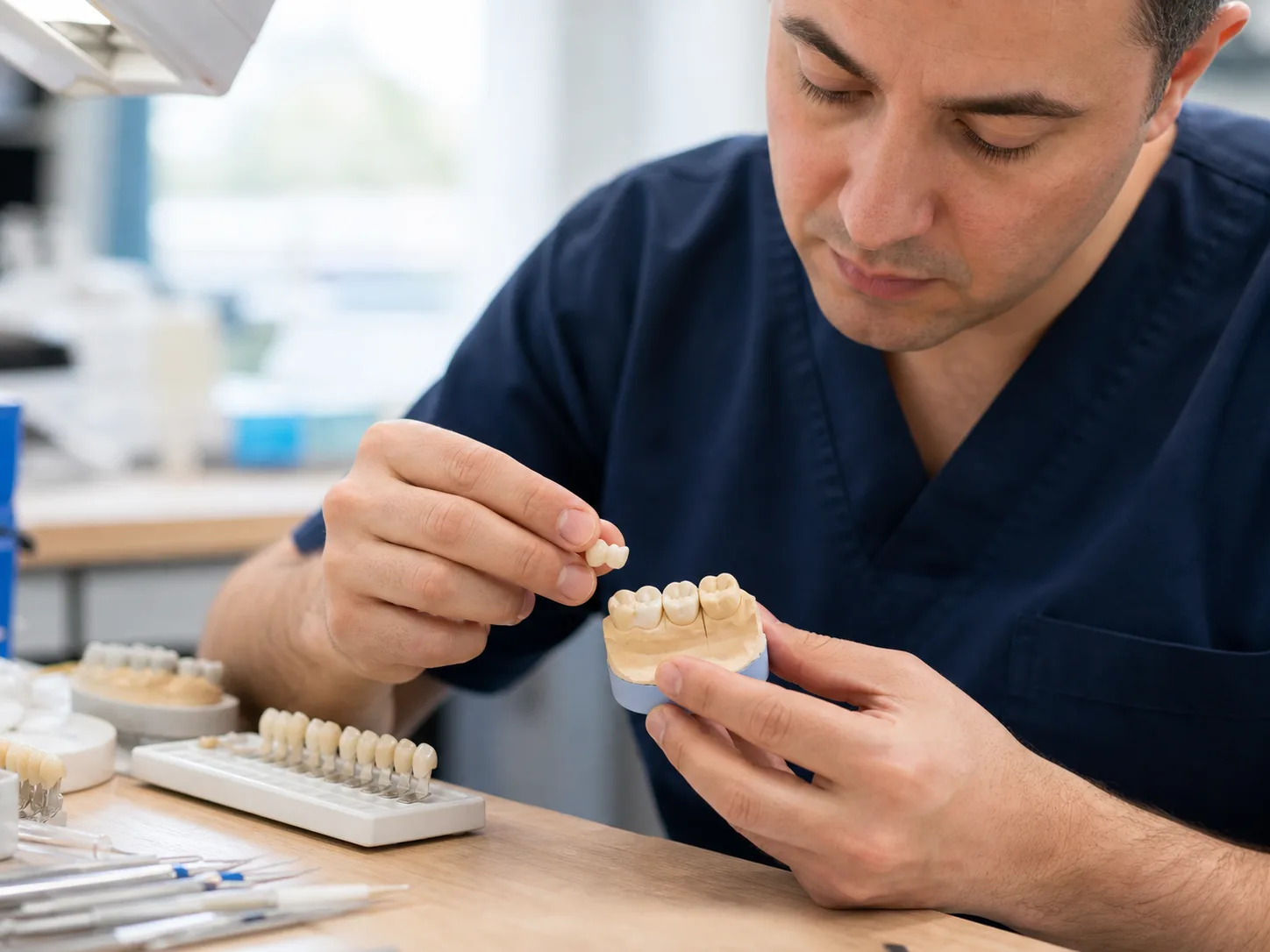
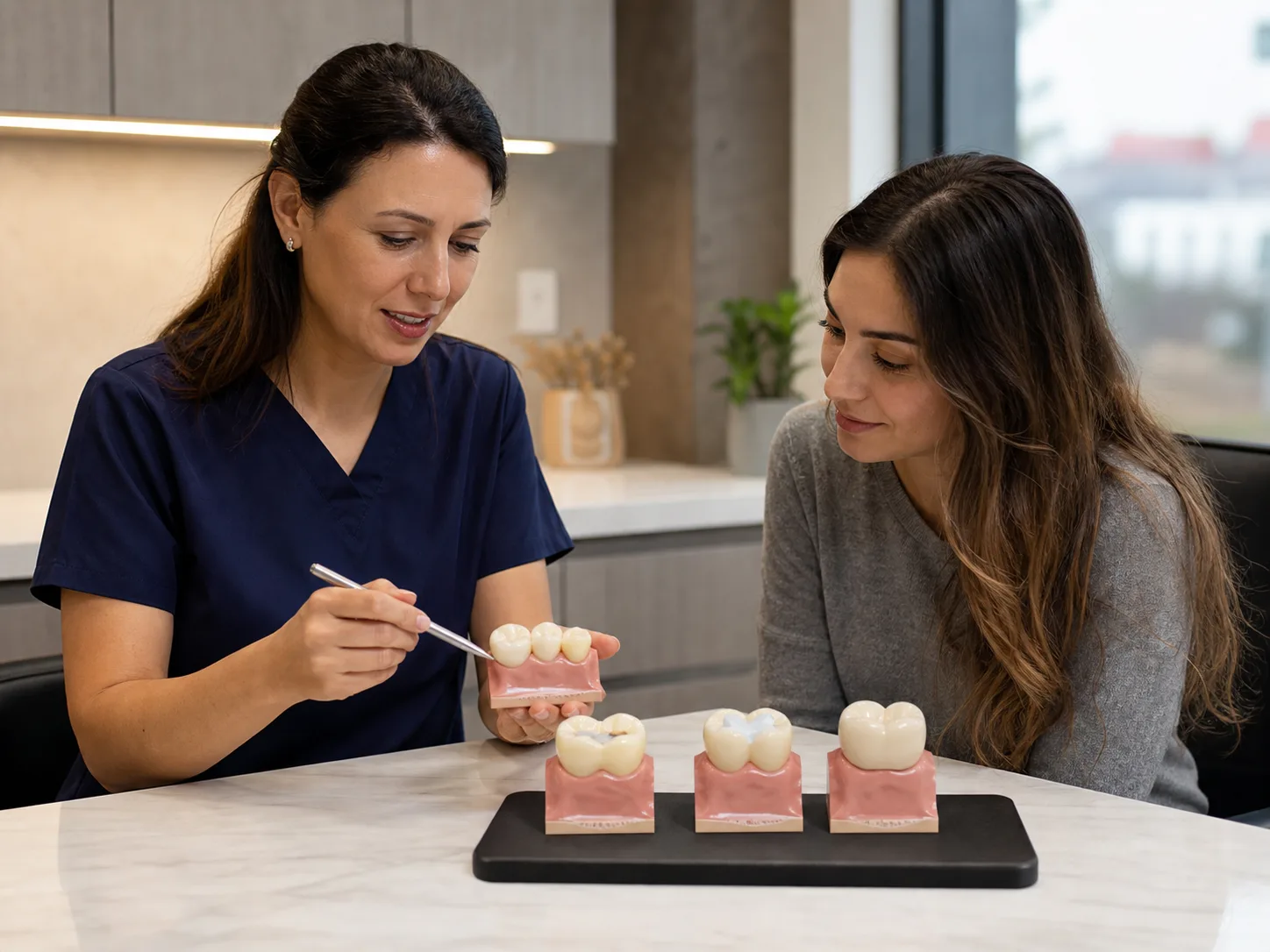
Dentist explaining the internal structure of the tooth and the restoration option on the model
The scope of treatment is determined by the extent to which the damage progresses not only to the visible surface but also to the internal tissues of the tooth.

We aim to replace tooth tissue lost due to decay, fracture or wear, in a form and function close to its natural form. For this purpose, direct composite filling or, in appropriate cases, personalized restorations such as inlay and onlay can be used.

The evaluation changes when the damage reaches the pulp tissue inside the tooth. The inflamed or infected pulp is removed. The root canals are cleaned, disinfected, shaped and filled.

After root canal treatment, a permanent restoration is made that closes the connection of the tooth with the oral environment. The type of restoration is determined by the remaining intact tooth tissue and the chewing forces the tooth is exposed to.

Not every deep cavity means root canal treatment.The decision is given by evaluating the complaint, pulp tests, clinical findings and necessary imaging together.

01
complaintHistory of pain and tenderness
02
PulpaSigns of vitality and inflammation
03
textureRemaining intact tooth structure
04
biteFunction and chewing forces
Treatment process

Treatment process
progresses from diagnosis to permanent restoration.

Not every tooth follows the same order. The scope of the procedure and the number of appointments vary depending on the diagnosis and the restoration to be applied.

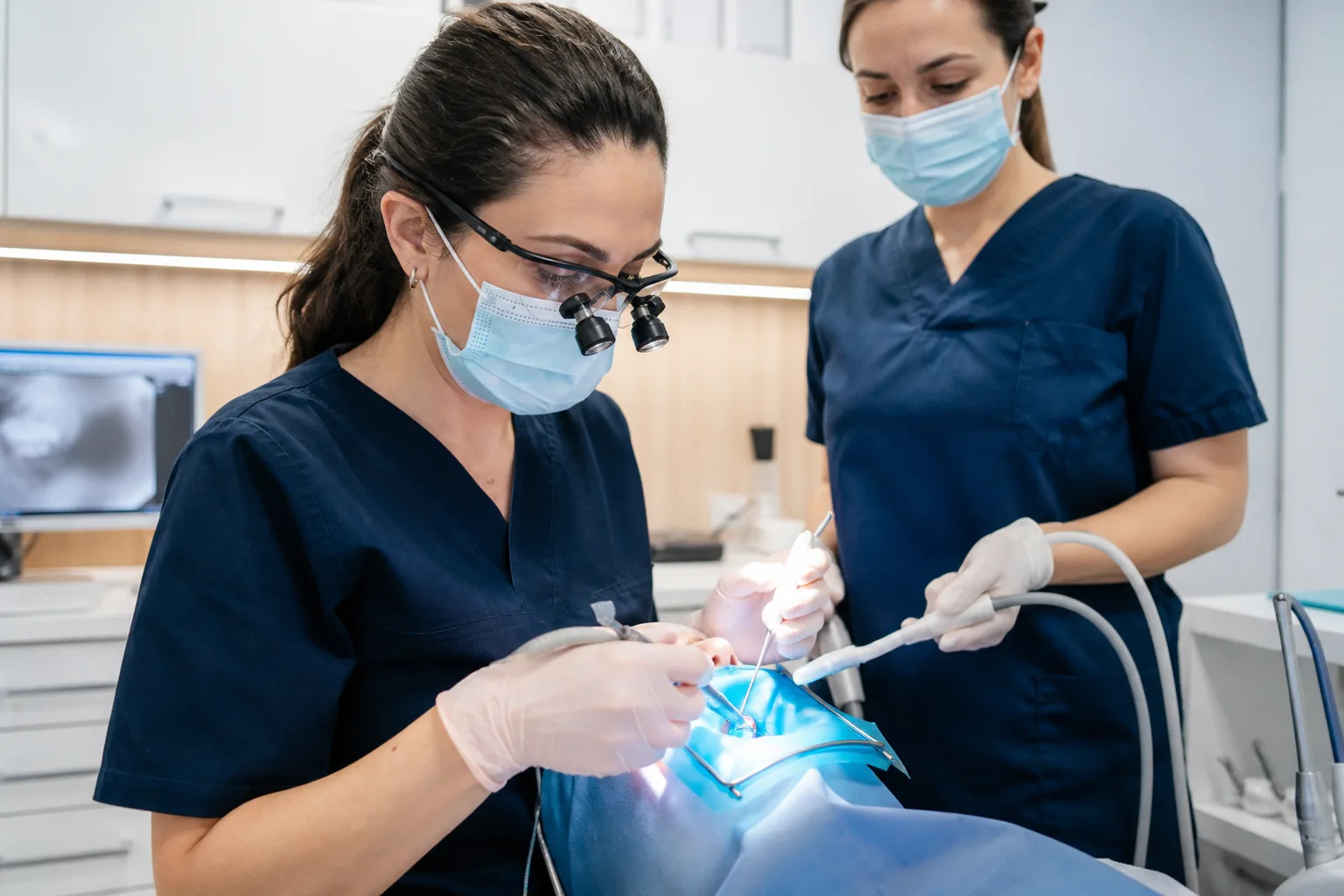
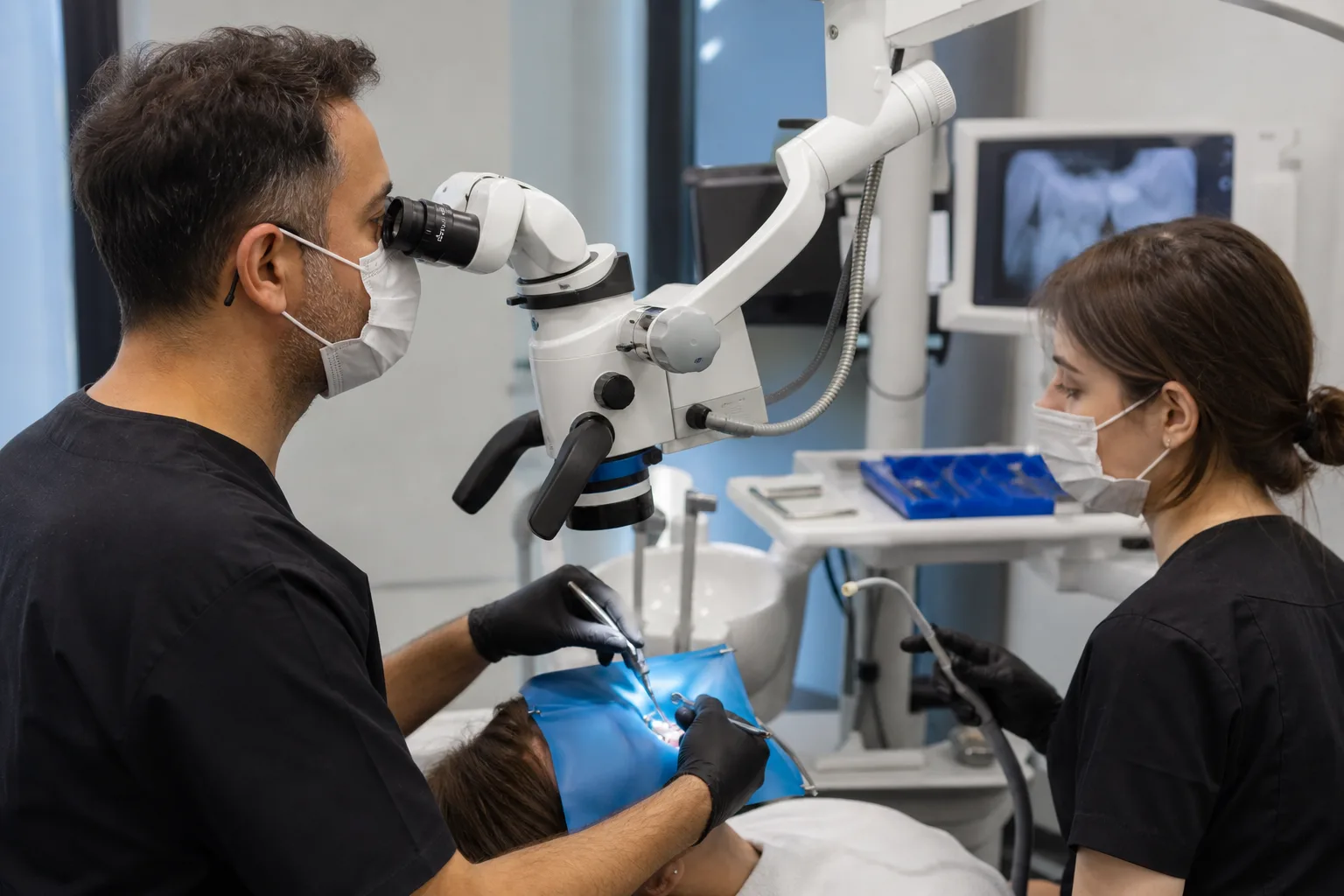
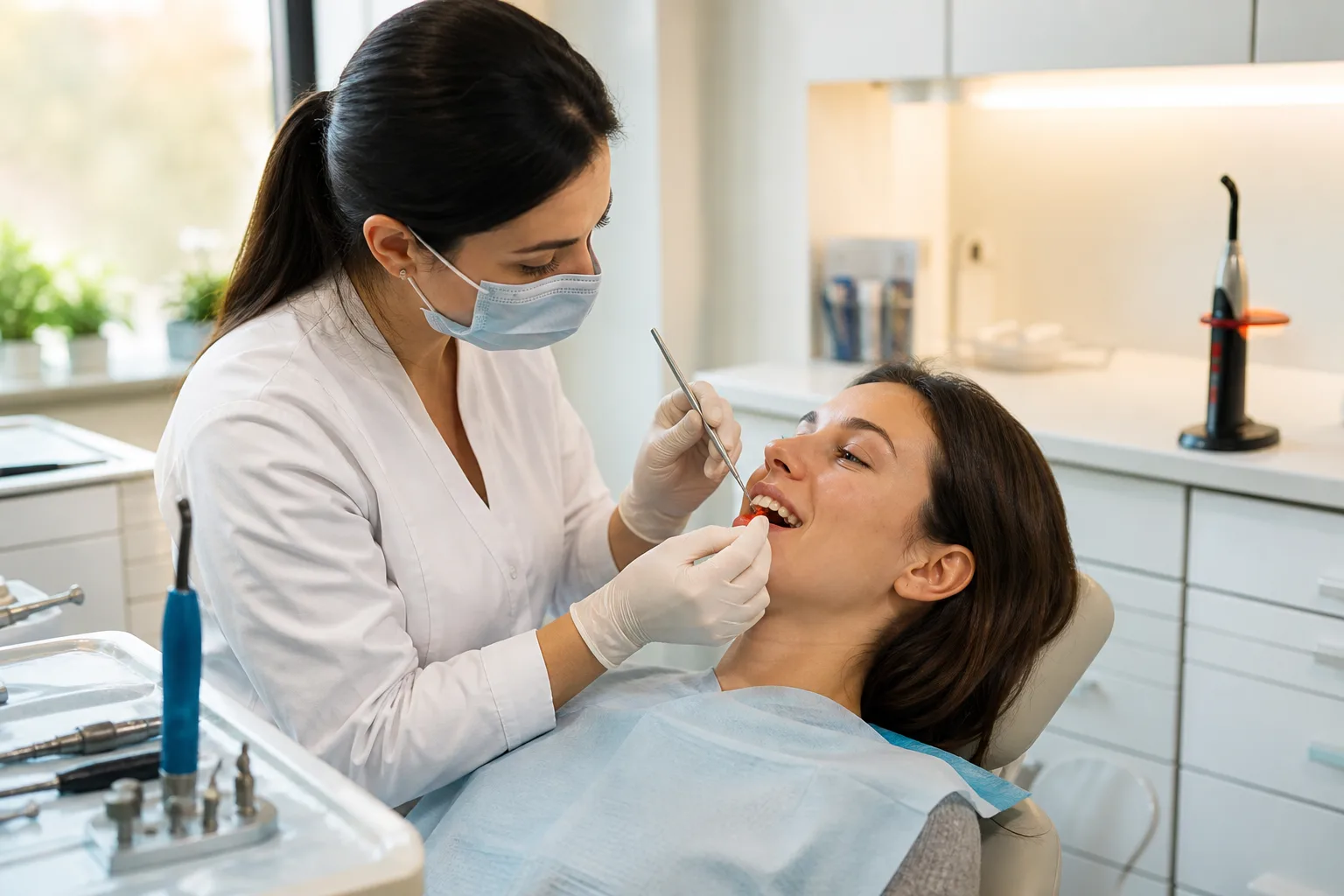
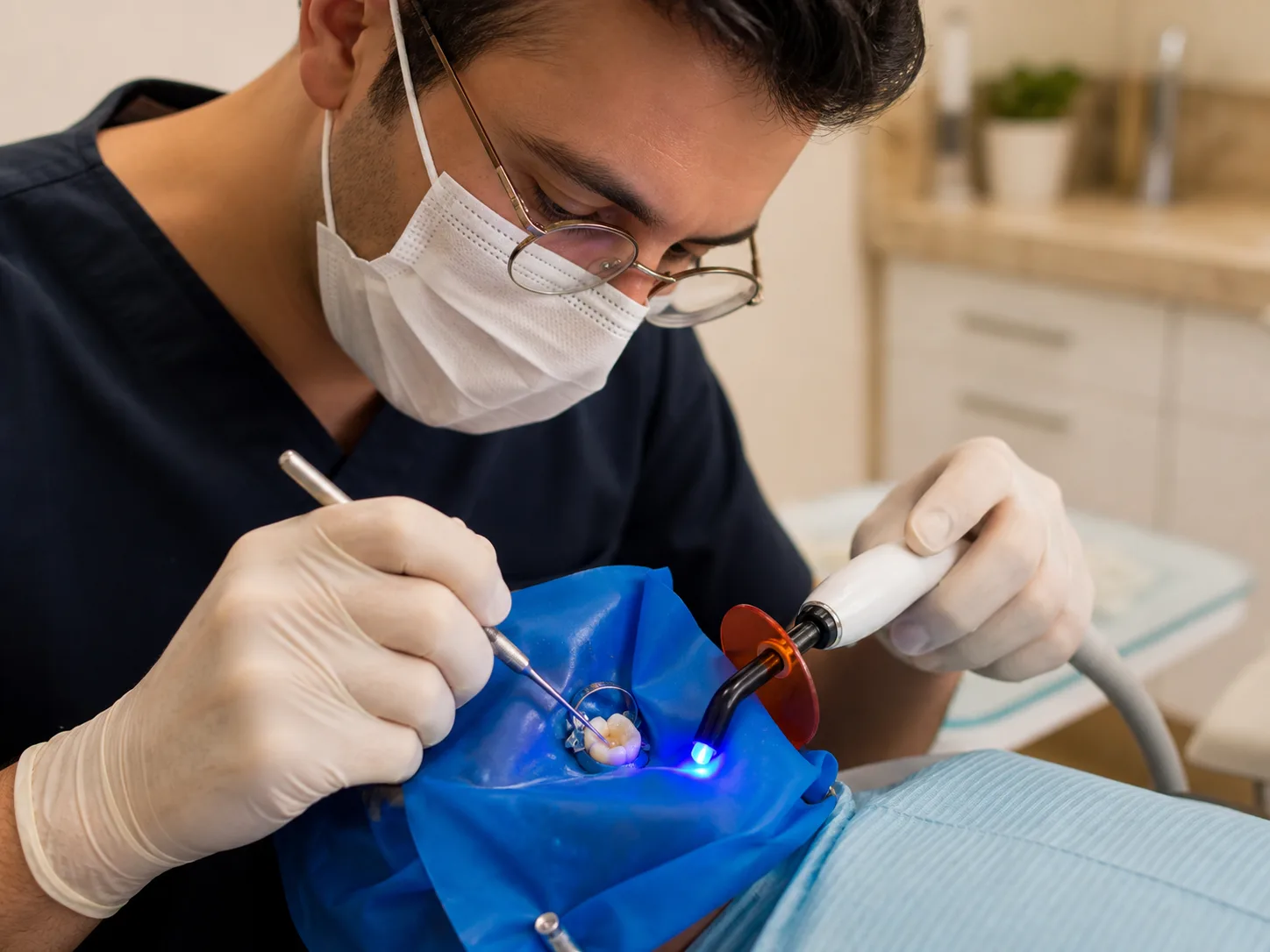
Cold test and dental x-ray evaluation before restorative and endodontic treatmentWork area isolated with rubber dam in restorative dental treatmentRoot canal treatment performed under a dental microscope and rubber damDentist checking the closure of the permanent restoration after treatment
01 / DiagnosisIdentify the source of pain through clinical tests and
We evaluate it together with imaging.
01 — 04
  1. 01
    Diagnosis

    Examination and pulp tests

    Duration of pain, type of sensitivity and loss of material in the tooth are evaluated. The condition of the pulp can be understood with the necessary tests and imaging.

  2. 02
    Isolation

    Moisture control and tooth isolation

    The tooth to be treated is separated from the oral environment; Appropriate isolation is provided to support vision and procedure of restorative material.

  3. 03
    treatment

    Restoration or root canal treatment

    If the pulp can be preserved, the lost tissue is replaced with a restorative method; When necessary, root canals are cleaned, shaped and filled.

  4. 04
    Completion

    Final restoration and review

    Depending on the remaining tissue of the tooth, a filling, inlay, onlay or a different superstructure is planned; Contact, closure and surface compatibility are checked.

Treatment options

Filling, inlay, onlay and root canal treatment:
How to choose the appropriate method?

The scope of the procedure is determined by the condition of the pulp, the remaining healthy tissue and the functional load of the tooth.

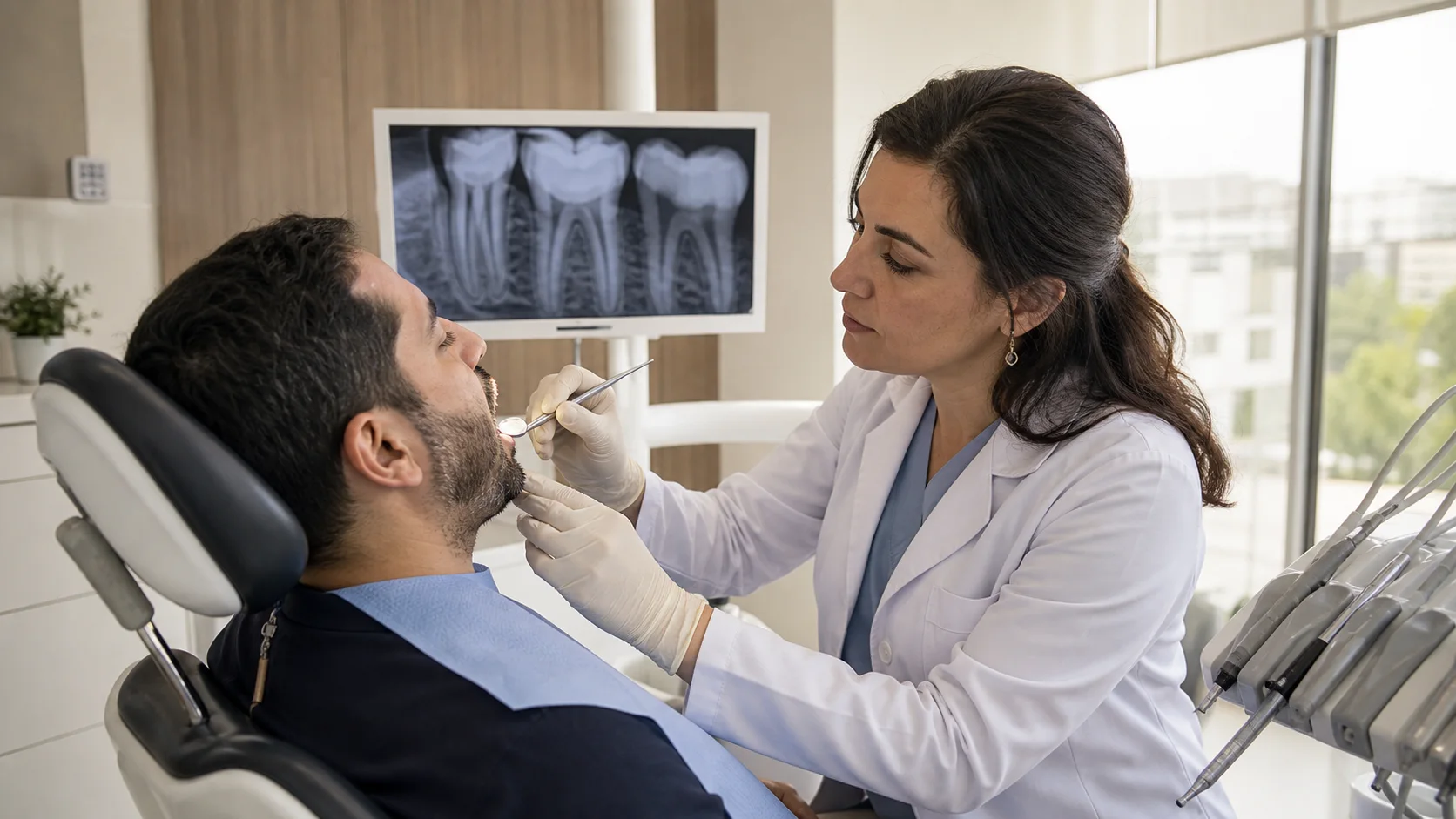
Dentist evaluating a tooth with decay and an old filling using clinical images and x-rays
01 Initial assessment that determines the scope
01 / Diagnosis

Decay and material loss

The spread of caries, old restorations, cracks and the location of the remaining intact tissue are examined together.

Imaging findings are not a substitute for clinical examination. The decision is made by evaluating both records together.Assessment appointment
Scope of treatment

Scope of treatment,
determine the pulp and remaining intact tissue.

With deep decay, the aim is neither to perform root canal treatment automatically nor to place a filling without sufficient assessment. The condition of the pulp and remaining sound tissue must be evaluated carefully to avoid unnecessary tissue loss.

For teeth requiring root canal treatment, we do not consider the root canal procedure and the permanent superstructure as separate decisions. Sealing, contact, closure and protection of the remaining tissue constitute the integrity of the treatment.

Let's evaluate your teeth

Frequently asked questions

About filling and root canal treatment
frequently asked questions.

Appropriate treatment is determined by evaluating the clinical condition of the tooth and the necessary imaging findings.

Restorative treatment focuses on replacing tooth tissue lost due to decay, fracture or wear with procedures such as fillings, inlays or onlays. Endodontic treatment involves cleaning, disinfecting and filling the root canals in cases where the pulp tissue inside the tooth becomes inflamed or infected.

No. The depth of the decay alone is not sufficient to decide on root canal treatment. The nature of the complaint, pulp tests, clinical findings and radiographic evaluation are considered together. If the pulp can be preserved, a more conservative restorative approach can be chosen.

The choice depends on the amount of remaining sound tooth tissue, the location of the defect, chewing load, fracture risk, neighbouring contacts and the bite. The aim is to restore function safely while preserving as much healthy tissue as possible.

Root canal treatment is usually performed under local anesthesia. Sensitivity may occur after the procedure, which may last for a few days; This situation varies depending on the patient and the initial condition of the tooth. In case of increasing pain, swelling or an unexpected complaint, the clinic should be contacted.

Number of appointments; It varies depending on the tissue loss in the tooth, the condition of the pulp, signs of infection, the type of restoration to be applied, and the response of the tooth to treatment. The exact flow is determined after clinical examination and necessary imaging.

The fee is depending on the tooth to be treated, the scope of the procedure, the number of channels, the type of restoration to be used and additional procedures that may be required. Appropriate options and costs are shared with the treatment plan after the examination.