
protecting teeth
Personalized night guard
For suitable patients, a personally compatible appliance is planned that helps protect tooth surfaces against excessive load.
Teeth grinding is not just a habit that occurs at night. We evaluate it together with teeth, chewing muscles, joints and daily life.
Bruxism assessment ↗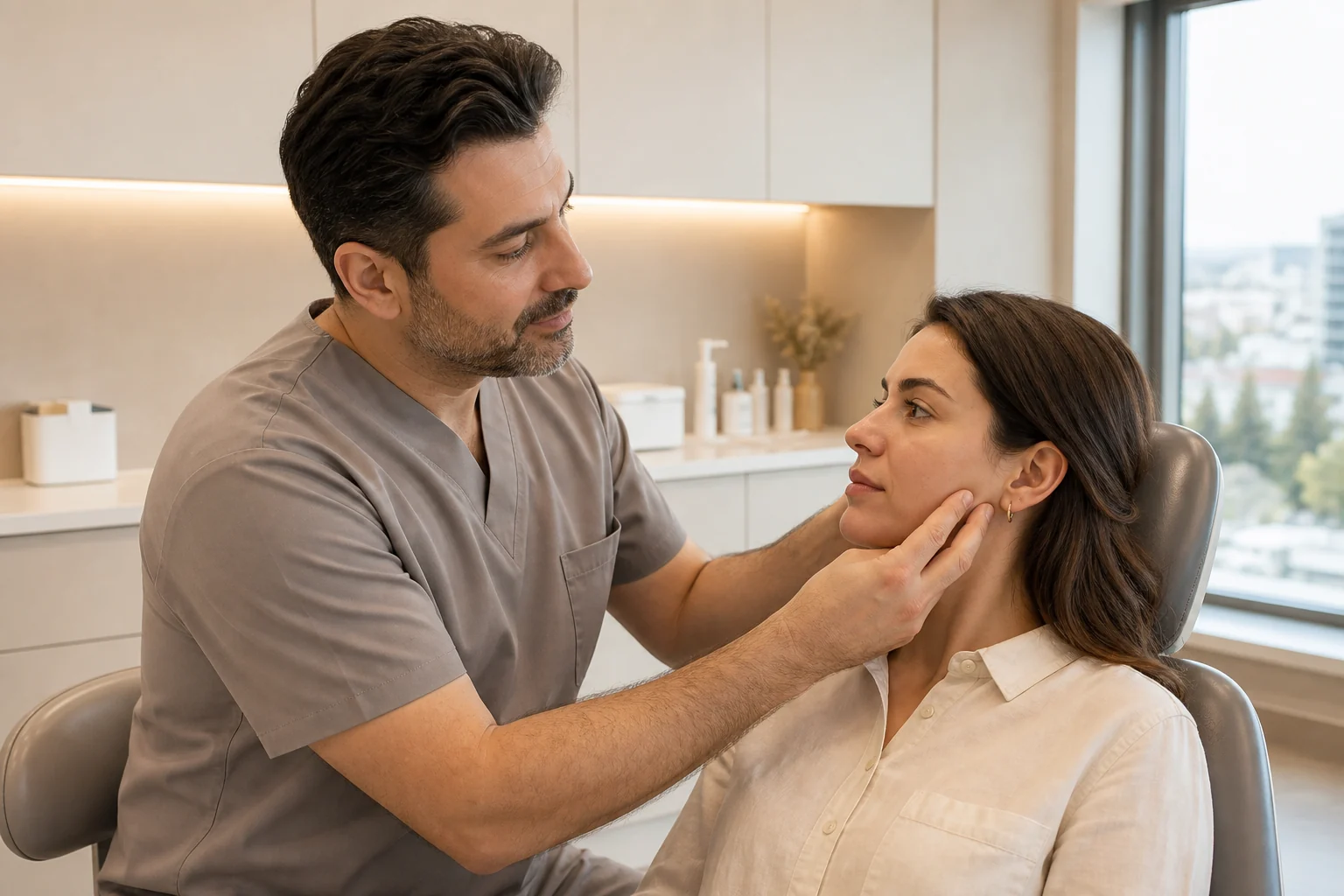
We bring together the traces on the teeth, jaw muscles and joint movement in the same evaluation.
Bruxism is clenching or grinding the teeth while awake or asleep. Mild cases may cause no symptoms, while frequent or intense bruxism can affect the teeth, muscles and jaw joints.
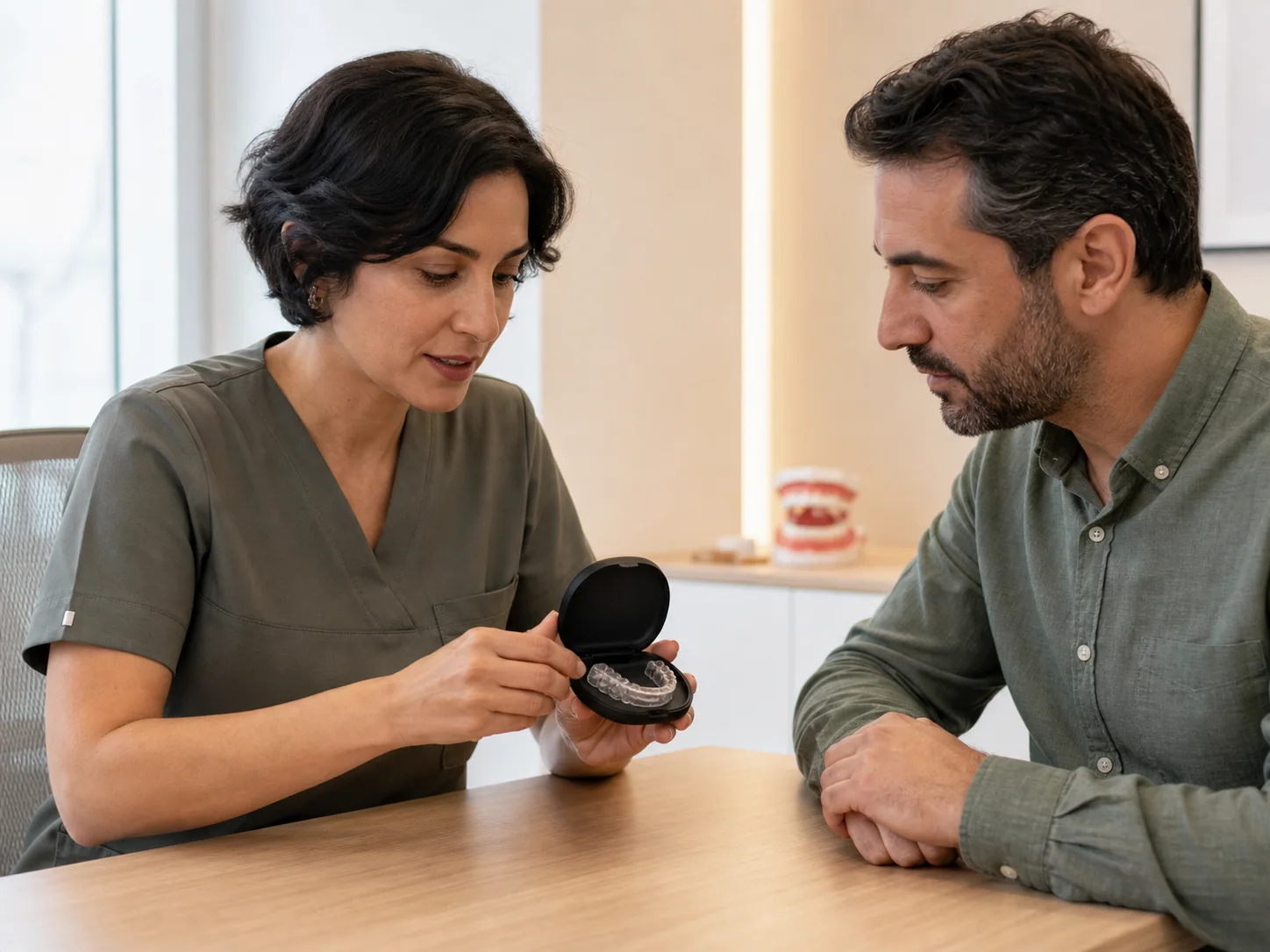
Morning jaw fatigue, unexplained tooth sensitivity or wear on the tooth surfaces may be signs of clenching or grinding.
During the examination, we evaluate the wear on the tooth surfaces, cracks and restoration damages, sensitivity in the chewing muscles, mouth opening movement and jaw joint findings.
We talk about when the boredom occurs, sleep patterns, periods of stress and accompanying habits. When necessary, evaluation together with relevant health fields may be recommended.
Clenching and grinding patterns differ from one patient to another.The type of occlusal splint, duration of use and review intervals are personalized according to intraoral findings.
Correctly understanding muscle and joint findings is as much a part of the personal plan as protecting the teeth.
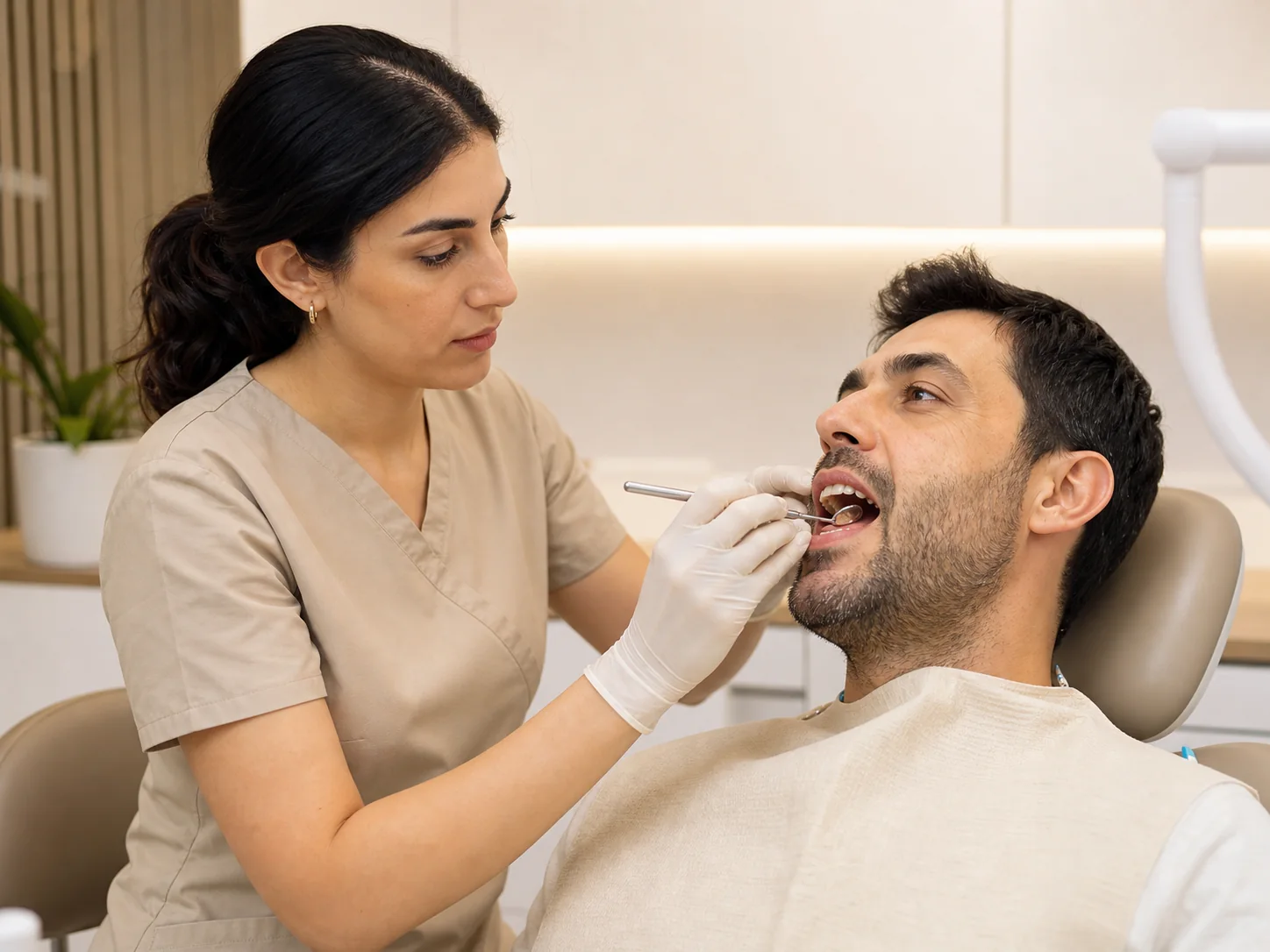
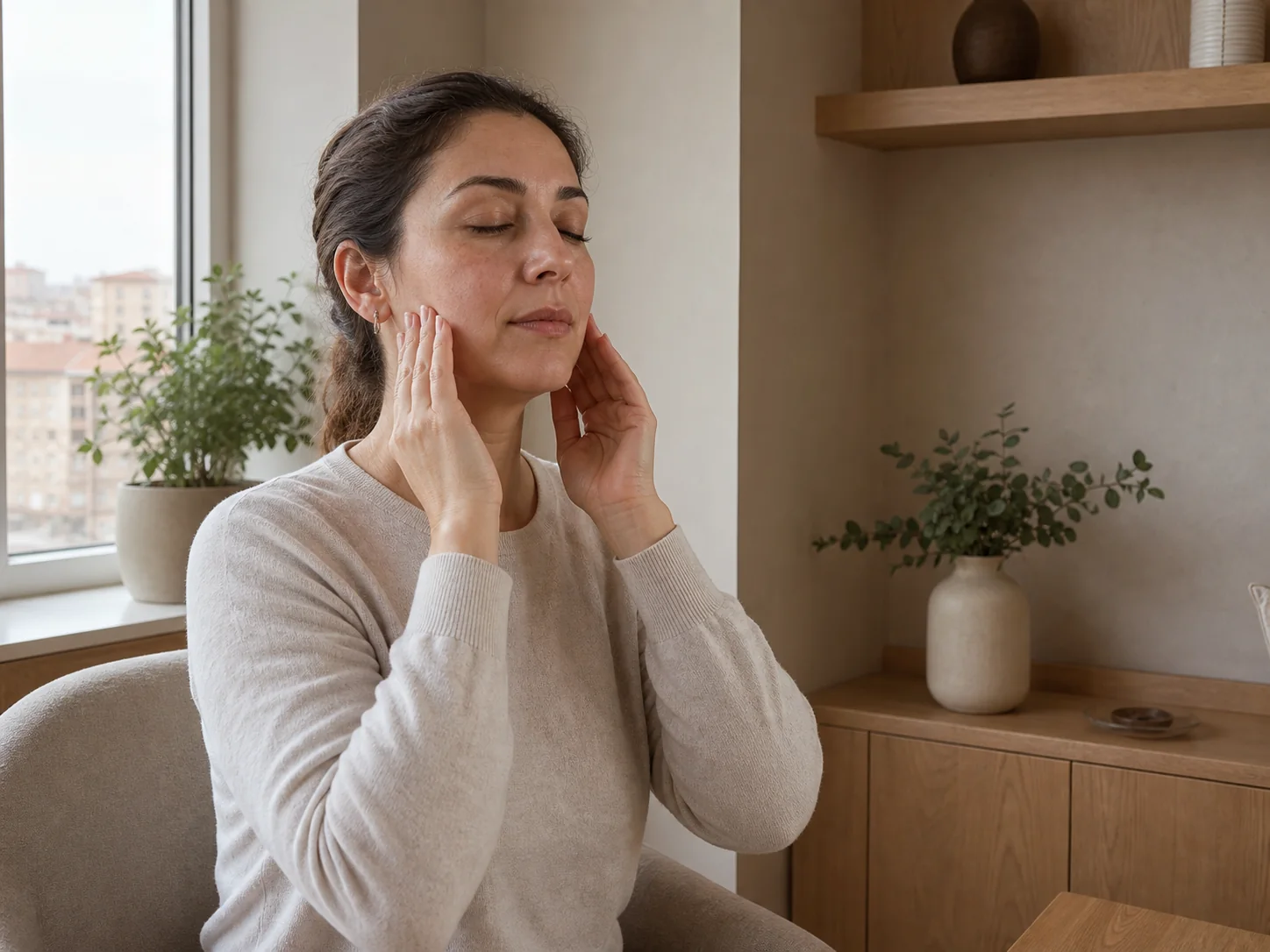
He listens to complaints from time to time. We check chewing muscles, joint movement and mouth opening.
We determine the current load marks by examining the relationship between tooth surfaces, restorations, sensitivity and closure.
When necessary, we plan a protective appliance compatible with the teeth using digital or classical measurements.
We evaluate the compatibility of the occlusal splint, changes in the teeth and muscle complaints at specified intervals.
The aim of bruxism treatment is to evaluate the source of the findings and plan appropriate steps together to help reduce possible damage to the teeth.
For suitable patients, a personally compatible appliance is planned that helps protect tooth surfaces against excessive load.
Personal suggestions for noticing the resting position of the teeth and recognizing trigger moments are shared.
Teeth that are worn, sensitive or damaged are also evaluated according to their needs.
When sleep, stress or muscle-joint problems are considered, referral to necessary health areas can be planned.
Frequently asked questions
The source of the symptoms and the appropriate preventive approach are determined individually after clinical examination.
Fatigue in the jaw muscles in the morning, sensitivity or wear on the teeth, frequent headaches, and a grinding sound heard during sleep may be related to bruxism. For a definitive evaluation, teeth, muscles and jaw joint are examined together.
No. While bruxism can occur during sleep, it can also occur unnoticed during the day during moments of concentration or stress. Noticing the jaw position during the day helps in evaluation.
The main purpose of an occlusal splint is to help protect the teeth from wear and fracture caused by clenching or grinding. Contributing factors and any associated muscle or sleep concerns are also assessed.
No. Intraoral records are taken and a custom occlusal splint suitable for the teeth and closure is planned. It is not the same as ready-made, standard products and its compatibility is checked after delivery.
Joint sound alone does not diagnose bruxism. It should be evaluated together with pain, limitation of movement, muscle tenderness and bite symptoms.
The treatment timeline depends on tooth wear, muscle and joint findings, the protective appliance and any contributing factors. Review intervals are determined individually after the first examination.